What is a Trademark?
A trademark is like your brand's signature — the name, logo, or slogan that helps customers recognize your products. Your brand is how people see and remember you; the trademark is the legal right that lets you own and protect that brand. When people see the Nike swoosh or hear "Just Do It," they instantly know what company it's from. That's the power of a trademark. It legally protects your brand identity and prevents competitors from using something confusingly similar. You can trademark words, images, shapes, colors, or even sounds that distinguish your business. Once registered with the USPTO, you gain exclusive rights to use that mark within your industry. This helps maintain your reputation, protect customers from fakes, and build long-term brand value.
What is a Service Mark?
A service mark used to refer specifically to branding for services (like delivery or hospitality), while a trademark referred to branding for physical products. Today, the term "trademark" is used for both products and services, so the distinction no longer has legal significance. Still, some businesses choose to use SM instead of TM to show the mark is used for services. The ® symbol applies to both once registered.
What is a "Good"?
In trademark law, a "good" means a physical product that can be sold or traded. It's something customers can touch, hold, or use — like shoes, phones, or coffee mugs. When you file a trademark for goods, you must describe the exact products your mark will appear on. For example, "Nike" is a mark for athletic shoes and apparel.
However, goods don't always have to be physical. Downloadable software, digital files, and other downloadable products are also considered "goods" even though you can't physically touch them.
Goods are categorized by "classes" — specific groups defined by the USPTO that help identify what type of items your trademark covers.
What is a "Service"?
A service refers to an action or activity you provide for others — not a physical object. For example, hair salons, delivery companies, and online consulting firms all offer services. Service marks protect the branding of these activities, ensuring that when someone books an Uber or Amazon Prime delivery, they're interacting with the true provider. When registering a service mark, it's important to clearly define what your business actually does for customers.
What is a Patent?
A patent protects new inventions — machines, designs, or processes that solve problems or improve technology. It gives the inventor exclusive rights to make, use, or sell the invention for a set time (usually 20 years). Think of Apple's patents for iPhone touch gestures or Tesla's electric battery systems. There are three main types: utility (how something works), design (how something looks), and plant (new plant varieties). A patent rewards innovation and stops others from copying your idea without permission.
What is a Copyright?
Copyright protects creative works like books, music, movies, art, and software code. It gives the creator exclusive rights to reproduce, distribute, and display their work. For example, Disney owns copyrights to its movies and characters — meaning others can't legally copy or sell them without permission. Unlike trademarks, copyrights don't protect brand identity; they protect artistic and intellectual expression. Copyright automatically applies once a work is created, but registering it gives stronger legal rights in court.
What is a Common Law Trademark?
A common law trademark does not arise just because you started using a name or logo in your business. It only develops after a meaningful number of customers begin to recognize that name as identifying you as the source of specific products or services. Until that recognition exists, you have no enforceable trademark rights.
Even when common law rights do exist, they are very limited. They usually apply only in the specific geographic area where customers already associate the name with your business, and they are expensive and difficult to prove in court.
By contrast, a federally registered trademark provides clear, nationwide ownership, public notice, and far simpler enforcement. Relying on common law rights alone often means spending far more money to defend your brand — with a much higher risk of losing it.
Common law rights may happen eventually, but registration is the only reliable way to protect your brand.
What is a Specimen?
A specimen is a real-life example showing how your trademark is actually used in commerce. It's proof to the USPTO that your mark isn't just an idea — you're using it with real goods or services. For products, a specimen might be a product label, packaging, or a photo of the product being sold. For services, a common specimen is a screenshot of your website showing the mark next to the services you offer.
Important: You cannot submit digital mockups, drafts, or anything staged just for the application. The specimen must show real, current use in the marketplace. And in the U.S., an acceptable specimen of use will be required before your trademark can register.
What is an Intent to Use Application?
An "Intent to Use" (ITU) application lets you reserve a trademark before you've officially started selling your product or service. It's a way to secure rights early while you prepare to launch. For example, if you're developing a new clothing line but haven't sold anything yet, you can file ITU to lock in your brand name. You'll need to prove actual use later (via a Statement of Use). This process helps startups claim valuable names before competitors do. In fact, most serious businesses file trademark applications long before they announce or launch a new brand — to secure legal ownership before the public sees the brand's value.
What is a Statement of Use Application?
A Statement of Use (SOU) confirms to the USPTO that you've actually started using your trademark in commerce. It's filed after an Intent to Use application once your product or service is truly available to customers. Along with the SOU, you'll submit specimens showing your mark being used on real goods or services—not mockups.
Once the SOU is accepted, your application moves to full registration, and your trademark gains its legal protections. In short, the SOU tells the government: "This isn't just a planned brand anymore — it's now being used in real business."
What does "Use" mean?
In trademark law, "use" means that your mark is actually being used in real business — not just planned or imagined. For goods, it means your product with the mark is sold or transported across state lines. For services, it means you're actively providing that service to customers under that brand name. For example, if you sell "Luna Coffee" beans online, and customers order them from different states, that counts as "use in commerce." Simply posting a logo idea on your website isn't enough. The USPTO needs proof, called a "specimen," that your brand is out there in the real world.
What is a Certification Mark?
A certification mark is used to show that a product or service meets certain standards or comes from a specific region. It's not owned by the business selling the goods — it's owned by an organization that sets quality rules. For example, "UL" (Underwriters Laboratories) certifies product safety, and "Fair Trade Certified" ensures ethical sourcing. Businesses use these marks to show customers that their products meet these requirements. The owner of a certification mark doesn't make or sell anything — they just approve who can use it.
What is a Collective Mark?
A collective mark identifies members of a group or organization. For example, "CPA" (Certified Public Accountant) shows that someone is part of a recognized professional community. Trade unions, cooperatives, and associations often use collective marks to show membership and uphold standards. The organization owns the mark, and members use it to show affiliation or credibility. It helps maintain reputation and ensures that only qualified members represent the group's values.
What is disclaiming a part of a mark?
Sometimes a trademark includes a generic or descriptive word that can't be protected by itself. In that case, the USPTO may ask you to "disclaim" that part. For example, if your mark is "Sunny Bakery Café," you may need to disclaim the words "Bakery" and "Café," since others must be free to use them. Disclaiming doesn't remove the word from your logo — it just means you don't claim exclusive rights to that piece alone. It's a normal part of registration and doesn't weaken your trademark as a whole.
What is a Declaration of Incontestability?
After your trademark has been registered and in continuous use for five years, you can file a Declaration of Incontestability. This means your ownership and validity of the mark become much harder to challenge in court. For example, if "Starbucks" filed this declaration, another coffee brand couldn't easily argue that the name isn't valid or owned by them. It's a strong layer of protection — but only available for federal registrations that meet specific criteria.
What is and when would I file under the Supplemental Register?
If your trademark is descriptive and not yet distinctive enough for the Principal Register, the USPTO may offer you the option to move your application to the Supplemental Register. Generic terms still cannot be registered at all, but descriptive marks that are already in use in commerce may qualify for the Supplemental Register. You cannot file an Intent-to-Use application directly to it — the mark must be in use at the time of registration.
The Supplemental Register provides limited protection — you can still use ®, block imports, and start building brand recognition — but it does not provide the same legal advantages as the Principal Register.
If your brand becomes distinctive over time, you cannot simply "move" or "upgrade" the original registration. Instead, once your mark has acquired distinctiveness, you would file a new application to seek registration on the Principal Register.
What do TM, SM, and ® signify?
These symbols show the legal status of your mark.
TM (Trademark) — used for unregistered product marks.
SM (Service Mark) — used for unregistered service marks.
® (Registered) — means the USPTO has officially approved your mark.
For example, before Apple registered its logo, it could use ™, and once approved, it switched to ®. Using ® without registration is illegal, but TM and SM can be used anytime to show ownership intent. In fact, Google still uses ™ next to many of their registered trademarks.
What is a drawing?
A "drawing" in your USPTO application is the official representation of your trademark. It shows exactly what you are claiming rights to. There are two main types of trademarks:
— Standard Character: just the word(s) only, with no specific font, color, or style. This protects the wording itself, no matter how it's displayed.
— Special Form: a stylized version, such as a logo, custom font, or specific colors. This protects the visual design itself and such trademarks are usually called "design marks."
For example, the word COCA-COLA could be filed as a standard character mark (just the text), or as the famous script logo, which would be a special form mark.
The drawing is what the USPTO publishes and is what defines the scope of legal protection for design marks.
What is a dead or abandoned mark?
A trademark becomes "dead" or "abandoned" when the owner stops using it or fails to meet USPTO deadlines. That means the registration is no longer active or enforceable. For example, if a small brand forgets to file its renewal paperwork, its mark might be canceled. Two of the most common ways trademarks go abandoned are: failing to respond to an Office Action on time, and failing to file the required maintenance paperwork between the 5th and 6th year after registration. Once abandoned, a mark usually reenters the public domain, meaning others can apply to register it — unless the previous owner resumes use and addresses the issue quickly.
Can an abandoned trademark be revived?
Sometimes, yes. If a mark was abandoned due to a missed deadline or incomplete filing, the owner may file a "petition to revive" within a limited period — usually six months. But if the business truly stopped using the mark, it can't be revived just by paperwork. For instance, if "GlowSkincare" shut down for two years, another company could claim that name. Reviving a mark is possible only if the lapse was accidental, not because the owner gave up the brand.
What is a Trademark Search?
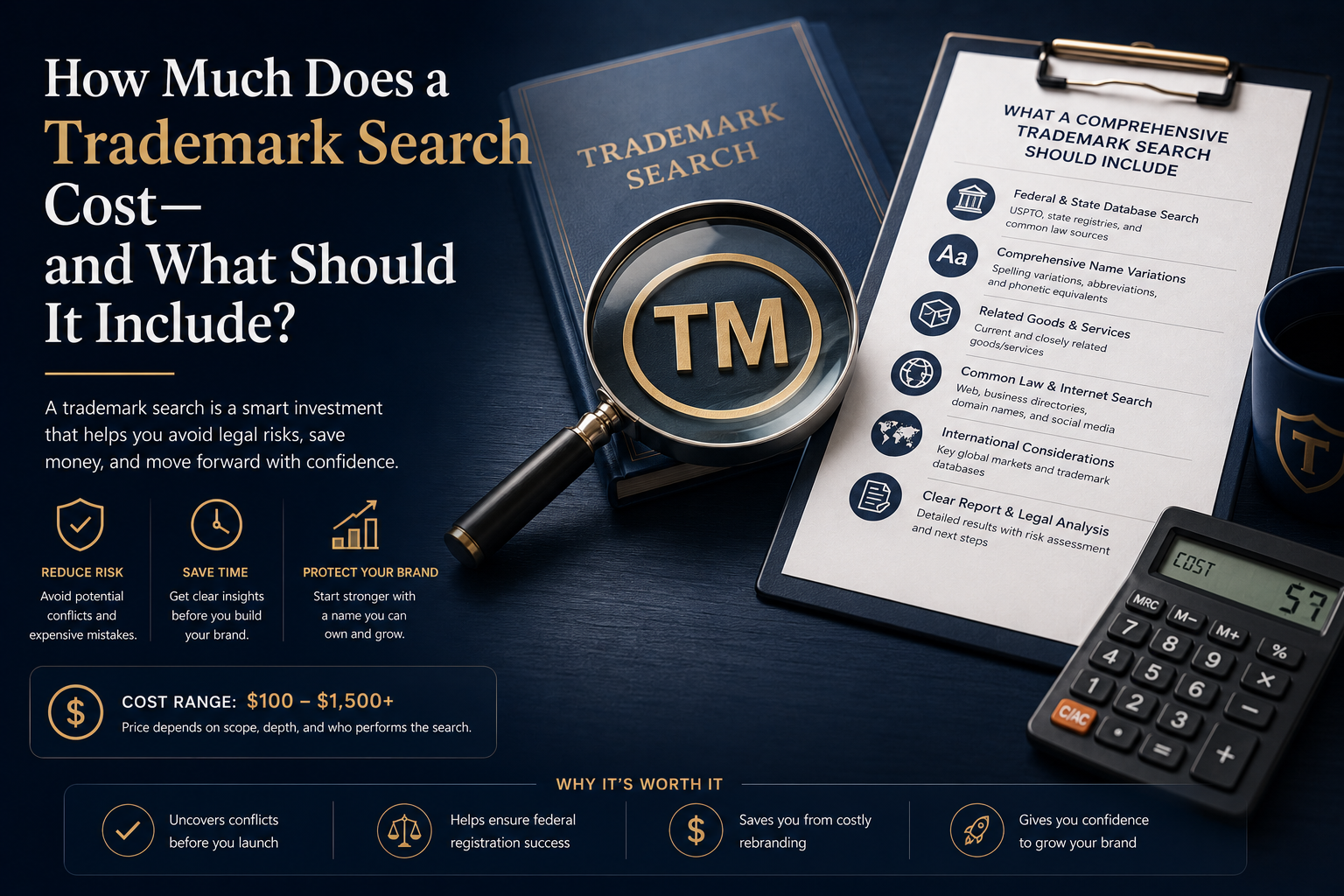
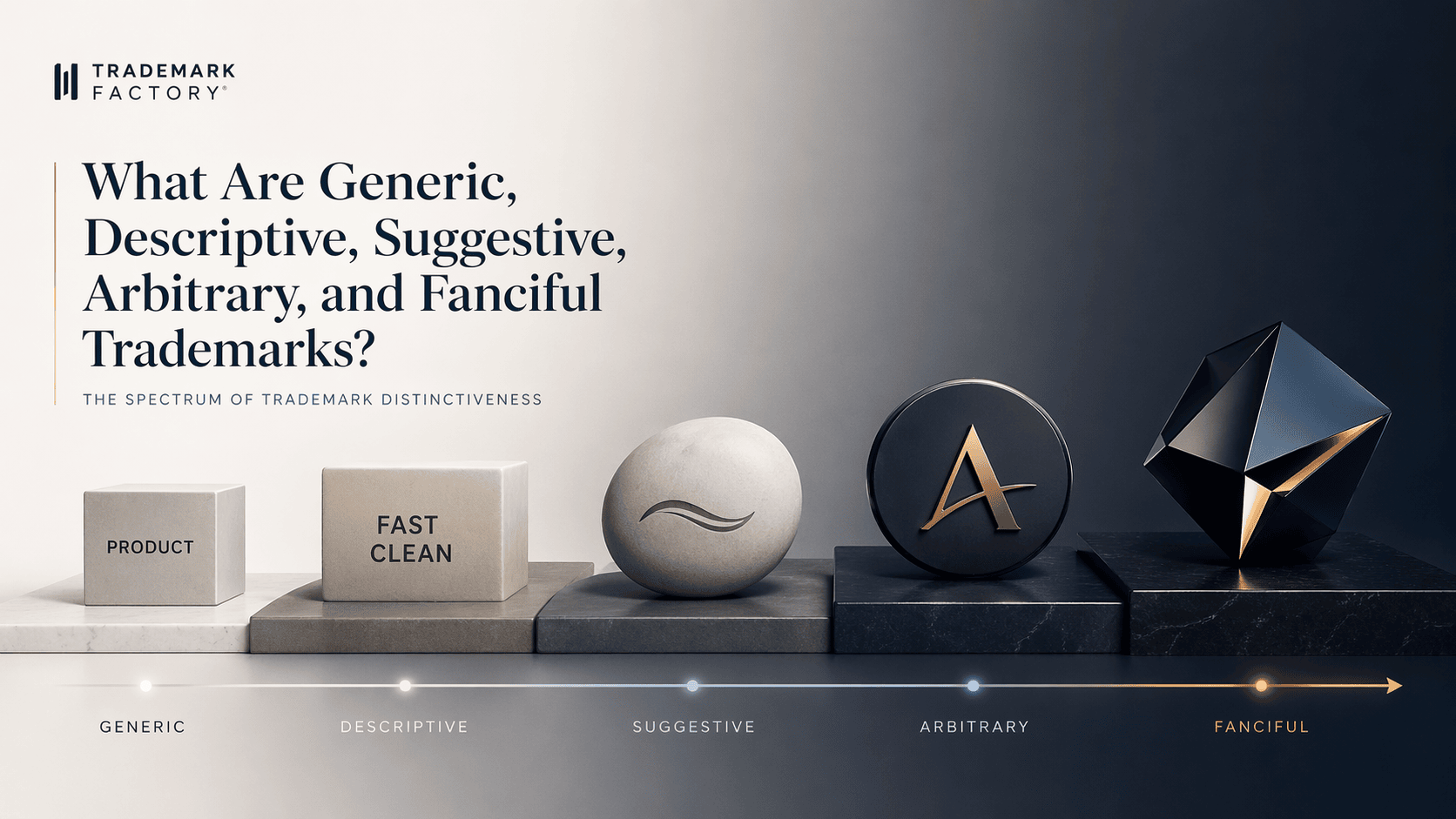
A trademark search is the first and most important step before filing an application. It helps determine whether your brand is likely to qualify for registration — not just whether the exact name is taken. A proper search checks whether your mark meets USPTO requirements and whether it's likely to be refused because it is descriptive, generic, or too similar to an existing federal registration.
The focus of a meaningful search is on federal trademark records, because only federal registrations and applications are considered when the USPTO examines your mark. State trademarks, common law use, and foreign registrations generally do not affect the outcome of a federal application — and if someone hasn't invested in a federal registration, the chances of them spending significantly more to challenge yours are very low.
A thorough search before filing helps you avoid brands that are likely to be rejected, saving time, money, and frustration before you commit to building the brand.
What is a Common Law Search?
A common law search looks for unregistered trademarks in everyday use — for example, names that appear in local businesses, websites, or social media but are not registered with the USPTO. In theory, someone who has built enough customer recognition could try to oppose your federal application based on those unregistered rights.
However, in practice, this risk is very small. If a business has not invested in getting a federal trademark, it is extremely unlikely they would spend far more money to challenge someone who does. And importantly, once you become aware of those unregistered uses, filing anyway could actually increase your legal risk.
That's why we focus on what the USPTO will actually consider — federal trademark records — instead of upselling "common law searches" that often create more confusion than protection.
What is Trademark Monitoring?
Trademark monitoring means keeping an eye on new applications and uses of similar names to protect your brand. Even after registration, you must actively defend your mark — the USPTO won't do it for you. Monitoring helps you spot potential infringements early, so you can act quickly. Many companies use monitoring services to scan new filings weekly. For instance, if someone applies for "Nikee" or "Nyk Air," Nike's legal team would be notified and could file an opposition.
What will I need to provide to Trademark Factory to begin my application?
To start your trademark application, you'll typically need:
1. The name or logo you want to protect.
2. A description of goods or services you'll offer under that brand.
3. The date of first use in commerce (if already in use).
4. A specimen (only if the mark is already in use) — for example, product packaging or a service webpage.
5. Your business information — owner name, address, and entity type.
Having this ready helps us prepare your trademark application quickly and accurately.
What and how much is the USPTO Filing fee?
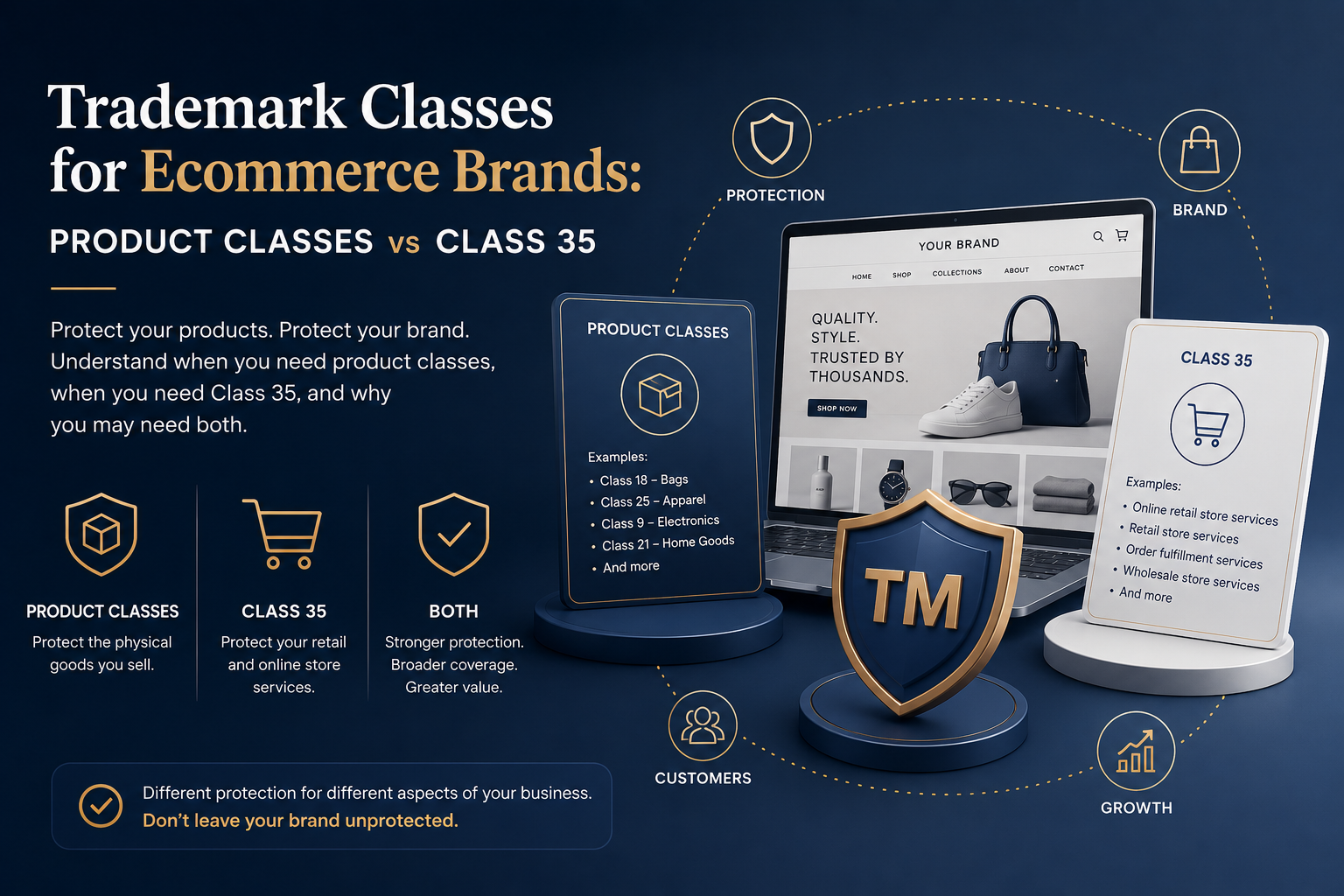
The USPTO filing fee is $350 per class of goods or services. A "class" is a category of products or services your trademark will cover — for example, clothing is one class and cosmetics is another. If your mark covers both, you'll pay for two classes. The fee is paid directly to the government and is non-refundable, even if the application is later refused.
Am I able to get a refund?
USPTO filing fees are non-refundable once your application is submitted, even if the trademark is later refused. However, Trademark Factory® is known for its Guaranteed Result for a Guaranteed Budget™ packages — which do offer a full refund if we determine your trademark is registrable and it still receives a final refusal. This guarantee is unique to Trademark Factory and protects you from the typical financial risk of the trademarking process.
How long does the USPTO processing take?
On average, the USPTO takes 12–16 months to review and approve a new trademark application. Some applications move faster if there are no issues, while others may take longer if an examiner raises questions or if anyone files an opposition. The timeline also depends on whether you filed as "in use" or "intent to use."
Trademark registration is not quick — but securing exclusive rights to your brand is well worth the wait.
Can I make changes to the mark after it has been filed?
Not really. The USPTO doesn't allow major changes to a trademark after it's filed. You can correct minor mistakes (like a typo or missing punctuation), but you can't alter the name, design, or logo in a way that changes how the mark looks or sounds. If you want to use a new version, you'll need to file a fresh application. This ensures the record stays accurate and clear for legal protection.
What is an Office Action?
An Office Action is a letter from the USPTO examiner explaining why your application can't move forward yet. It may point out legal issues (like descriptiveness or similarity to another mark), missing information, or formatting problems. In the U.S., you typically have three months to respond, otherwise your application may be considered abandoned. Some Office Actions are simple and just require small corrections. Others raise more complex legal issues that need detailed responses supported by facts and evidence. Responding properly is crucial — it's your chance to show the USPTO why your trademark should be approved.
Where can I check the status of my application with the USPTO?
You can track your trademark anytime using the USPTO's TSDR system (Trademark Status and Document Retrieval) at tsdr.uspto.gov. Enter your serial number to see updates, examiner notes, and deadlines.
However, Trademark Factory® clients don't have to dig through TSDR. We provide a Client Cabinet where you can see the status of all your trademarks at a glance — including what's done, what's coming up, and whether anything needs your attention. It's the easiest way to stay on top of your applications without manually checking every detail.
How do I keep my mark protected after registration?
Registering your trademark is just the beginning — keeping it protected means using it consistently and renewing it on time. In the U.S., you must file maintenance documents between the 5th and 6th anniversary of your trademark registration, again at the 10-year mark, and every 10 years after that. Always monitor for infringement and act quickly if someone uses a confusingly similar mark. For example, if you own "GlowSkin," you are expected to enforce your brand and send a cease-and-desist letter to a new "GlowSkynn" brand. Regularly using your mark in commerce and enforcing your rights keeps it strong.
Why do trademarks get refused?
The USPTO can refuse a trademark for many reasons. The most common is likelihood of confusion — when your mark looks or sounds too much like an existing one. Other reasons include being too descriptive ("Tasty Pizza"), generic ("Computer Store"), or deceptive ("Organic Silk" for synthetic fabric). Marks that contain offensive language, government symbols, or misleading claims are also refused. A professional search and attorney review before filing can help avoid these pitfalls.
What does my description need to include?
Your trademark description must clearly explain the goods or services associated with your mark. Be specific but concise. For example, instead of saying "clothing," say "men's and women's t-shirts and hoodies." The USPTO uses these descriptions to classify your mark correctly. If it's too vague or overly broad, the USPTO may refuse or delay your application. It's best to review the USPTO's Acceptable Identification of Goods and Services Manual when preparing your description.
If you're filing through Trademark Factory®, we prepare this for you and ensure your description meets USPTO requirements.
Why do I need to register a trademark when a common law trademark may already exist?
A common law trademark only helps you after enough customers recognize your brand as the source of your products or services — and even then, the protection is limited to the small geographic area where that recognition exists. Common law rights are also hard to prove and expensive to enforce. By contrast, federal registration gives you: nationwide ownership from the start, the right to use the ® symbol, public notice of your rights, and much stronger and easier enforcement. If you rely only on common law rights, someone else can register the same (or similar) brand federally and block your expansion, even if you were using it first. Registering your trademark prevents that and gives your brand room to grow securely.
Who holds the ultimate right to use and registration?
A federal trademark registration certificate gives the owner a legal presumption of ownership and validity. In other words, the law assumes the person named on the certificate is the rightful owner of the brand. This presumption can be challenged at first — but once the mark becomes incontestable (after several years of proper use and filings), that challenge becomes extremely difficult.
Even if someone claims they used the mark earlier, they must prove that their use was significant enough for customers to actually recognize the brand. And even if they succeed, their rights are usually limited to only the small geographic area where they were known — while the federal registrant owns the rights everywhere else in the country.
Bottom line: registration is what secures nationwide protection — and prevents someone from boxing you into a tiny local territory.
Should I trademark my logo as well?
Trademarking your brand name is always the most important step. Names rarely change, and without owning the name, owning the logo alone doesn't give you meaningful control over your brand. However, if your logo is unique and is used by customers to recognize your business, you should trademark it separately. Word marks protect the name, while design marks protect the visual style. For example, Nike has a word trademark for "NIKE" and a design trademark for the swoosh. Registering both ensures full coverage — even if someone copies your design but changes the wording. Just note that if your logo changes in the future, you'll need to re-file to protect the updated version.
What category do I use for my product/service?
The USPTO organizes trademarks into 45 classes — 34 for goods and 11 for services. For example, clothing is Class 25, while online education services are Class 41. Picking the right class is important because your protection only applies within that category. If you later decide to also sell candles (Class 4) or jewelry (Class 14), you'll need to file additional classes.
When you speak with our Trademark Strategy Advisor and legal team, be sure to explain what your business does now and what you plan to offer in the next 2–3 years, so we can craft a list of goods and services that accurately fits your business and future growth.
Is my web address protected or do I need to register it as well?
Owning a domain name does not give you trademark rights. You can trademark a name that includes ".com," but the USPTO usually ignores the ".com" portion and examines the brand name itself. So if your brand is distinctive enough to be registered as a trademark without ".com," you don't need to trademark the domain version separately. If someone ever tries to take or misuse your domain, you can use the UDRP process to reclaim it if you own the trademark.
The best approach is simple: keep your domain registration active and renewed, and register your brand as a trademark to protect the name legally. This way, you control both the web presence and the legal rights to the brand.
Do plurals of my trademark need to be registered separately?
No, you don't need to register every plural form separately. Trademark protection covers reasonable variations — like "Apple" and "Apples." However, if the plural changes the meaning or creates a new impression, it may require a separate application. For example, "Champion" and "Champions" might represent different products or teams. Generally, consistency in use helps keep your mark clear and enforceable without needing multiple filings.
What happens if someone is infringing?
If someone uses a mark that's confusingly similar to yours, it's called infringement. The first step is usually to send a cease-and-desist letter, explaining your rights and asking them to stop. If they don't comply, you can file a lawsuit in federal court. In some cases, online platforms (like Amazon or Instagram) allow you to report infringing content directly. Taking action quickly is essential — letting others use your mark unchecked can weaken your protection.
Can I sell, license or assign my mark?
Yes! Trademarks are considered intellectual property, which means you can sell (assign) or license them just like physical assets. Many brands do this to expand or franchise. For instance, Disney licenses its characters to toy manufacturers. When selling or licensing, it's crucial to have a written agreement specifying rights, territory, and duration. The USPTO also requires filing an "assignment" record to officially transfer ownership. Selling your trademark can bring in revenue, but always ensure the buyer maintains the same quality standards — otherwise, it could weaken your brand's reputation.
What is software classified as?
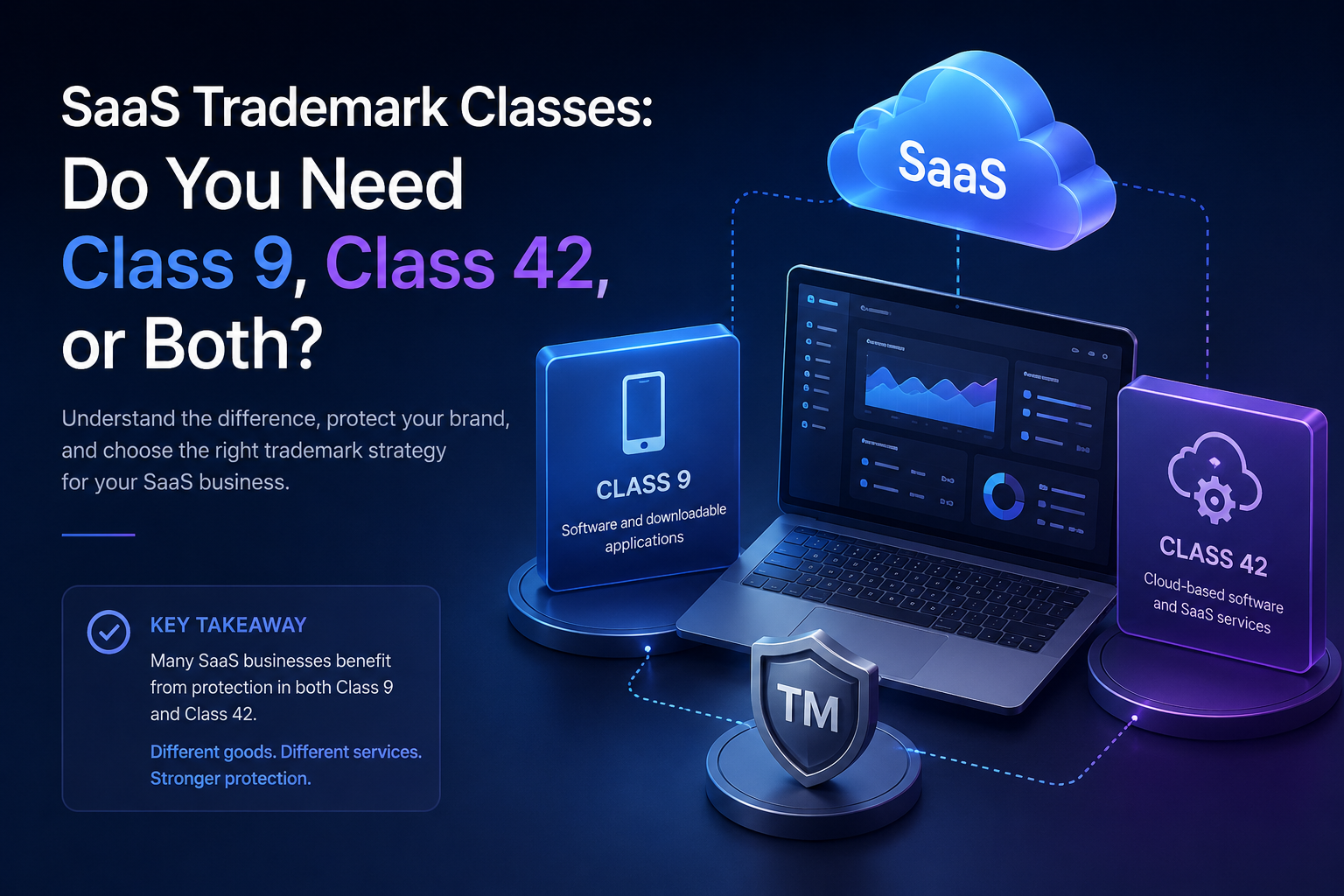
Software can fall under several trademark classes, depending on its function. Generally, downloadable software (like apps or programs) is in Class 9, while software as a service (SaaS) belongs in Class 42. For example, Microsoft Office (downloadable) would be Class 9, and Google Workspace (cloud-based) would be Class 42. The correct class ensures your trademark protects the right type of product. Misclassification could delay or even block your registration.
Can I trademark my book?
You can't trademark the title of a single book, but you can trademark the name of a series. For example, "Harry Potter" is a registered trademark because it represents a series, not just one title. If your book title becomes a brand — like "Chicken Soup for the Soul" — then it can qualify. However, copyrights, not trademarks, protect the actual text and story. A trademark only protects the brand identity related to the books (like merchandise, events, or spin-offs).
Do I have to be a U.S. citizen to register a mark in the United States?
No. You do not need to be a U.S. citizen to register a trademark with the USPTO. Anyone from any country can apply, as long as the mark is either already in use in U.S. commerce or there is a real intent to use it in the U.S. However, non-U.S. applicants are required to file through a U.S.-licensed trademark attorney. This is to ensure the application meets U.S. legal standards. Trademark Factory® works with some of the most experienced U.S. trademark attorneys to file and manage U.S. applications for our clients, so American and international businesses can protect their brands in the United States with confidence.
Is a Federal Registration valid outside of the U.S.?
A U.S. federal trademark registration only protects your mark within the United States. If you want protection in other countries, you must file there as well — either country by country or through international filing systems like the Madrid Protocol. For example, a U.S. trademark won't stop someone in France or Australia from using a similar name unless you secure rights in those regions too. Many businesses register in the U.S. first and then expand internationally once the brand begins to grow.
What happens if someone files the same name in another country?
Trademark rights are territorial, meaning they only apply in the countries where the mark is registered (or in some cases, widely used and recognized). If someone in another country registers your brand name before you, they may legally own the rights in that country, even if you already have the trademark in the U.S.
A well-known example is Burger King: the brand didn't register in Australia early enough, and someone else secured the rights first. As a result, Burger King is forced to operate under a different name there — Hungry Jack's.
Registering your brand internationally early — especially through systems like the Madrid Protocol — helps prevent others from locking you out of markets you may want to expand into.
Can I use my trademark in other countries before registering there?
Technically yes, but it's risky. Only a handful of countries recognize "first to use," while others follow a strict "first to file" rule. That means whoever files first gets ownership — even if you've used the mark before. For example, China operates on a first-to-file basis, so foreign brands often lose their names to local registrants. To stay safe, it's best to file for international protection before launching abroad.
What if I change my business name or logo later?
If you significantly change your name or logo, you'll need to file a new trademark application. The USPTO treats each mark as unique, and your protection only applies to the specific version you registered. Small updates (like minor color or layout adjustments) may still fall under the original mark if the overall design remains recognizable.
For example, Starbucks has refreshed its mermaid logo several times. While some of those updates could probably still be covered under older registrations, Starbucks still files new trademark applications for each redesign — and they do it before announcing the change. This ensures uninterrupted protection.
If you change your name entirely, that always requires a new registration.
Can I lose my trademark?
Yes — trademarks can be canceled or abandoned if not properly maintained. If you stop using the mark in commerce, fail to file renewals, or allow it to become generic, you can lose your rights. For example, "Aspirin" and "Escalator" were once trademarks but became generic due to overuse. Always use your mark consistently and enforce it when others misuse it. Consistent brand management keeps your rights alive.
What's the difference between a Trademark and a Brand?
A brand is the overall image, reputation, and emotion your business creates — what people feel when they think of you. A trademark is the legal protection for the symbols, names, or phrases that represent that brand. For instance, "Apple" as a brand represents innovation and design; the trademark protects the logo and name so competitors can't use them. In short, a trademark is the legal shield, and your brand is the emotional connection behind it.