

A trademark specimen is real-world evidence showing how a mark is used with the goods or services listed in an application. When you upload the evidence, you should identify what it is and explain how it connects the mark to those goods or services.
The description does not rescue an unacceptable specimen. It helps the examining attorney understand acceptable evidence quickly and accurately. A good description is specific, factual, and consistent with what is visible in the submitted image or webpage.
What the USPTO means by a specimen
The drawing in a trademark application shows the mark you want to register. The specimen shows how the public actually encounters that mark in commerce.
For goods, common specimens include the mark on the product, packaging, a label or tag attached to the product, or a point-of-sale webpage. For services, common specimens include a website, advertisement, brochure, business sign, or other material that directly associates the mark with the identified services.
A use-in-commerce application generally submits a specimen with the application. An intent-to-use application submits evidence later through an Amendment to Allege Use or Statement of Use. The USPTO generally requires at least one specimen for each class, and it may request additional evidence.
What to write in the specimen description
Use a short sentence that answers three questions:
- What is the specimen?
- Where does the mark appear?
- How does it show the listed goods or services?
A useful formula is:
The specimen is a [photograph/screenshot/copy] of [the product, packaging, tag, webpage, sign, or promotional material] showing the mark [location] in connection with [specific goods or services].
Do not write a conclusion such as “This proves trademark use” without describing the actual evidence. Do not claim a feature that is not visible.
Specimen description examples for goods
Mark on the product
Example: “The specimen is a photograph of the applicant’s reusable water bottle showing the mark printed on the front of the bottle.”
This works when the product and the mark are both visible and the use appears genuine.
Label or hangtag
Example: “The specimen is a photograph of a hangtag attached to the applicant’s T-shirt, with the mark displayed on the tag.”
Show the tag attached to the goods or enough context to establish that it is a real product label, not a detached design proof.
Product packaging
Example: “The specimen is a photograph of the retail box for the applicant’s wireless headphones, showing the mark on the front panel and the headphones identified on the packaging.”
The packaging should identify or clearly contain the relevant goods.
Ecommerce product page
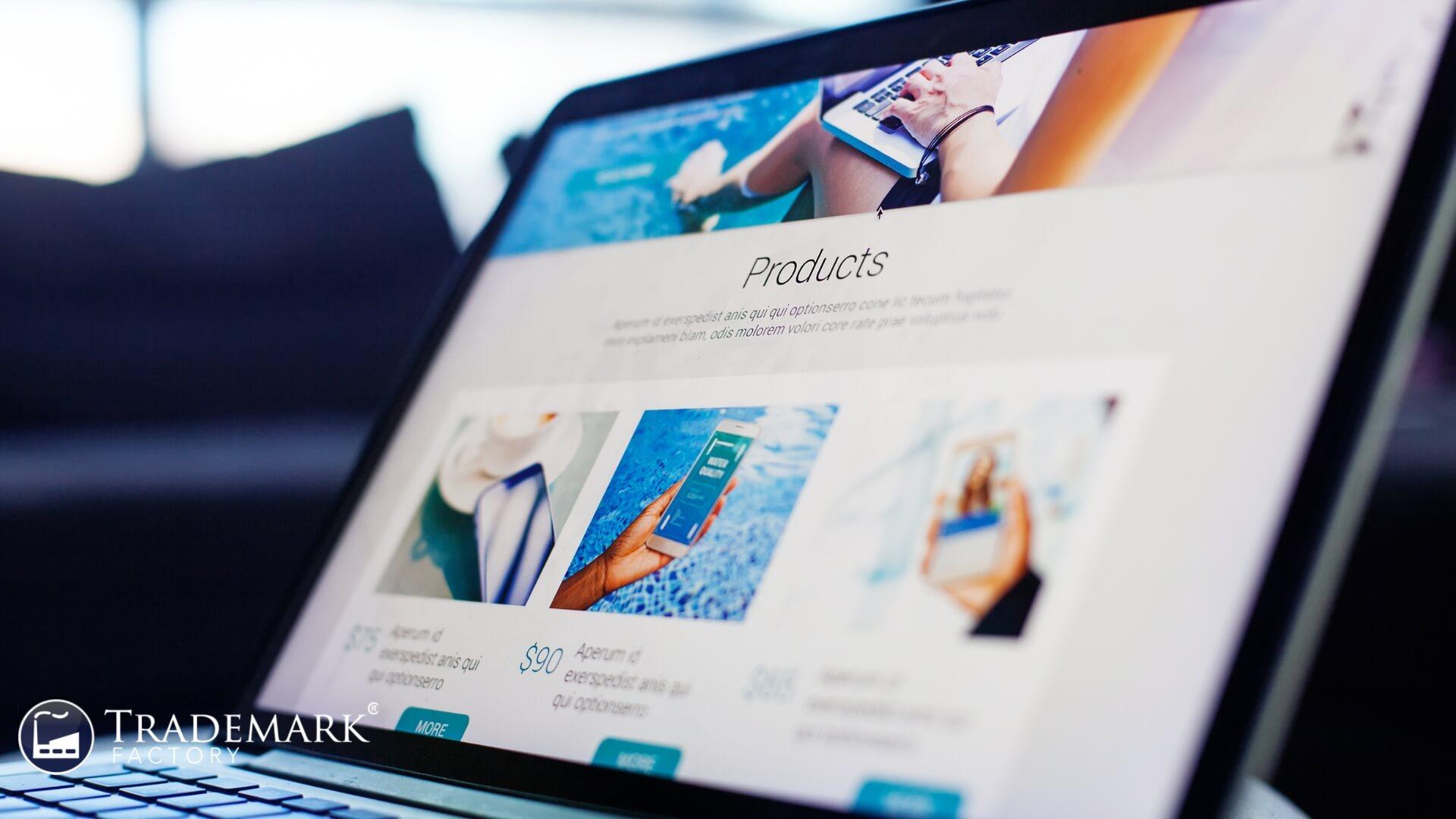
Example: “The specimen is a screenshot of the applicant’s online product page showing the mark next to the identified backpack, its price, and an Add to Cart button. The screenshot includes the page URL and access date.”
For a webpage display associated with goods, the page should connect the mark to the goods and provide a way to purchase or order them. General advertising without ordering information is usually not enough for goods.
Downloadable software
Example: “The specimen is a screenshot of the download page for the applicant’s mobile application, showing the mark as the application name and a button through which users can download the software. The URL and access date appear on the submission.”
Specimen description examples for services
Service website
Example: “The specimen is a screenshot of the applicant’s website showing the mark in the header and describing the applicant’s business consulting services. The screenshot includes the URL and access date.”
The page should do more than display the mark. It should create a direct association between the mark and the services.
Advertisement or brochure
Example: “The specimen is a copy of a brochure showing the mark on the cover and advertising the applicant’s residential landscaping services.”
Sign at the place of service
Example: “The specimen is a photograph of exterior signage at the applicant’s restaurant, showing the mark above the entrance where the restaurant services are provided.”
SaaS platform
Example: “The specimen is a screenshot of the applicant’s website showing the mark and offering temporary use of online, non-downloadable project-management software. The URL and access date are supplied.”
The service wording visible on the page should align with the services listed in the application.
Webpage specimen requirements
A webpage specimen must include the URL and the date the page was accessed or printed. The information can appear on the screenshot or be entered in the filing where the specimen is submitted. Preserve a full-page capture and the original file in your records.
Avoid cropping away the product name, price, purchasing control, service description, mark, URL, or date. The examiner needs enough context to identify the specimen, the mark, and the relevant goods or services.
What not to submit
The following frequently create specimen problems:
- a digitally created mockup showing how packaging may look in the future;
- a printer’s proof or label design that has not been used in commerce;
- a product photograph with the mark digitally added;
- a business card that does not identify the relevant services;
- a social post that shows the mark but not the listed goods or services;
- general advertising for goods with no point-of-sale information;
- an invoice or internal document that does not show consumer-facing trademark use;
- a screenshot missing its URL or access date; or
- evidence that shows a materially different mark from the application drawing.
The USPTO may investigate evidence that appears digitally altered or created only for the filing. Never manufacture a transaction or modify an image to make it look like marketplace use.
A submission checklist
Before filing, confirm that:
- the specimen shows the same mark as the drawing;
- the mark functions as a source identifier rather than merely decoration;
- the identified goods or services are visible or clearly described;
- the evidence reflects real use in commerce;
- the use occurred by the relevant filing deadline;
- every class has appropriate evidence;
- webpage evidence includes the URL and access date;
- the image is legible and contains enough context; and
- the description states exactly what the evidence shows.
What happens if the specimen is refused?
The USPTO may issue an Office Action if the evidence is unacceptable, does not match the identified goods or services, appears to be a mockup, or lacks required information. The available response depends on the filing basis, the reason for refusal, the dates, and whether acceptable substitute evidence existed by the relevant deadline.
Do not automatically upload a new image without analyzing whether it qualifies and whether it was in use at the required time. An incorrect response can create a declaration problem or make the refusal harder to resolve.
Trademark Factory can review a proposed specimen before filing, prepare a Statement of Use, or evaluate a specimen-related Office Action. If a deadline is running, obtain advice early.
Do I need to put a special label on a physical product specimen?
No special filing label is required. The evidence itself must show acceptable use, and the electronic submission should identify what the specimen is.
How long should the specimen description be?
Usually one precise sentence is enough. State the type of evidence, where the mark appears, and the goods or services it shows.
Can I use an Amazon or Shopify product page?
A marketplace or store page may work for goods when it shows the mark associated with the goods and provides a way to purchase or order them. Include the URL and access date.
Can I submit a mockup before my product launches?
No. A mockup does not show actual use in commerce. An intent-to-use filing allows an applicant to file before launch and submit real evidence later.
Can one specimen cover several classes?
It may be possible when the same evidence independently shows acceptable use for each class, but each class must be supported. Explain the connection clearly and be prepared for the USPTO to request more evidence.
' width='400' height='200'/%3E%3C/svg%3E)