
If you’re building a clothing brand, launching a sneaker label, selling merch online, or even starting a small Etsy store with handmade apparel — there’s a very high chance your trademark will fall under Trademark Class 25.
And honestly? That makes sense.
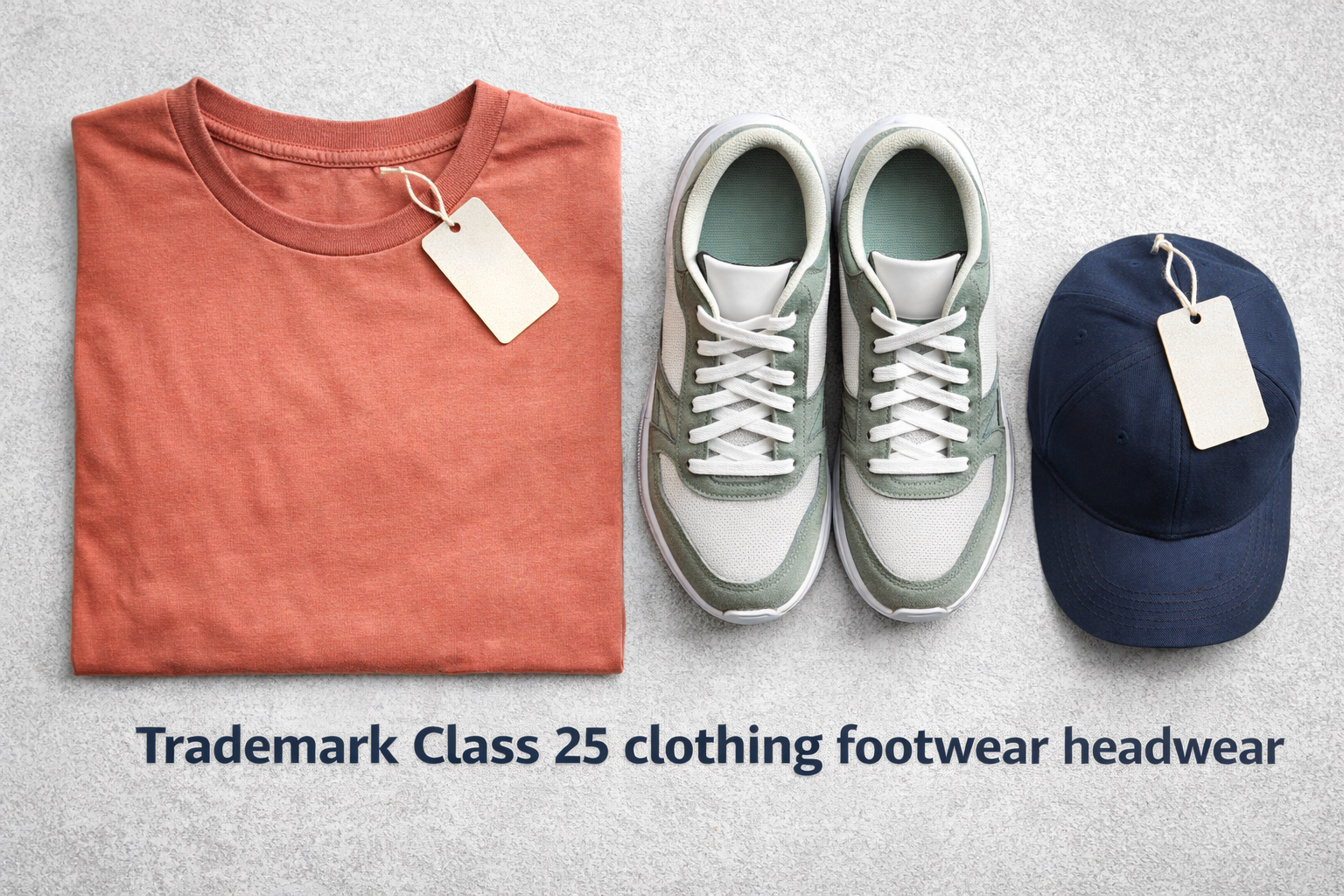
Class 25 covers some of the most common products people sell:
clothing, shoes, and headwear.
Which also means it’s one of the most crowded and competitive trademark classes at the USPTO.
But here’s what most brand owners don’t realize until it’s too late:
Trademark Class 25 is not “everything fashion.”
It’s not “anything you can sell in a clothing store.”
And it definitely isn’t “anything your brand might sell someday.”
Choosing the wrong class (or missing an important additional class) can lead to:
- delays
- Office Actions
- extra fees
- or worse: a trademark that technically registers, but doesn’t protect what you actually sell
This guide breaks down what Trademark Class 25 covers, what it doesn’t, and how to choose the right filing strategy — especially if you’re selling online.
What Does Trademark Class 25 Cover?
Trademark Class 25 is part of the Nice Classification system, which is used by the USPTO and most countries worldwide. It divides trademarks into 45 classes:
- Classes 1–34 = goods (physical products)
- Classes 35–45 = services
Class 25 sits right in the middle of the goods categories, and it covers:
✅ Clothing
✅ Footwear
✅ Headwear
So if your trademark will appear on:
- a clothing label
- a shoe box
- a hat tag
- a hang tag
- or a product listing page selling apparel
…then Class 25 is usually the first class you’ll look at.
But “usually” is doing a lot of work here.
Because the USPTO doesn’t classify based on your brand vibe.
They classify based on what the product actually is, and how it’s defined in their system.
Examples of Goods in Trademark Class 25 (Real, Practical List)
Let’s make this very real-world.
Here are common products that belong in Trademark Class 25, broken down by category.
Clothing / Apparel (Class 25)
- T-shirts
- Hoodies
- Sweatshirts
- Jackets
- Coats
- Dresses
- Skirts
- Jeans
- Pants
- Shorts
- Leggings
- Socks
- Underwear
- Lingerie
- Swimwear
- Pajamas
- Yoga clothing
- Sports uniforms
- Work uniforms
- Gloves (as clothing)
Footwear (Class 25)
- Sneakers
- Boots
- Sandals
- Flip-flops
- Slippers
- Athletic shoes
- Dress shoes
- Hiking boots
- Running shoes
- Heels
Headwear (Class 25)
- Baseball caps
- Beanies
- Bucket hats
- Visors
- Berets
- Headbands
- Bandanas (as headwear)
The Biggest Confusion: “Fashion” ≠ Trademark Class 25
This is the part where a lot of business owners get tripped up — especially e-commerce sellers.
Because most modern brands aren’t “just clothing.”
They’re more like lifestyle brands.
For example:
- a streetwear brand might sell hoodies + bags + phone cases
- a luxury brand might sell clothing + jewelry + perfume
- a gym brand might sell leggings + supplements + coaching
And while all of those products are part of your brand, they don’t all belong in Class 25.
What Is NOT Included in Trademark Class 25?
Here are the most common “fashion-related” products and services that are not Class 25 — even though people assume they are.
❌ Bags, wallets, backpacks
Most of these fall under Trademark Class 18.
❌ Jewelry, watches, precious metals
Typically Trademark Class 14.
❌ Sunglasses and eyewear
Often Trademark Class 9 (because they are treated as optical goods).
❌ Perfume, skincare, cosmetics
Usually Trademark Class 3.
❌ Online store / retail services
That’s a service — usually Trademark Class 35.
This is where a lot of clothing brands accidentally under-protect themselves.
| You sell… | Likely class | Why |
|---|---|---|
| T-shirts, hoodies, pants | Class 25 | Clothing goods |
| Sneakers, boots, sandals | Class 25 | Footwear goods |
| Hats, caps, beanies | Class 25 | Headwear goods |
| Bags, backpacks, wallets | Class 18 | Leather goods category |
| Jewelry, watches | Class 14 | Jewelry category |
| Perfume, skincare | Class 3 | Cosmetics category |
| Sunglasses | Class 9 | Optical goods |
| An online clothing store | Class 35 | Retail services |
Common Mistakes When Filing a Trademark in Class 25
Trademark Class 25 looks simple on paper, but in practice it’s where we see some of the most expensive mistakes.
Here are the big ones.
Mistake #1: Filing for “clothing” but selling way more than clothing
A lot of people file a trademark like this:
“Clothing” — Class 25
But in reality they sell:
- clothing
- hats
- bags
- jewelry
- phone cases
- cosmetics
So what happens?
They end up with a registration that protects only part of what they actually sell.
Mistake #2: Forgetting that retail services are a different class
If you run a Shopify store or an Amazon brand, you’re not only selling products — you’re providing retail services.
This is why Class 25 + Class 35 is one of the most common multi-class strategies for clothing brands.
And it’s also one of the most common things people miss.
Mistake #3: Using wording that doesn’t match how you sell the goods
USPTO cares about:
- what the goods are
- how they’re described
- and whether your proof of use matches
If your goods are “athletic apparel,” but your specimen shows a hat, you can get a refusal.
Mistake #4: Filing without a trademark search
This one is huge.
Class 25 is one of the most crowded classes because clothing brands are everywhere.
If you file without a proper trademark search, you risk:
- a refusal for likelihood of confusion
- wasted filing fees
- or being forced to rebrand after you’ve already invested in marketing
| Business model | What you sell | Typical classes |
|---|---|---|
| Shopify clothing brand | Apparel + hats | Class 25 (+ Class 35 often) |
| Streetwear brand | Apparel + bags + merch | Class 25 + 18 + 35 |
| Beauty + fashion brand | Apparel + perfume | Class 25 + 3 (+ 35) |
| Amazon private label | Apparel + phone cases | Class 25 + 9 (+ 35) |
| Luxury label | Apparel + jewelry | Class 25 + 14 |
Do You Need Multiple Classes If You Sell Clothing?
Sometimes yes, sometimes no.
But if you’re building a brand (not just selling one product), it’s very common.
Here’s a simple way to think about it:
Class 25 protects:
the products you sell
Other classes protect:
the other categories your brand touches
For example:
- You sell hoodies → Class 25
- You sell backpacks → Class 18
- You sell jewelry → Class 14
- You run a retail store → Class 35
So if your brand is growing, multi-class filing is often a smart move.
How the USPTO Reviews Trademark Classes (and Why It Matters)
When you file your trademark application, the USPTO examining attorney reviews:
- the class(es) you chose
- the wording of your goods/services
- whether your specimen proves real use
- whether your trademark conflicts with earlier marks
And if something doesn’t line up, you may receive an Office Action.
This is where a lot of clothing brands lose time — because even a simple mismatch can cause delays.
Also important:
USPTO filing fees are per class, and they are usually non-refundable.
So if you file the wrong class and have to start over, it can cost you twice.
How to Choose the Right Trademark Class for a Clothing Brand
If you want a practical checklist (not legal jargon), here’s the best approach:
Step 1 — Write down what you sell today
Be honest. Not “what you might sell later.”
What you sell right now.
Step 2 — Identify what category each product belongs to
If it’s wearable: Class 25
If it’s an accessory: maybe Class 18 or 14
If it’s beauty: Class 3
If it’s tech: Class 9
Step 3 — Decide whether retail services matter for you
If your brand is mainly online, Class 35 might be relevant.
Step 4 — Think about the next 12 months
If you’re launching bags in 6 months, filing now in Class 18 might make sense.
Step 5 — Don’t guess if the brand is important
Class selection mistakes are one of the top reasons people end up refiling.
Helpful Resources (Official Links)
Here are the most useful official resources for confirming Class 25 and related goods:
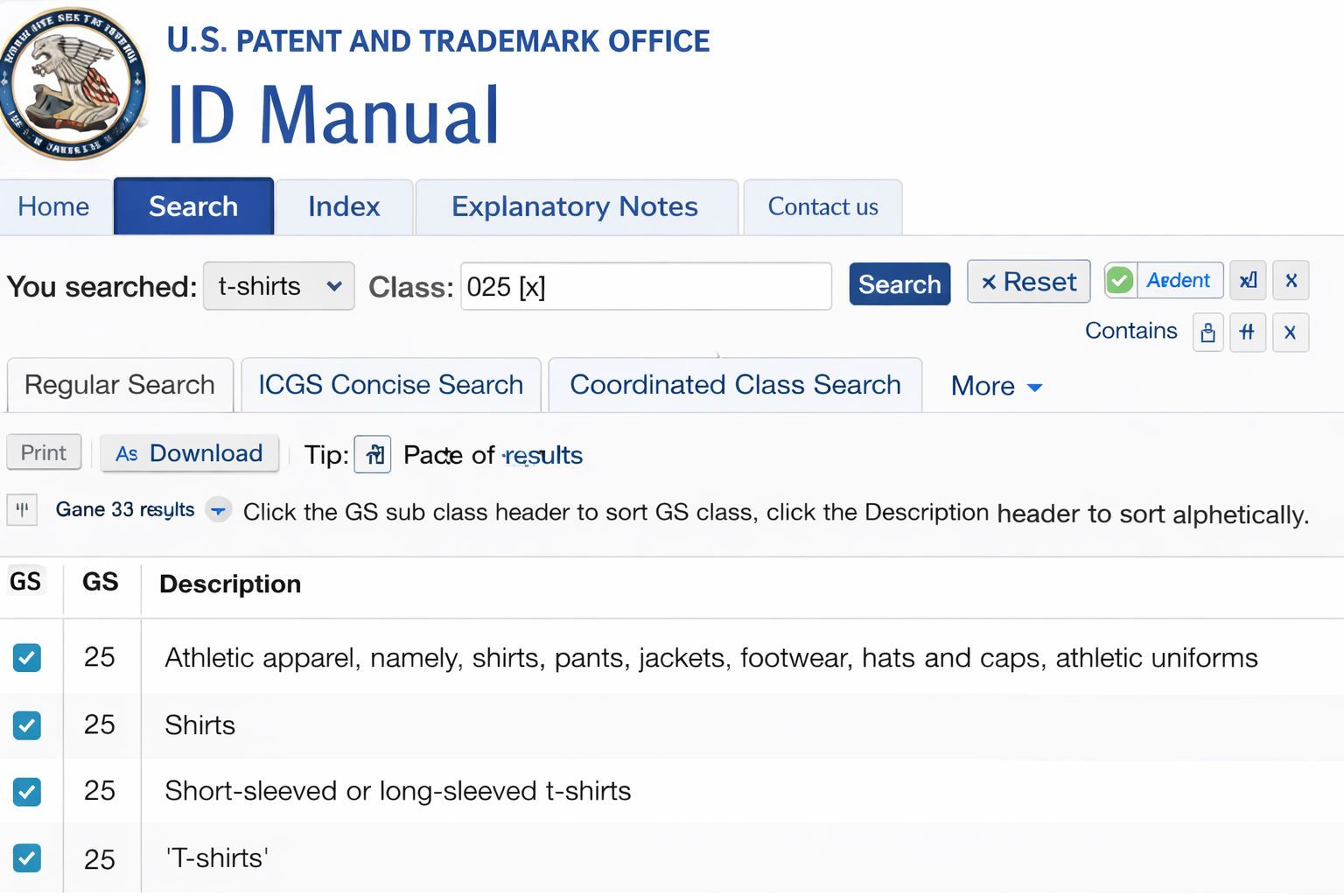
- USPTO Trademark ID Manual
- USPTO Trademark Basics
- WIPO Nice Classification
- USPTO Trademark Application Guide
FAQ About Trademark Class 25
What is Trademark Class 25?
Trademark Class 25 is the category in the Nice Classification system that covers clothing, footwear, and headwear. It’s commonly used by apparel brands, shoe brands, and hat brands filing with the USPTO.
Does Trademark Class 25 include bags?
No. Bags, backpacks, wallets, and purses are typically filed in Trademark Class 18.
Does Trademark Class 25 include jewelry?
No. Jewelry and watches are usually Trademark Class 14.
Do I need Class 35 if I sell clothing online?
Possibly. If your business provides online retail services, Class 35 may apply in addition to Class 25. This is especially common for Shopify and Amazon sellers.
What happens if I choose the wrong class?
You may receive an Office Action or need to amend your application. In some cases, you may need to refile, and USPTO fees are usually not refundable.
Can I add another class later?
You can file a new application later, but you typically can’t expand an existing application the way people assume. Planning early is often cheaper.
Final Tip (for clothing brands)
If your brand is serious — meaning you’re investing in marketing, packaging, influencer deals, or retail growth — Class 25 should be filed with a strategy.
Because the most painful trademark stories usually start the same way:
“We filed quickly without thinking too much… and then the USPTO refused it.”
If you want to avoid that, your best move is to start with a search and class strategy review.
Ready to protect your clothing brand?
Start here:
Trademark Search & Assessment
' width='400' height='200'/%3E%3C/svg%3E)