

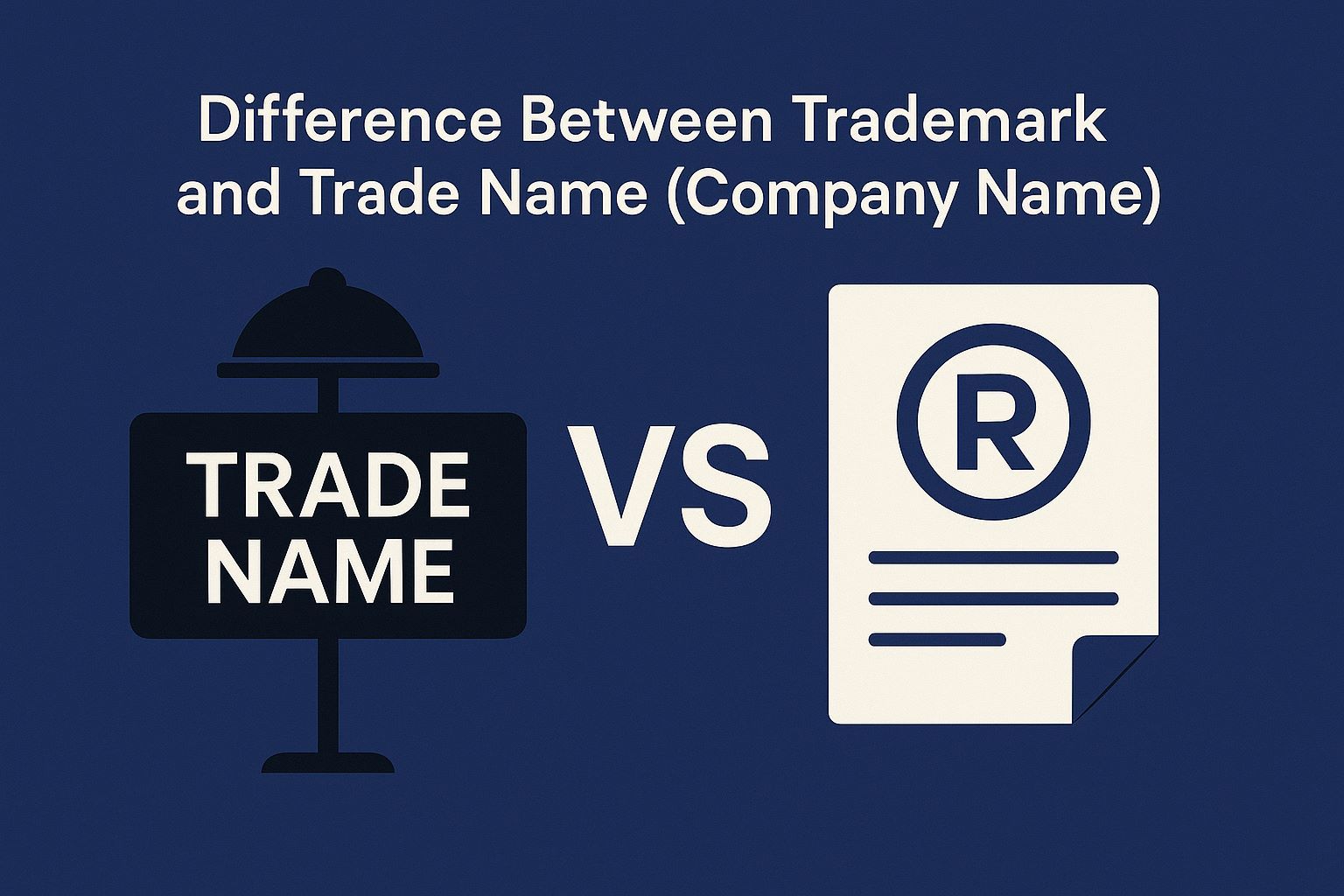
Many founders assume that once they’ve incorporated, their brand is protected. It isn’t. Understanding the difference between trademark and trade name (also called a company name) is essential if you want to protect how customers find—and remember—your business.
Quick Definitions
Trade name / company name
The legal name you register to form your business. It identifies you, the entity for banking, taxes, and contracts. It’s recorded with a corporate or business registry.
Trademark
A word, name, logo, slogan, or other sign that identifies the source of your goods or services in the marketplace. It’s recorded with a Trademarks/Intellectual Property Office and protects how you present your offer to consumers.
The Core Difference (Plain English)
- Trade name = who you are (the business).
- Trademark = what you sell (the brand customers see).
A company can legally operate many lines of business under one trade name. But a trademark protects specific names/logos as used for particular goods or services. That’s the crucial difference between trademark and trade name.
Side-by-Side Comparison
Why Incorporation Alone Isn’t Brand Protection
Registering a company does not grant trademark rights. Different offices apply different tests. You might form “North Coast Ventures Ltd.” and still be blocked from branding as NORTH COAST if someone already owns a confusingly similar trademark for overlapping goods/services.
Bottom line: If a name or logo appears on packaging, your site, or ads, treat it as a trademark and protect it.
Can a Company Name Become a Trademark?
Yes—if you use it as a brand. Many businesses trademark their company name because it appears on products/services. Protection comes from trademark use and registration, not from being your legal name.
Common Myths (Busted)
- “I incorporated first, so I own the brand.” Not necessarily. Trademark rights turn on use/registrability for defined goods/services.
- “I can stop others from using my company name anywhere.” Not without valid trademark rights in relevant categories/regions.
- “My logo is copyrighted, so I’m covered.” Copyright protects the artwork; it doesn’t replace trademark protection for branding in commerce.
What to Register—and When
- Always register your company name to create the entity.
- Additionally, register a trademark for any name, logo, or tagline you’ll use to sell goods/services.
- On a tight budget, prioritize the word mark (brand name), then add the logo.
Quick Starter Plan
- Choose a distinctive brand (avoid generic/descriptive terms).
- Run a comprehensive trademark search (not just a corporate name check).
- List accurate goods/services and select the right classes.
- File your trademark(s)—word mark first if prioritizing.
- Use consistently (match the registered form in marketing and packaging).
- Maintain and renew on schedule; expand coverage as you grow.
Short FAQs
Is my company name automatically a trademark?
No. Incorporation creates the legal entity; trademarks protect branding for specific goods/services.
Can I trademark my company name?
Yes, if it functions as a brand in commerce. File a word mark and consider a separate design mark for your logo.
Do I still need a company name if I have a trademark?
Yes—these systems serve different purposes. You need both.
What if there’s a conflict with an existing trademark?
You may need to rebrand or adjust scope. Always clear the mark before launch.
Key Takeaway
The difference between trademark and trade name is simple but critical: a trade name identifies the business, while a trademark identifies the product or service in the marketplace. Incorporation isn’t brand protection—file trademark applications for the names and logos your customers see.
Want predictable, start-to-finish help? TrademarkFactory® runs a comprehensive search and handles the whole process for a flat fee through to registration - schedule a free consultation now!
' width='400' height='200'/%3E%3C/svg%3E)