

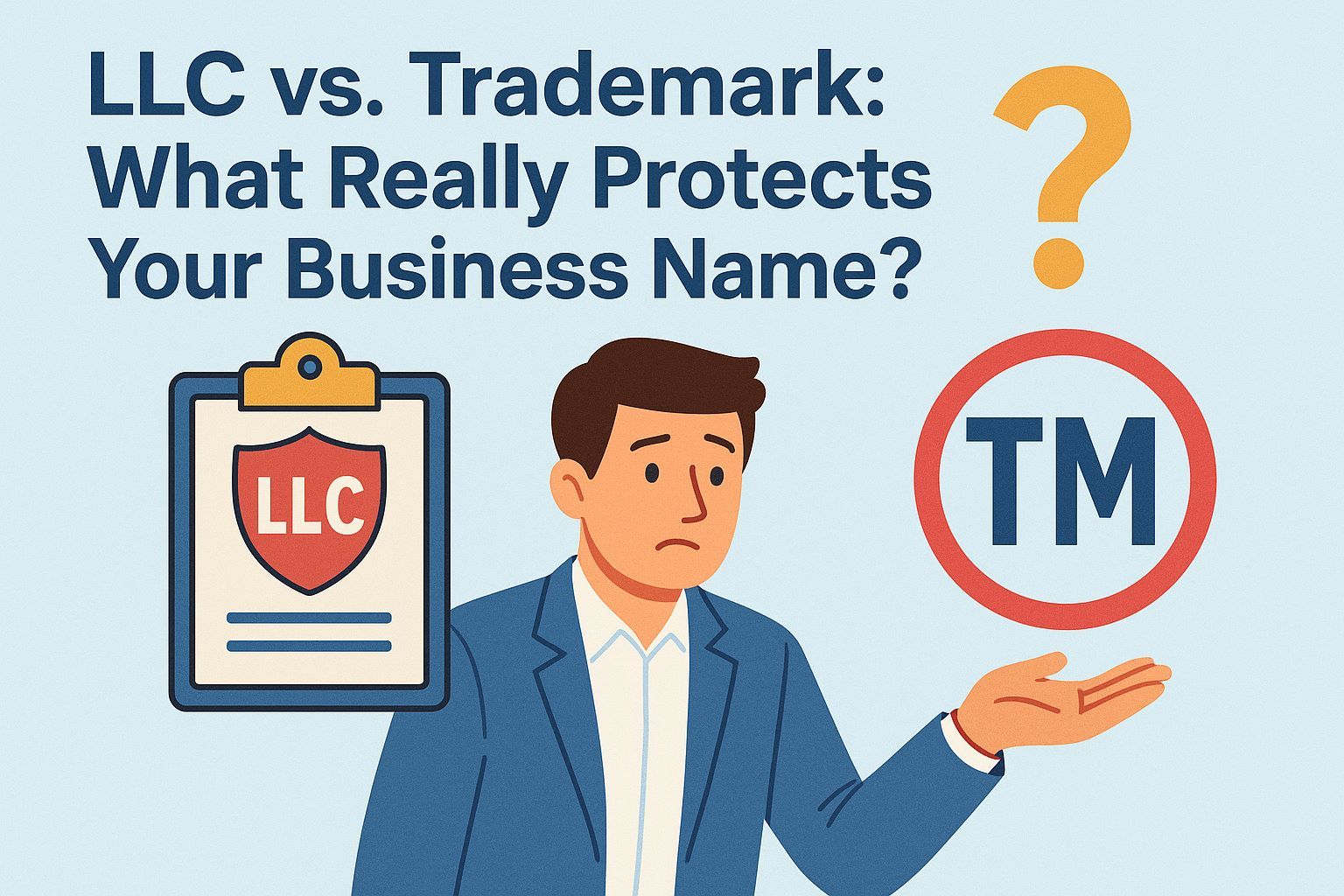
When starting a business, protecting your brand is just as important as launching your product or service. One of the most common questions new entrepreneurs ask is: Does forming an LLC protect my business name from being used by someone else?
The short answer: No, forming an LLC does not trademark your business name. To fully protect your name and brand identity, you'll need to take an additional step—registering a trademark.
Understanding the distinction between a business entity and a trademark is essential to building and safeguarding a long-lasting brand.
Is a Trademark the Same as an LLC?
While both are legal tools that support your business, they serve different purposes. An LLC (Limited Liability Company) is a business structure that offers personal liability protection for its owners. A trademark, on the other hand, protects your brand identity—your business name, logo, slogan, or other distinguishing marks—from being used by competitors.
So if you’re wondering, is a trademark and LLC the same?—they’re not. An LLC gives your business a legal presence; a trademark gives your brand legal protection.
Does an LLC Trademark Your Business Name Automatically?
Many business owners assume that once their LLC is registered with the state, their name is fully protected. Unfortunately, that’s not the case.
When you register an LLC, the state ensures no other entity in that state is operating under the exact same name. However, this does not stop another business—either in a different state or in a similar industry—from using a similar or even identical name.
Only a registered trademark can give you exclusive nationwide rights to your business name and prevent others from using it in ways that could harm your brand.
Business Name Registration vs. Trademark Registration
Registering a business name with your state is often required to operate legally. This step gives your company a legal identity and allows you to open a bank account, pay taxes, and enter into contracts. However, this does not provide brand protection.
A trademark, registered with the United States Patent and Trademark Office (USPTO), offers protection beyond your state borders. It ensures that your brand elements—name, logo, tagline—are legally recognized as yours, giving you the right to stop others from using confusingly similar branding.
Do I Need to Trademark My LLC?
If your brand name plays a critical role in how customers find, remember, or recommend your business, then yes—you need to trademark your LLC name.
Without a trademark, you may be forced to rebrand if another business secures federal rights to the name before you do. Even if your LLC is legally registered, someone else can obtain the trademark—and potentially prevent you from using your own business name nationwide.
For brand-driven businesses, a trademark is not optional; it's a foundational asset.
Should You Trademark Before or After Forming an LLC?
Timing matters, but what’s more important is that you complete both steps as early as possible. Some entrepreneurs ask if they should file a trademark before forming an LLC. While you can apply for a trademark with an “intent to use” basis, most business owners choose to form their LLC first to establish a legal entity and then proceed with trademark registration.
Regardless of the sequence, what matters is securing both the business structure and the brand protection your company needs.
Key Differences Between LLCs and Trademarks
Why Trademarking Matters More Than Ever
In today’s competitive landscape, a brand name is often your most valuable asset. It helps consumers remember you, trust you, and refer you. Without trademark protection, that brand equity is left exposed.
A registered trademark allows you to:
- Own your brand nationwide
- Prevent others from using similar names or logos
- Enhance your business value in the eyes of investors and buyers
- Take legal action against infringement
How to Register a Trademark for Your Business Name
Registering a trademark involves several steps, but the protection it provides is worth the effort:
- Conduct a trademark search
Before filing, make sure your name isn't already registered or too similar to an existing mark. - Determine the correct trademark class
This identifies the type of goods or services your brand represents. - File with the USPTO
Submit your application with all required information and pay the applicable fees. - Monitor the application process
The USPTO review process can take several months and may include an opposition period. - Maintain and renew your trademark
To keep your protection active, you’ll need to file maintenance documents and continue using the mark in commerce.
Final Thoughts: LLC and Trademark Work Together—But Aren’t the Same
To build a legally secure and recognizable business, you need both a strong foundation and solid protection. Forming an LLC gives your company a legal structure; trademarking gives your brand the protection it needs to grow without fear.
At TrademarkFactory, we help entrepreneurs and growing businesses protect what matters most—their brand. From business name clearance to full-service trademark registration, we guide you through every step so you can focus on what you do best: building your business.
Ready to protect your brand name the right way?
Let TrademarkFactory show you how easy trademarking can be, schedule a free consultation now!
FAQ:
- Does an LLC trademark your business name?
No. Forming an LLC registers your business name with your state, but it does not provide trademark protection. To secure exclusive rights to your name nationwide, you must file for a trademark with the United States Patent and Trademark Office (USPTO).
- Is a trademark and LLC the same thing?
They are not the same. An LLC is a legal business structure that offers liability protection. A trademark is intellectual property that protects your brand elements—such as your name, logo, or slogan—from being used by others.
- Do I need to trademark my LLC?
Yes, if you want to prevent others from using your business name or brand in the marketplace. Registering a trademark gives you enforceable legal rights to your name across the country, not just within your state.
- Should I file a trademark before forming my LLC?
It depends on your goals. Some businesses file a trademark application based on “intent to use” even before forming an LLC. However, most entrepreneurs form the LLC first, then file for a trademark. What matters most is securing both legal structure and brand protection early in the process.
- Can I have the same business name as another company in a different state?
Yes, state-level LLC registrations don’t prevent duplicate names across state lines. Only a federal trademark can prevent other businesses from using the same or a confusingly similar name nationwide.
- How long does it take to get a trademark?
The USPTO trademark process typically takes 8 to 12 months, depending on the complexity of the application and whether any objections or oppositions arise. Once registered, your trademark can last indefinitely, as long as it’s maintained properly.
- Can I trademark my logo or slogan?
Yes. You can trademark not only your business name but also your logo, slogan, and even product packaging—anything that distinguishes your brand in the market.
- What happens if someone else trademarks my business name first?
If another company registers a trademark for a name similar to yours, they may have the legal right to stop you from using it—even if you registered the name as an LLC in your state. That’s why it’s important to file for a trademark as soon as possible.
- Does a trademark cover my website domain name?
Not automatically. However, if your domain name is also your brand identifier and used in commerce, it may be eligible for trademark protection.
- How much does it cost to trademark a business name?
The cost varies depending on how many classes of goods or services you file under. Government filing fees typically start around $250–$350 per class. Working with a professional trademark service can help you avoid costly mistakes during the process.
' width='400' height='200'/%3E%3C/svg%3E)