Music Brand Licensing: How Musicians Can Earn More Through Trademarks
For many musicians, touring and streaming aren't enough to generate stable income. In today’s industry, the strongest artists don’t just sell music — they sell brands.
Your stage name, band name, logo, slogan, or symbol can become a powerful asset that generates income long after a song stops streaming. This is why understanding music brand licensing is essential for modern musicians.
Licensing allows you to legally permit others to use your brand in a controlled, profitable way. Whether it’s merchandise, endorsements, collaborations, digital products, or branded content, trademarks unlock income streams unavailable to unprotected artists.
This guide explains how licensing works, how musicians earn royalties, what types of licenses exist, and how to build a brand that scales globally.
What Is Music Brand Licensing?
Music brand licensing is the legal process through which a musician (the licensor) grants someone else (the licensee) the right to use their name, logo, or brand identity in exchange for payment — usually royalties.
Licensing allows artists to:
- monetize their brand without physical production
- scale merchandise without managing inventory
- collaborate with companies and designers
- expand into new markets and audiences
- protect brand usage under strict legal terms
- diversify income beyond live shows and streams
A trademark transforms your artistic identity into a business asset that others can legally pay to use.
Why Licensing Is a Powerful Revenue Stream for Musicians
Licensing is one of the most profitable ways to grow a music career because:
- it requires no upfront manufacturing
- partners handle production and distribution
- royalties create passive revenue
- licensing is scalable across markets
- collaborations boost brand exposure
- global merch deals can generate long-term income
Musicians who trademark their identity gain financial leverage: brands, promoters, fashion designers, toy companies, beverage companies, and digital creators can all license the musician’s branding.
How Musicians Earn Money Through Licensing
Musicians can license almost any brand asset they own. Some of the most common licensing opportunities include:
Merchandise Licensing
Your band name or logo can appear on clothing, accessories, jewelry, bags, posters, collectibles, and much more.
Brand Collaborations
Companies may license your name for product lines, limited editions, or co-branded releases.
Digital Licensing
Your branding can be used in:
- video games
- apps
- NFTs
- virtual concerts
- metaverse merchandise
Content Licensing
Brands may pay to use your identity in commercials, advertising campaigns, or cross-promotions.
Event Licensing
Festivals or venues may license your logo for official promotional material.
Licensing unlocks a wide spectrum of income streams — all based on the power of a protected brand.
Types of Licensing Agreements for Musicians
Licensing agreements vary depending on the rights, territory, and partner needs.
Here are the most common types:
Each model impacts revenue, partner expectations, and brand exposure.
Understanding Royalty Structures for Musicians
Successful licensing depends on clear royalty terms. Here are the most common royalty models:
Percentage Royalties (Most Common)
The musician receives a percentage of net sales.
Typical music brand royalty: 5–20% depending on the category.
Minimum Guarantees
The licensee must pay a guaranteed minimum royalty annually — even if sales are low.
Flat-Fee Licensing
A fixed fee paid once for the right to use the brand (used for short-term deals).
Hybrid Structures
Combination of percentage royalties, minimum guarantees, and upfront fees.
Royalties create recurring income while allowing partners to handle production and distribution.
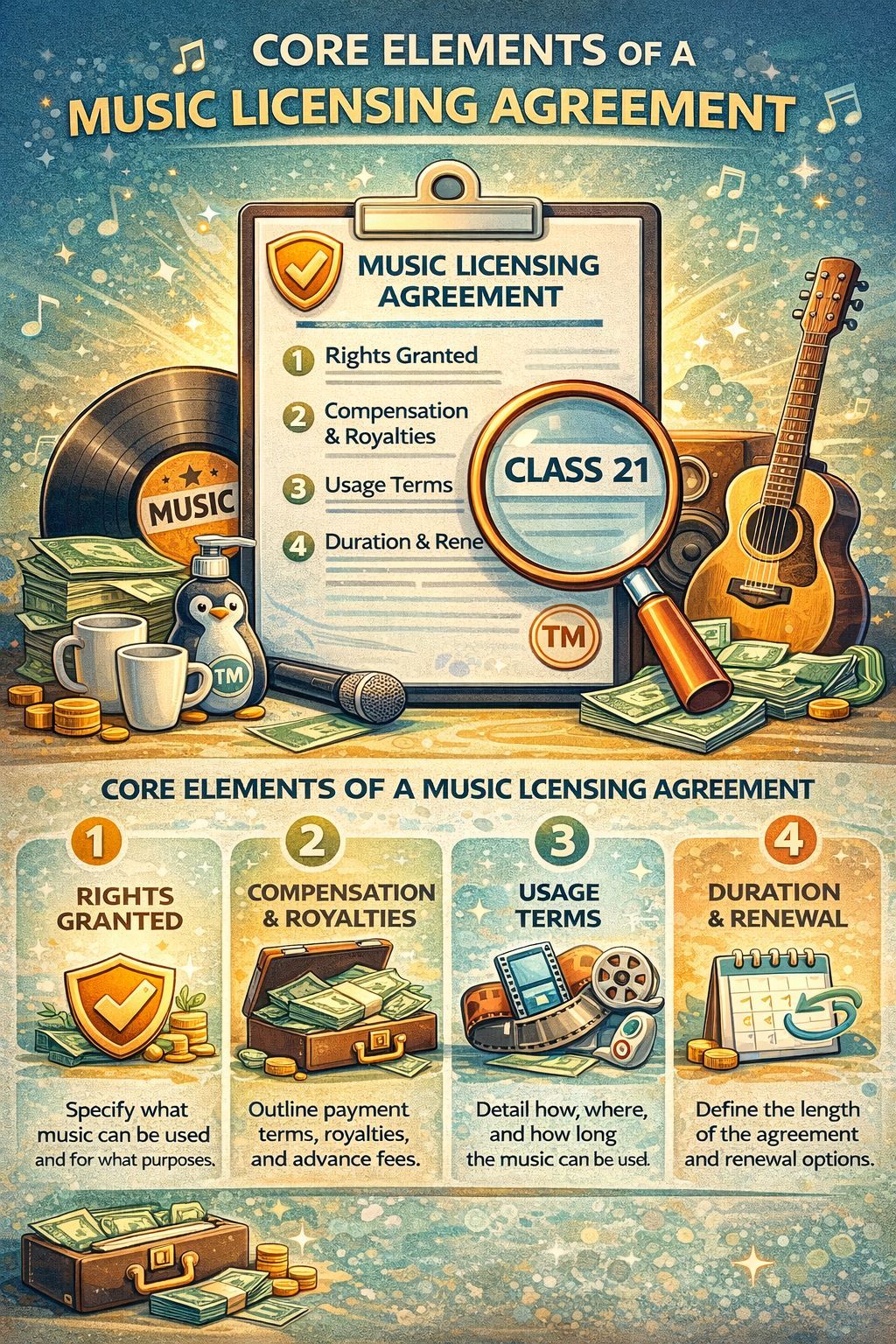
Key Elements of a Strong Music Licensing Agreement
A licensing agreement must clearly define all aspects of the partnership. The most important elements include:
- Territory — countries where the license applies
- Term — duration of the license
- Royalty Structure — percentage, guarantees, payment schedule
- Quality Control — ensuring products meet brand standards
- Product Approvals — what designs the artist must approve
- Distribution Channels — online, retail, global markets
- Intellectual Property Rights — ensuring trademark protection
- Termination Clauses — how to end the agreement if needed
A well-structured trademark-backed agreement protects both revenue and brand reputation.
Licensing Agreement Essentials
How Trademarks Strengthen Your Licensing Power
You cannot license what you don’t legally own.
A trademark gives musicians:
- exclusive rights to the band name
- control over logo usage
- leverage in negotiations
- the ability to license branding globally
- legal enforcement against counterfeits
- revenue through official merchandise deals
Without a trademark, you can’t stop unauthorized sellers — and brands will not partner with you.
Examples of Music Licensing Success
Many major artists build empires through licensing:
- KISS — one of the most licensed music brands in history
- BTS — global collaborations from clothing to tech
- Metallica — co-branded collections with fashion labels
- Snoop Dogg — licensed across food, fashion, tech, media
Independent artists can do the same on a smaller scale — as long as they protect their brand.
How Trademark Factory® Helps Musicians Build Licensing Success
Trademark Factory® provides:
- trademark search and analysis
- full trademark registration
- global licensing strategy
- attorney-led contract drafting
- negotiation support
- royalty structure consulting
- worldwide brand protection
- fixed-fee, guaranteed trademark services
👉 Book a Free Call to Build Your Music Licensing Strategy
👉 See How Trademark Factory® Helps Musicians Monetize Their Brands
FAQ — Music Brand Licensing
Do I need a trademark before licensing my brand?
Yes. You cannot license rights you do not legally own.
How much can musicians earn from licensing?
Anywhere from a few hundred dollars to millions, depending on popularity and category.
Can I license my stage name?
Yes — trademarks protect performer names as well as band names.
Are royalties negotiable?
Absolutely. Royalty percentages, guarantees, and terms depend on partner value.
Can independent artists license their brand?
Yes — even emerging musicians can license branding for merch, collaborations, and digital products.
Useful Resources
- USPTO Trademark Guide
- WIPO Licensing Resources
- Royalty Rate Database
- Music Industry Licensing Basics
- Trademark Factory® Blog
Conclusion
Licensing transforms your brand into a business. With the right trademarks, agreements, and strategy, musicians can earn more, grow globally, and protect their creative identity while creating long-term, scalable revenue streams. Whether you're an emerging artist or an established performer, music brand licensing opens the door to financial independence and global recognition.