
Let’s be honest: when people ask about Trademark Class 25, they’re usually not asking because they love trademark law.
They’re asking because they’re trying to build something real.
Maybe you’re launching a Shopify clothing brand.
Maybe you’ve been selling on Etsy and suddenly your products started going viral.
Maybe you’re a streetwear brand getting ready for your first drop.
Or maybe you’re an Amazon private label seller who just realized your brand name is starting to matter.
And then you hit the same wall everyone hits:
“What products are actually in Class 25?”
Because the internet makes it sound simple:
Class 25 = clothing.
But when you’re running a real brand, it quickly gets messy.
Clothing brands rarely sell only clothing.
They sell hats.
They sell shoes.
They sell tote bags.
They sell jewelry.
They sell “merch.”
They sell lifestyle.
And only part of that belongs in Class 25.
So in this guide, I’ll walk you through Class 25 like a real person would — not like a trademark dictionary.
Quick Answer: What Does Trademark Class 25 Cover?
Trademark Class 25 covers three categories:
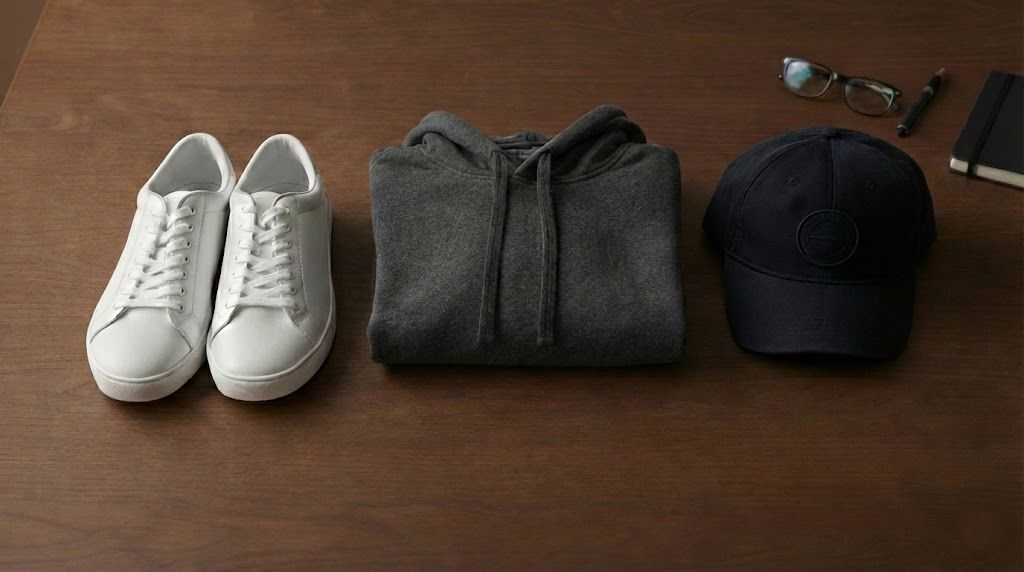
- Clothing
- Footwear
- Headwear
That’s it.
But the range inside those three categories is huge — and that’s where the confusion starts.
The Real Question People Mean to Ask
When someone searches:
- “Trademark class for hoodies”
- “Is activewear Class 25?”
- “Trademark class for hats”
- “What class is streetwear?”
What they’re really asking is:
“If I file in Class 25, will my trademark actually protect what I’m selling?”
And the answer is:
✅ yes, if your products are wearable goods
❌ no, if your “fashion products” include other categories like bags, jewelry, cosmetics, or retail services
Let’s Start With Clothing (The Easy Part)
If your brand sells actual clothing, Class 25 is usually correct.
And yes, that includes more than just “shirts.”
It includes basically anything wearable, such as:
- t-shirts, hoodies, sweatshirts
- jeans, pants, shorts, skirts
- dresses, coats, jackets
- underwear, socks, swimwear
- activewear and gym sets
So if you sell clothing, you’re almost certainly in the right place.
But here’s a subtle detail people miss:
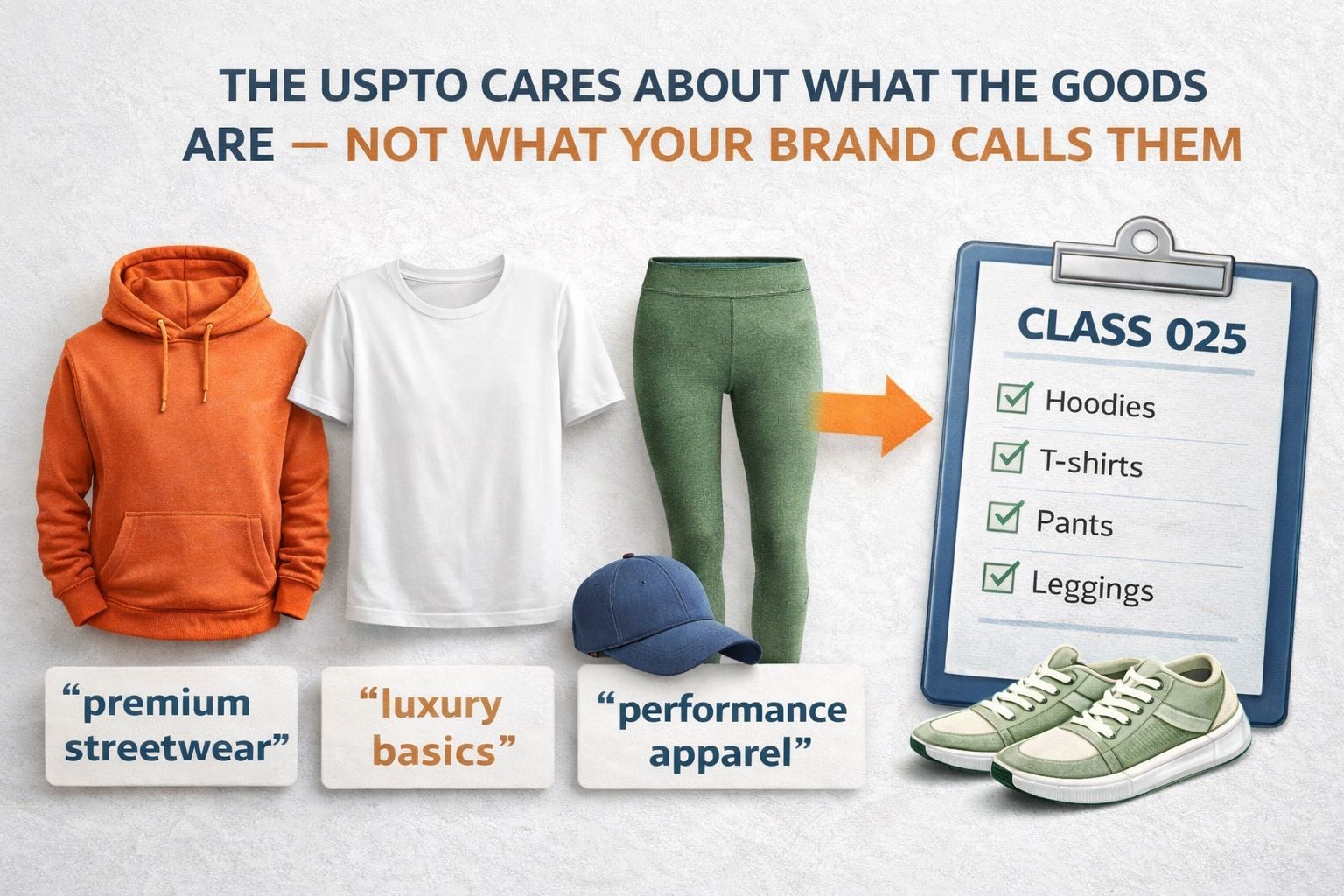
The USPTO cares about what the goods are — not what your brand calls them.
For example, your website might say:
- “premium streetwear”
- “luxury basics”
- “performance apparel”
But your trademark application needs to describe goods in a way the USPTO accepts.
That’s why the USPTO ID Manual matters so much
| If you sell… | You’re usually in Class 25 |
|---|---|
| T-shirts, hoodies, sweatshirts | ✅ Yes |
| Pants, shorts, skirts, dresses | ✅ Yes |
| Activewear / athletic clothing | ✅ Yes |
| Socks, underwear, lingerie | ✅ Yes |
| Swimwear | ✅ Yes |
| Uniforms, workwear | ✅ Yes |
Footwear: Still Class 25 (Almost Always)
Footwear is one of the simplest categories.
If it’s a shoe, it’s almost always Class 25.
Sneakers? Class 25.
Boots? Class 25.
Sandals? Class 25.
Slippers? Class 25.
Even if you brand them as:
- “performance sneakers”
- “luxury footwear”
- “handmade shoes”
…it still stays in Class 25.
This is why a lot of sneaker brands file in Class 25 first.
Headwear: More Than Just Hats
Headwear is also Class 25.
And it includes more than what most people think of as “hats.”
Examples:
- baseball caps
- beanies
- bucket hats
- visors
- headbands
- bandanas (when used as headwear)
So if your brand sells hats and caps, Class 25 is still your class.
Where It Gets Confusing: “Merch”
This is where Class 25 starts turning into a trap.
Because people file a trademark when they start selling merch, and they assume:
merch = clothing
But merch is rarely just clothing.
Here’s a super common scenario:
You’re a creator or small brand and you sell:
- hoodies
- hats
- stickers
- tote bags
- mugs
- phone cases
Only the hoodies and hats are Class 25.
Everything else belongs in different classes.
| Merch item | Most common class | Why |
|---|---|---|
| T-shirts, hoodies, hats | Class 25 | Wearable goods |
| Tote bags, backpacks | Class 18 | Bags/leather goods |
| Stickers, posters | Class 16 | Printed goods |
| Mugs, water bottles | Class 21 | Household containers |
| Phone cases | Class 9 | Tech accessories |
The Most Common “Fashion Brand” Mistake
This one is so common it deserves its own section.
A brand sells clothing… and then they add bags.
Or they add jewelry.
Or they add perfume.
And they assume it’s all “fashion.”
But trademark classes don’t work like that.
A clothing brand can absolutely sell:
- bags
- jewelry
- perfume
…but if you want your trademark to protect those categories, you may need additional classes.
What Is NOT in Trademark Class 25? (Even if You Sell It)
Here are the top things that fashion brands sell that are not Class 25:
❌ Bags, wallets, backpacks
Usually Class 18.
❌ Jewelry and watches
Usually Class 14.
❌ Perfume and cosmetics
Usually Class 3.
❌ Sunglasses
Often Class 9.
❌ Online store / retail services
Usually Class 35.
And Class 35 is a big one for Shopify and Amazon sellers.
| You sell | Not Class 25 — usually | Common reason |
|---|---|---|
| Tote bags, backpacks | Class 18 | Bags aren’t apparel |
| Jewelry, watches | Class 14 | Separate category |
| Perfume, skincare | Class 3 | Cosmetics category |
| Sunglasses | Class 9 | Optical goods |
| Online retail store | Class 35 | Retail is a service |
The Filing Mistake That Costs People the Most Money
Here’s the part nobody wants to hear:
Filing in the wrong class doesn’t just “delay things.”
It can cost you an entire new filing.
Because USPTO fees are typically per class and not refundable.
And in many cases, you can’t simply “add” a class later to the same application in the way people assume.
So the real risk isn’t just a delay — it’s paying twice.
How to Use This Article If You’re Actually Filing
Here’s the most practical workflow:
Step 1 — Make a list of your products
Not the vibe. Not the aesthetic.
The actual products.
Step 2 — Group them by what they are
- wearable = likely Class 25
- accessories = maybe Class 18 or 14
- cosmetics = Class 3
- tech accessories = Class 9
Step 3 — Decide if retail services matter
If your business is mainly:
- Shopify
- Amazon
- Etsy
- a marketplace storefront
…Class 35 might be part of your strategy.
Step 4 — Confirm the wording in the USPTO ID Manual
Because the wording matters almost as much as the class itself.
Helpful Resources (Official Links)
If you want the official sources:
Related TrademarkFactory Services (Internal Links)
If you’re planning to file a trademark for a clothing brand, these pages are the most relevant:
- Trademark Search & Assessment
- Trademark Filing & Registration
- Office Action Response
- Statement of Use Filings
- Trademark Monitoring
FAQ: Trademark Class 25 Product Examples
Are hoodies in Trademark Class 25?
Yes. Hoodies are considered clothing, so they typically belong in Class 25
Are socks in Class 25?
Yes. Socks are a clothing item and belong in Class 25.
Are bags in Class 25?
No. Bags and backpacks are usually Class 18, even when they’re sold by fashion brands.
Are sunglasses in Class 25?
Usually not. Sunglasses are often classified in Class 9.
Is activewear Class 25?
Yes. Most athletic clothing and activewear products are in Class 25.
Do I need multiple classes for merch?
Often yes. Many merch businesses end up needing multiple classes because merch includes goods in different categories.
' width='400' height='200'/%3E%3C/svg%3E)