

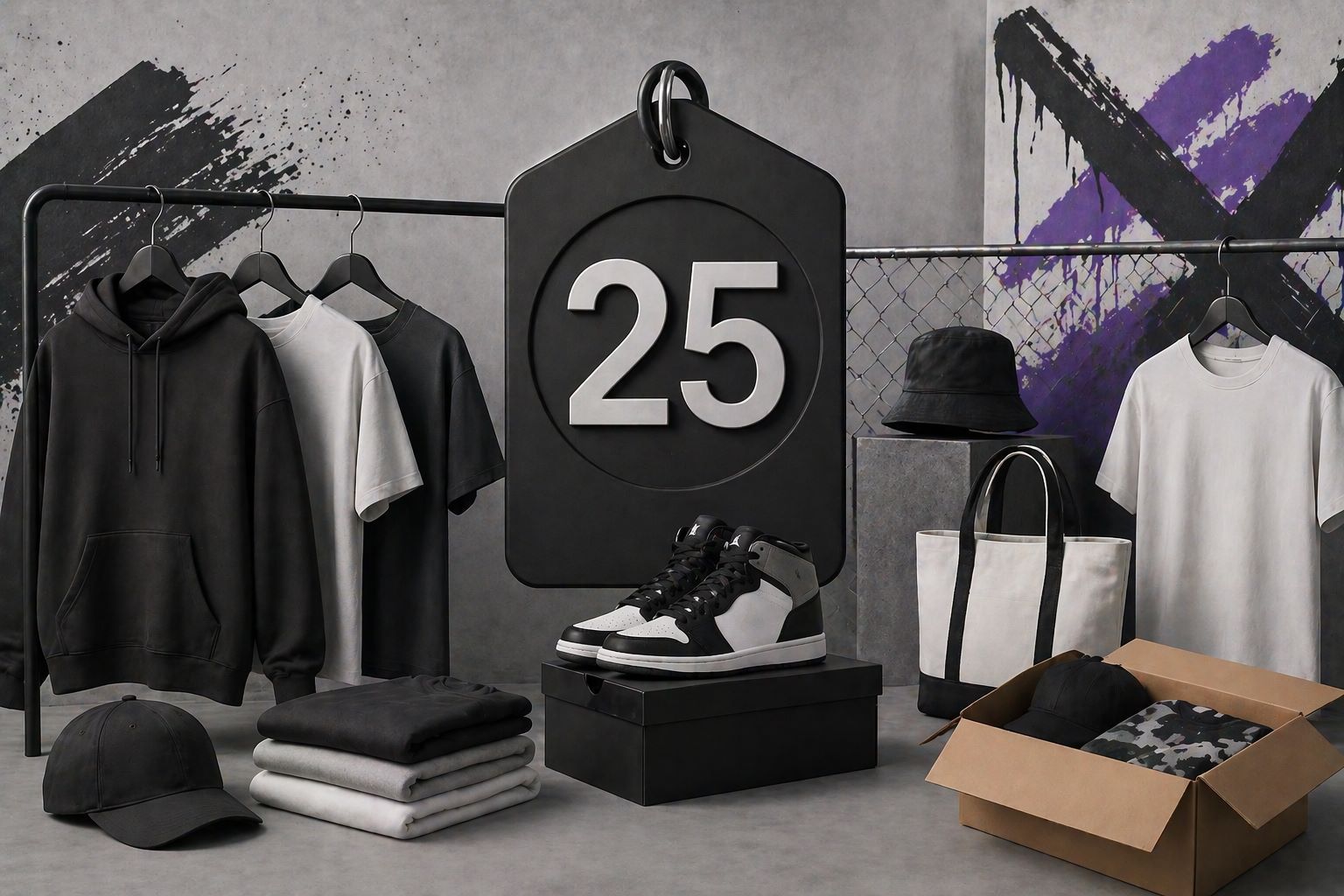
Streetwear doesn’t behave like traditional fashion.
It moves fast.
It drops without warning.
It sells out in minutes.
It lives on Instagram and Discord before it lives in stores.
And because of that speed, a lot of streetwear founders treat trademarks as something to think about “later.”
Until one day, something happens:
- A collab is scheduled.
- A reseller starts copying the name.
- A bigger brand files something similar.
- Or a cease-and-desist letter shows up.
And suddenly trademark protection feels very real.
So let’s talk about how Trademark Class 25 actually applies to streetwear brands — not in theory, but in the way streetwear actually works.
First: Yes, Streetwear Is Still Class 25
No matter how creative or culturally unique your brand is, the USPTO sees it very simply.
If you’re selling:
- hoodies
- tees
- caps
- sneakers
- tracksuits
That’s Class 25.
The legal system doesn’t distinguish between:
- luxury fashion
- fast fashion
- streetwear
- minimalist basics
If it’s clothing, it’s Class 25.
So if your logo appears on:
- a neck tag
- a sleeve print
- a woven label
- or a product listing
…Class 25 is your foundation.
But streetwear brands almost never stop there.
The Drop Culture Problem
Streetwear brands often operate through “drops.”
Limited release.
Limited quantities.
High demand.
High resale value.
And many founders think:
“We’re small. We’ll worry about trademarks when we scale.”
The problem is this:
Streetwear names spread quickly.
Your drop sells out.
People repost it.
Resellers list it.
Influencers tag it.
If someone files your brand name before you do — even in Class 25 — you may be stuck fighting for the identity you built.
Because trademark rights often depend on:
- who filed first
- or who used it first (and can prove it)
In crowded Class 25, speed matters.
Merch vs Streetwear: They’re Not the Same Legally
Here’s something many creators don’t realize.
If you’re a content creator launching merch, and then it evolves into a streetwear brand, your trademark needs evolve too.
Merch might include:
- t-shirts
- hoodies
- hats
Which are Class 25.
But streetwear brands often expand into:
- bags (Class 18)
- jewelry (Class 14)
- even fragrances (Class 3)
So the legal footprint becomes larger than just “apparel.”
Streetwear brands grow into lifestyle brands very fast.
And that’s where multi-class filing strategy becomes relevant
Collaborations (Collabs) — Where Trademark Risk Increases
Streetwear lives on collaborations.
Brand × Artist
Brand × Influencer
Brand × Sneaker Company
Brand × Luxury Label
But here’s the trademark reality:
When you collaborate, your brand name appears:
- on joint products
- in marketing campaigns
- in resale markets
If your trademark protection is weak or unclear, you may lose leverage in partnerships.
And if your collaborator has stronger trademark protection than you, guess who has more control?
Streetwear brands that plan long-term usually protect their name before scaling collabs.
The Reseller Issue
Streetwear culture includes resale.
And resale creates another layer of visibility.
Your brand name may appear:
- on StockX
- on eBay
- on Grailed
- on marketplace listings
If your trademark isn’t registered, enforcement becomes harder.
Because once counterfeit versions start appearing, it’s harder to control the narrative.
When Streetwear Brands Need More Than Class 25
Let’s talk real expansion.
Scenario 1 — You add bags
Now you may need Class 18.
Scenario 2 — You release jewelry pieces
Now Class 14 becomes relevant.
Scenario 3 — You open a concept retail space
Class 35 (retail services) may matter.
Streetwear brands evolve into multi-category identities quickly.
That’s why filing only Class 25 might be correct at launch — but insufficient long term.
| Growth Stage | Likely Trademark Classes |
|---|---|
| Drop-only clothing brand | 25 |
| Clothing + hats + sneakers | 25 |
| Add bags and accessories | 25 + 18 |
| Add jewelry | 25 + 14 |
| Open retail store | 25 + 35 |
| Add fragrance | 25 + 3 |
The Specimen Issue in Streetwear
Streetwear brands love mockups and pre-drop hype.
But the USPTO doesn’t accept:
- “Coming soon” pages
- Concept art
- Rendered designs
- Instagram previews
You need real commercial use.
For Class 25, that usually means:
- sewn labels
- hang tags
- real product pages
The Timing Question: When Should a Streetwear Brand File?
The best time to file is usually:
Before your first big viral moment.
Because once your name spreads, it becomes visible — and visible names are easier to copy or file against.
Streetwear brands that wait until they’re “big enough” sometimes discover:
Someone else filed something similar in Class 25.
And now it’s a fight.
What About International Streetwear Brands?
Streetwear spreads globally fast.
You may be shipping to:
- Canada
- Europe
- Asia
A U.S. trademark only protects you in the U.S.
If your audience is global, international filing strategy matters
Because streetwear names cross borders faster than traditional brands.
Why Class 25 Is Especially Competitive for Streetwear
Streetwear names often:
- use short words
- use altered spellings
- use stylized typography
- use slang
And because Class 25 is crowded, small differences don’t always prevent conflicts.
For example:
- KULTURE
- KULTUR
- CULTURE
- KULTURR
Creatively distinct? Maybe.
Legally confusing? Possibly.
This is why a trademark search is not optional in this space.
FAQ: Streetwear & Trademark Class 25
Is streetwear automatically Class 25?
If you’re selling clothing, yes — Class 25 is your base class.
Do I need to trademark before my first drop?
You don’t legally have to — but filing early reduces risk as your brand gains attention.
Are collabs protected automatically?
No. Trademark ownership and licensing must be handled carefully.
Can someone copy my drop name if I don’t register it?
Possibly. Registration strengthens enforcement and legal clarity.
Final Thought
Streetwear culture moves fast.
But trademark law moves slowly.
And that gap is where problems happen.
If your brand is serious — even if it’s small — protecting the name early can save you from rebranding when it matters most.
Streetwear brands are built on identity.
And identity is exactly what trademark law protects.
' width='400' height='200'/%3E%3C/svg%3E)