
There’s a moment in almost every clothing trademark filing where things feel simple… until they’re not.
You’ve chosen your name.
You’ve picked Class 25.
You’ve submitted your application.
And then the USPTO asks for something that sounds harmless:
“Please provide a specimen.”
And suddenly, everything slows down.
Because now the question isn’t about your brand name.
It’s about proof.
Proof that your trademark is actually being used in commerce — the way trademark law requires.
And this is where a surprising number of clothing brands run into problems.
First: What Is a “Specimen” in Plain English?
A specimen is simply:
Real-world evidence showing how your trademark is used in connection with the goods you’re claiming.
For Class 25, that means your trademark must appear in a way that clearly connects it to clothing, footwear, or headwear.
Not in a branding mood board.
Not in a logo file.
Not in a social media bio.
It has to show real commercial use.
Why Class 25 Specimens Are Tricky
Clothing brands often think:
“My logo exists. That’s enough.”
But the USPTO isn’t evaluating whether your logo looks professional.
They’re asking:
- Is this mark actually used on the clothing?
- Is it used as a trademark?
- Is it connected to the goods listed in the application?
And that’s a different standard than “we launched our website.”
What Usually Gets Accepted in Class 25
Let’s start with what works.
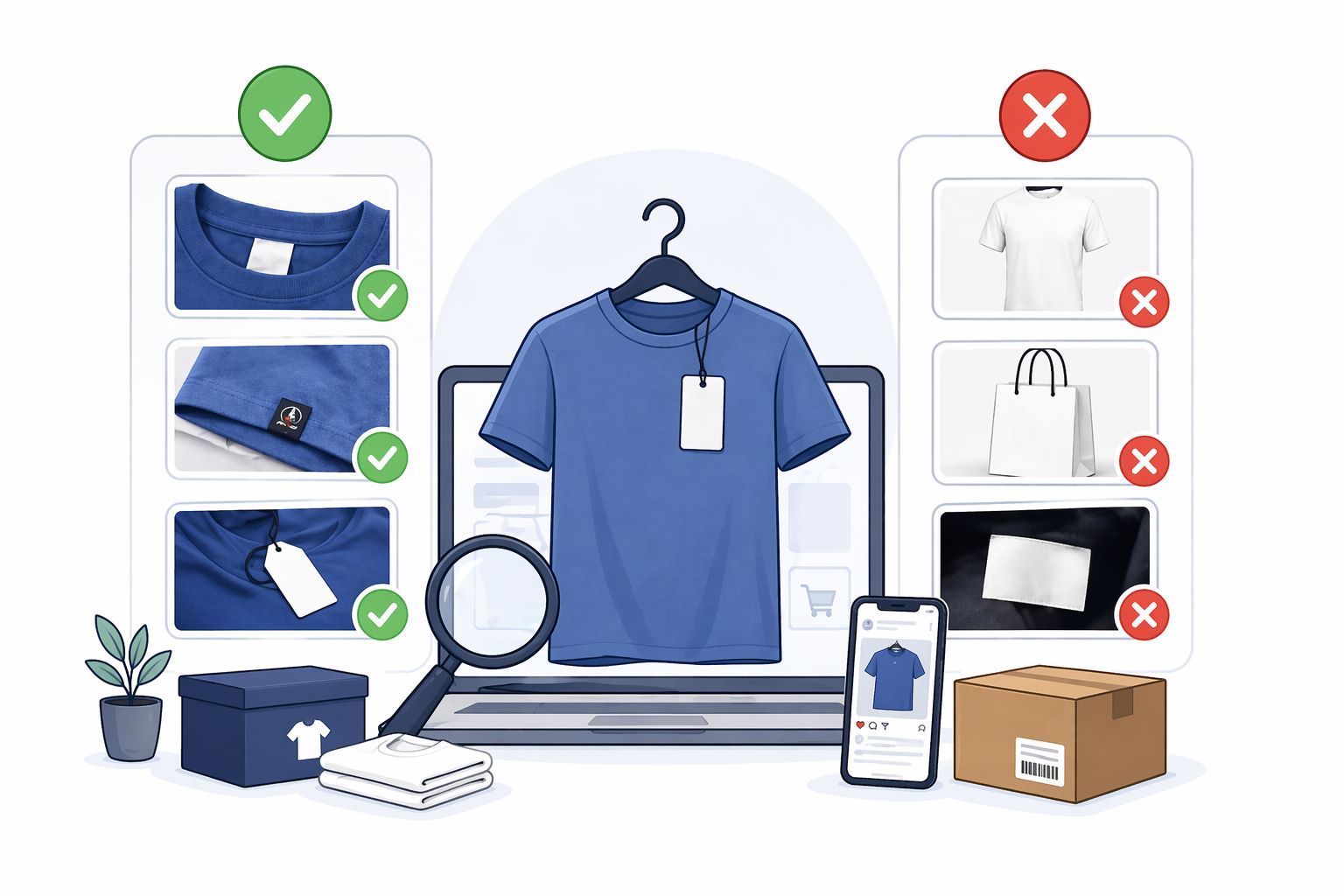
1. A label sewn into the garment
This is one of the strongest specimens for clothing.
For example:
- A neck label with the brand name
- A stitched tag inside a hoodie
- A sewn label in a jacket lining
Why this works:
It clearly shows the trademark attached to the clothing itself.
2. A hang tag attached to the clothing
A hang tag is typically acceptable if:
- It’s physically attached to the garment
- The trademark is clearly visible
- The product is identifiable as clothing
This shows commercial use in a way the USPTO recognizes.
3. Website product page (with real sales capability)
A website screenshot can be accepted — but only if:
- The product is clearly identified
- The trademark appears near the product
- There is a way to purchase (price + add to cart or purchase button)
If your screenshot is just:
- a homepage banner
- a lookbook
- or an “About Us” page
…it may get rejected.
What Often Gets Rejected
Now let’s talk about the frustrating part.
These are the things people submit thinking they’re valid — but the USPTO frequently rejects them.
Mockups
This is extremely common.
Someone designs a hoodie in Photoshop and places their logo on it.
They upload the mockup as a specimen.
The problem?
It’s not proof of actual use in commerce.
It’s just a design concept.
Social media posts
An Instagram post that says:
“New drop coming soon!”
…is not proof of commercial use.
Even if the product is shown, if there’s no clear purchase information or actual sales connection, it can be rejected.
Logo by itself
Submitting just a clean logo file or branding graphic doesn’t show use in connection with clothing goods.
A trademark has to function as a source identifier tied to actual goods.
Pre-launch pages
If your website says:
“Launching soon.”
That’s not commercial use.
For a “use in commerce” filing basis, the mark must already be used in real sales.
| Accepted | Often Rejected |
|---|---|
| Sewn-in clothing label | Digital mockups |
| Hang tag attached to garment | Logo file alone |
| Product packaging with mark | Social media announcement |
| Website product page with purchase option | “Coming soon” page |
| Shoe box with brand name (if shoes listed) | Brand mood board |
The Specimen Mistake That Causes Delays
One of the most common problems is mismatch.
For example:
You list in your application:
“Footwear”
But your specimen shows:
- only a hoodie
Now the USPTO asks:
Where is the evidence that you’re using the mark for footwear?
This leads to an Office Action.
And now your application is delayed by months.
The “Intent to Use” Confusion
Another common situation:
A founder files under “use in commerce” — even though they haven’t started selling yet.
Why?
Because they assume they can “update it later.”
But that’s not how it works.
If you haven’t actually started selling, the safer approach may be filing under “intent to use.”
That allows you to:
- secure the filing date
- launch later
- submit a Statement of Use when sales begin
If you file incorrectly, you may create unnecessary complications.
Real Scenario: The Instagram-First Brand
Let’s say you built hype on Instagram.
You’ve got:
- 10,000 followers
- great engagement
- teaser photos
You file your trademark.
You submit a screenshot of your Instagram profile as your specimen.
The USPTO refuses it.
Why?
Because the screenshot doesn’t show:
- clear goods
- purchase mechanism
- commercial sale
It shows marketing — not trademark use in commerce.
Real Scenario: The Amazon Seller
You sell clothing on Amazon.
You submit a screenshot of your Amazon listing.
That can work — if:
- the brand name appears clearly
- the goods match the application
- the listing is live
If the brand name appears only in a small corner or not clearly tied to the product, it may raise issues.
Why Specimens Matter So Much in Class 25
Class 25 is crowded.
The USPTO examines clothing applications carefully because of:
- frequent conflicts
- similar brand names
- high filing volume
So weak documentation can easily trigger scrutiny.
How to Make Sure Your Class 25 Specimen Is Strong
Before filing, ask yourself:
- Is the product actually being sold?
- Is the mark visible on the goods?
- Is the mark clearly functioning as a brand?
- Does the specimen match the goods I listed?
If the answer to any of those is “maybe,” it’s worth reviewing before submission.
Helpful Resources
Related TrademarkFactory Services
FAQ: Class 25 Specimens
Can I submit a mockup as a specimen?
Usually no. The USPTO requires real commercial use, not digital renderings.
Is a website screenshot enough?
Yes, if it shows the product, the trademark, and a clear way to purchase.
Can I fix a bad specimen?
Sometimes, yes — but it can delay your application.
What if I haven’t started selling yet?
You may need to file under “intent to use” instead of “use in commerce.”
Final Thought
For clothing brands, the name feels like the hard part.
But in reality, specimens are often what delay applications.
A strong specimen shows the USPTO one simple thing:
This isn’t just a brand idea.
This brand is already being used in real commerce.
And that’s what trademark law ultimately protects.
' width='400' height='200'/%3E%3C/svg%3E)