Trademark Ownership Transfer: Complete Trademark Change Guide
Understanding Trademark Change of Ownership
When a business grows, restructures, merges, or is sold, a trademark change of ownership often becomes necessary. This transfer ensures the new entity legally controls the mark and all rights associated with it. Whether the transfer is part of a sale, inheritance, investment agreement, or internal restructuring, properly transferring trademark ownership is essential to protect the value of the brand and maintain enforcement rights.
If a trademark transfer is done incorrectly—or not recorded at all—the new owner may lose the ability to enforce or even use the trademark. This is why the trademark transfer process must follow strict legal and administrative rules.
What Trademark Ownership Actually Includes
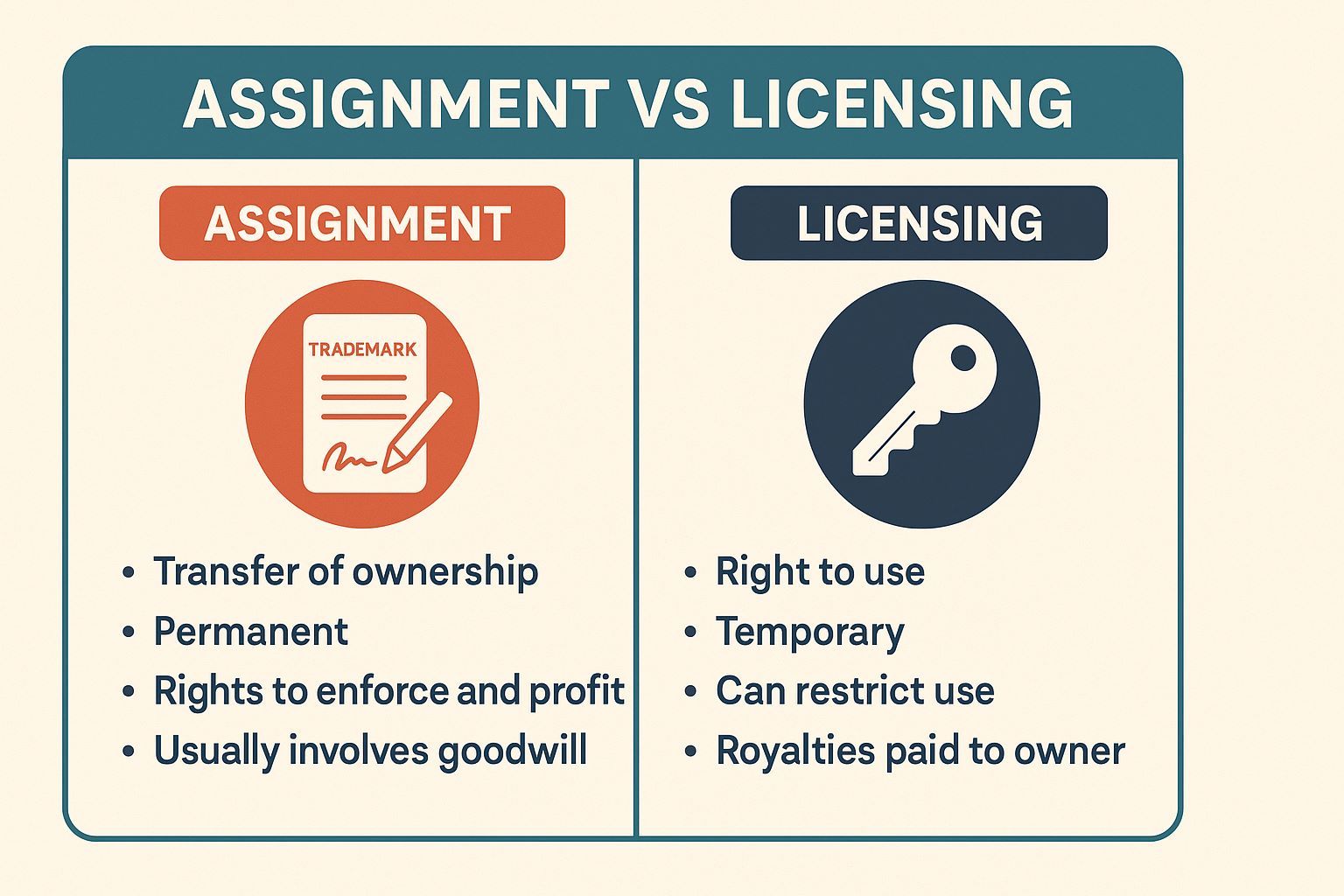
Transferring a trademark means much more than changing a name in a database. It is a legal act that assigns:
- the registered trademark itself
- all related trademark applications
- goodwill associated with the business
- rights to enforce against infringement
- rights to renew the mark
- rights to license or sell it further
A proper assignment must include goodwill (required in the United States) and must clearly define the relationship between the assignor and assignee to avoid legal disputes.
Why Companies Transfer Trademark Ownership
Businesses undergo changes throughout their lifecycle, and trademarks must legally follow those changes. A few of the most common scenarios involving a trademark change of ownership include:
- sale of the entire business
- merger or acquisition
- rebranding or restructuring
- transferring rights to a subsidiary or parent company
- inheritance by family members
- internal IP consolidation
- franchise and licensing adjustments
These events require accurate documentation to ensure the trademark remains enforceable and properly owned.
Trademark Transfer Process: How It Works
The trademark transfer process involves multiple legal and administrative steps. Each must be completed correctly to ensure official recognition of the transferby the United States Patent and Trademark Office and other international bodies.
Preparation phase
Before executing any transfer, you need clear documentation of current ownership, chain-of-title verification, and review of international records. This is especially important when the trademark has been assigned before or used across multiple entities.
Execution of the Assignment Agreement
A legally binding assignment agreement defines the assignment, obligations of both parties, goodwill transfer, and the exact identification of the trademark. The document must be drafted accurately to avoid rejection by the USPTO or other offices.
Recordation with the USPTO
To formally transfer trademark ownership, the agreement must be recorded with the USPTO Assignment Recordation Branch. Required elements include:
- assignment agreement
- cover sheet
- correct owner information
- proper signatures
- payment of USPTO fees
International & Madrid System Transfers
If a trademark has been registered internationally, you must also record the transfer with WIPO under the Madrid Protocol. This ensures the new owneris recognized across all designated countries.
Country-Specific Transfer Procedures
Outside the Madrid system, each country has its own transfer process. Some require notarization, others require original copies of agreements or translations.
Table: Where and How Trademark Transfers Are Filed
|
Jurisdiction |
Where Transfer Is Filed |
Notes |
|
United States |
USPTO Assignment Recordation Branch |
Online submission |
|
WIPO / Madrid |
WIPO International Bureau |
Required for Madrid filings |
|
EUIPO |
EUIPO Ownership Recordation |
May need supporting docs |
|
UKIPO |
UK Intellectual Property Office |
Online or paper |
|
Canada |
CIPO Trademark Database |
Assignment form required |
|
Australia |
IP Australia |
Requires documentation |
Documents Required to Complete a Trademark Transfer
Тo ensure the transfer is recognized legally, you must prepare:
- signed assignment agreement
- corporate resolutions (if entity-owned)
- supporting documents (merger agreements, sale agreements)
- original or electronic copies depending on jurisdiction
- WIPO assignment form (for Madrid-based trademarks)
- translations if required by foreign offices
Proper documentation ensures the trademark can be enforced by the new ownerwithout delays.
Trademark Transfer Costs
Trademark transfer expenses vary depending on the jurisdiction, number of marks, and additional services. Below is a general breakdown.
|
Cost Element |
Estimated Range |
Description |
|
USPTO Recordation Fee |
Fixed per submission |
Covers
one or multiple trademarks |
|
WIPO Assignment Fee |
Varies |
Based on
number of countries |
|
Legal Drafting Fee |
Depends on complexity |
Assignment agreement drafting |
|
Additional Requirements |
Case-dependent |
Translations, apostille, notarizations |
Common Mistakes in Transferring Trademark Ownership
Many owners underestimate how easy it is to lose rights due to incorrect or incomplete transfers. Frequent errors include:
- failing to record the transfer with the USPTO
- assignment without goodwill
- wrong or incomplete owner information
- missing signatures or legal authority
- lack of international recordation
- incomplete chain-of-title documentation
- relying on informal or unsupported assignments
Avoiding these mistakes is essential to protect the value of your trademark.
How to Ensure a Safe Trademark Ownership Transfer
Trademark Factory® helps businesses navigate trademark assignments globally with an attorney-led, guaranteed approach. Best practices for a smooth transfer include:
- verifying all historical assignments
- drafting a legally binding assignment agreement
- filing transfers in all relevant jurisdictions
- ensuring accurate identifying details
- verifying rights before enforcement
- conducting post-transfer audits
- tracking renewals and maintaining up-to-date records
👉 Book a Trademark Transfer Consultation
👉 Learn About Our Guaranteed Trademark Services
FAQ: Trademark Change of Ownership
What is a trademark change of ownership?
It is the legal process of transferring rights to a trademark from one party to another.
How long does the trademark transfer process take?
Most USPTO transfers are processed within days, while international transfers may take several weeks.
Does transferring a trademark affect trademark registration?
No, registration remains valid as long as the transfer is properly recorded.
Can I complete a trademark transfer without an attorney?
You can, but mistakes may affect enforceability. Legal assistance ensures accuracy.
Do I need to transfer international registrations as well?
Yes, all associated registrations and applications must reflect the new owner.
Can I transfer only part of the rights?
Some jurisdictions allow partial assignments for certain goods or services.
Useful Resources
- USPTO Trademark Assignments Search
- USPTO Transfer & Ownership Info
- WIPO Madrid Transfer Rules
- EUIPO Ownership Transfer Guide
- CIPO Trademark Assignment
Conclusion: Protect Your Trademark by Ensuring a Legally Valid Transfer
A trademark change of ownership is not just a simple update—it is a legal and operational necessity that directly impacts brand protection. Properly executing and recording the transfer ensures that the new owner can enforce rights, license the mark, renew it, and maintain its value.
Trademark Factory® provides end-to-end support for transferring trademark ownership, ensuring accuracy, compliance, and complete peace of mind.
👉 Get Professional Help With Your Trademark Transfer
👉 Protect Your Trademark With Our Guaranteed Services