

What appeared to be a straightforward brand revival quickly escalated into a legal and strategic cautionary tale when Nike discovered that the TOTAL 90 trademark no longer belonged to them. As reported by The Fashion Law, Nike’s move reignited discussion about the complexities of heritage brand management and the very real risks companies face when reviving marks that were abandoned years earlier.
Read the original report here. Today’s marketplace moves fast — and trademark law expects brands to move just as fast.
What Actually Happened With TOTAL 90
According to case details, Nike formally abandoned the TOTAL 90 trademark in 2019. When a trademark is abandoned, it becomes legally available for someone else to claim — and that’s exactly what happened.
A new company, Total90, LLC, acquired the now-vacant trademark and became the official owner.
Years later, Nike decided to revive the beloved brand. But by then, the trademark had a new owner — one with full legal rights to the name.
This situation highlights a fact that many companies (even giants) underestimate:
Nike found itself in a position many businesses could encounter: a brand they once considered obsolete suddenly became valuable again — but the legal rights no longer belonged to them.
Why This Case Matters: Risks of Reviving Dormant Brands
The TOTAL 90 conflict illustrates several crucial trademark principles:
1. Abandonment Makes the Trademark Fair Game
Once the mark was abandoned, another party had every right to register it.
2. Legacy Brand Value Doesn’t Disappear
Even after years of non-use, consumers may still remember iconic brands.
3. Modern Markets Move Faster Than Trademark Law
The trademark system was created for a slower era — today, a small company can register and launch products rapidly, gaining legal leverage over a global brand.
4. Trademark Maintenance Is Not a Formality — It’s a Strategy
Dormant marks can unexpectedly gain value in the future.
Strategic Outcomes for the New Owner (Total90, LLC)
Whether Total90, LLC anticipated Nike’s return or simply saw an opportunity, their position is undeniably strong. As the lawful trademark owner, they now have multiple leverage points:
- They can sell the trademark back to Nike for a premium price.
- They can pursue legal claims if Nike uses the mark without permission.
- They can capitalize on heightened brand awareness generated by media coverage of the dispute.
In modern trademark strategy, this is what experts call:
👉 “Trademark arbitrage” — acquiring marks others undervalue, then leveraging them strategically.
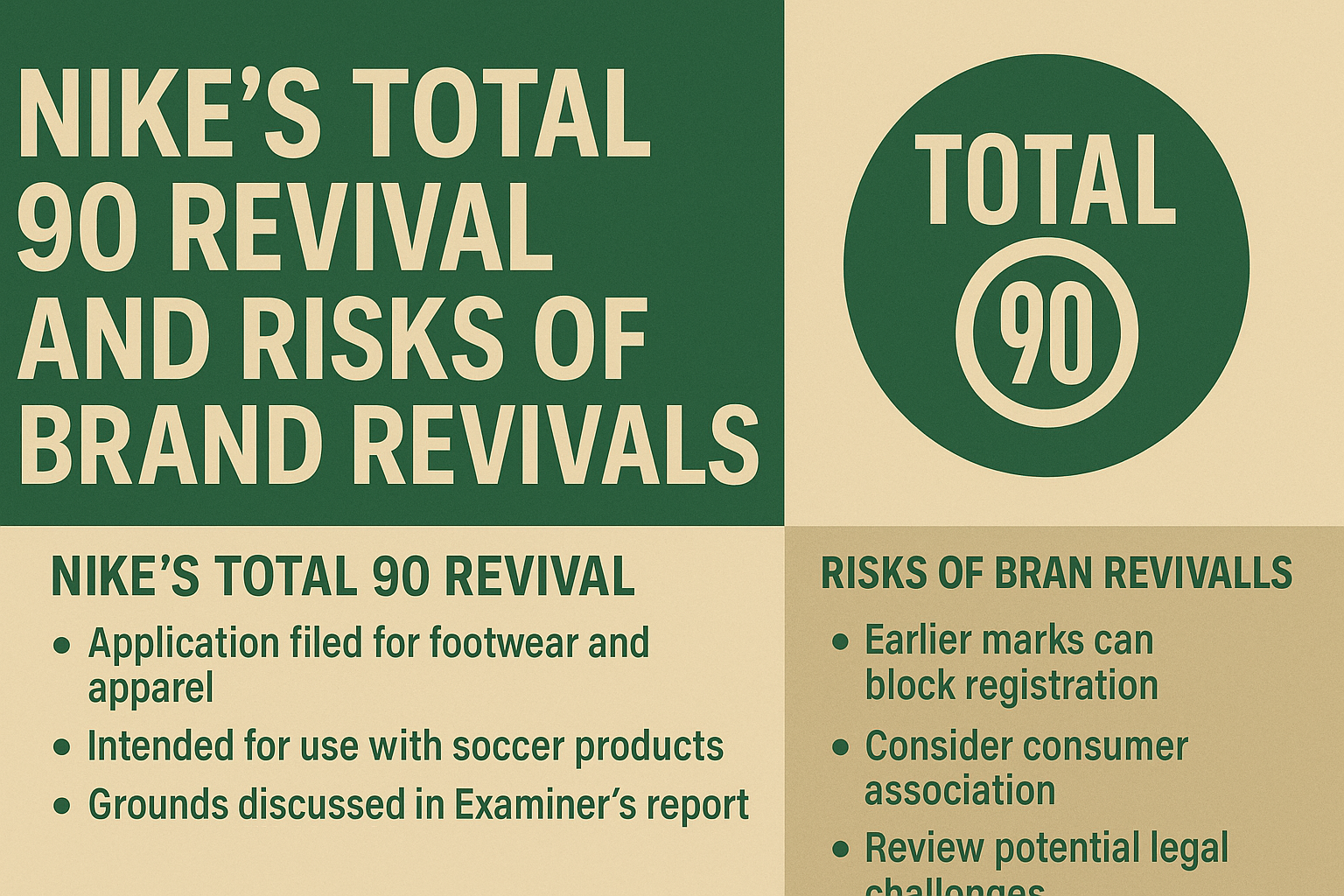
What Businesses Should Learn From the TOTAL 90 Case
This case is a powerful reminder that:
- Trademark maintenance is business-critical.
- Abandoning a mark means losing control — permanently.
- Market conditions change, and old brands can suddenly regain value.
- Competitors (or opportunistic entrepreneurs) move fast when rights lapse.
- Legal rights always favor the party that filed — not the party with historical use.
The bottom line:
👉 If a brand has even a small chance of future revival, maintaining the trademark is almost always worth the minimal investment.
' width='400' height='200'/%3E%3C/svg%3E)

Nike originally owned this trademark for years, but they formally abandoned it in 2019. Once that happened, another company — Total90, LLC — stepped in and registered the mark. Fast-forward a few years, and Nike decides it wants to revive its once-famous product line, only to discover that the trademark is no longer theirs.
This situation is a perfect example of how complex trademark rights can become if the brand owner stops maintaining them. The entire system of trademark protection was built in a different era — a time when creating or copying a business required far more resources and far more time. It wasn’t designed for today’s world, where a major company can let a mark lapse, later realize it still has value, and then find out that someone else legally owns it.
Whether Total90, LLC registered the mark because they anticipated Nike would eventually want it back — essentially treating the trademark as an investment — or whether they genuinely intended to build a new brand around it, we will never know. But what is clear is that their move was strategically brilliant. From here, they have several strong options:
-sell the trademark back to Nike for a significant amount,
-pursue legal claims if Nike uses the mark without permission
-continue developing the brand themselves and benefit from the renewed attention.
And it’s important to stress: Nike didn’t “make a mistake.” They simply stopped using the mark. They formally abandoned it. No responsible trademark attorney would tell a client to manufacture fake use just to keep a registration alive. At that time, Nike had no interest in TOTAL 90. Now they do — and that change comes with consequences.
The TOTAL 90 story is a powerful reminder that in today’s fast-moving market, maintaining trademarks is not just a bureaucratic formality. It’s a strategic business decision. And sometimes, letting a mark go means someone else will be ready to pick it up — and use it to their advantage.