

The craft beer industry has exploded over the past decade, with thousands of breweries producing seasonal releases, limited-edition cans, and creative flavor profiles. This rapid growth has also resulted in one of the most trademark-crowded sectors in the beverage world.
From hop-themed names to illustrated cans and highly stylized packaging, craft breweries depend heavily on branding — and that makes trademark protection essential.
This guide explains how craft beer fits into trademark classes, why Class 32 and Class 33 can be confusing, how to protect individual beer names and label artwork, and what strategies breweries should use to avoid costly legal disputes.
Why Craft Beer Branding Is a Trademark Minefield
Unlike traditional beer brands, craft breweries introduce:
- dozens of SKUs
- rotating seasonal beers
- collaboration brews
- limited runs with unique names
- artist-designed can graphics
The result: hundreds of possible trademark conflicts.
Trademark law requires breweries to protect not just their core brand, but also many individual product names and designs. Without structured protection, a brewery risks forced rebranding, consumer confusion, and even legal action from existing brands.
Understanding Class 32 vs Class 33 for Beer Brands
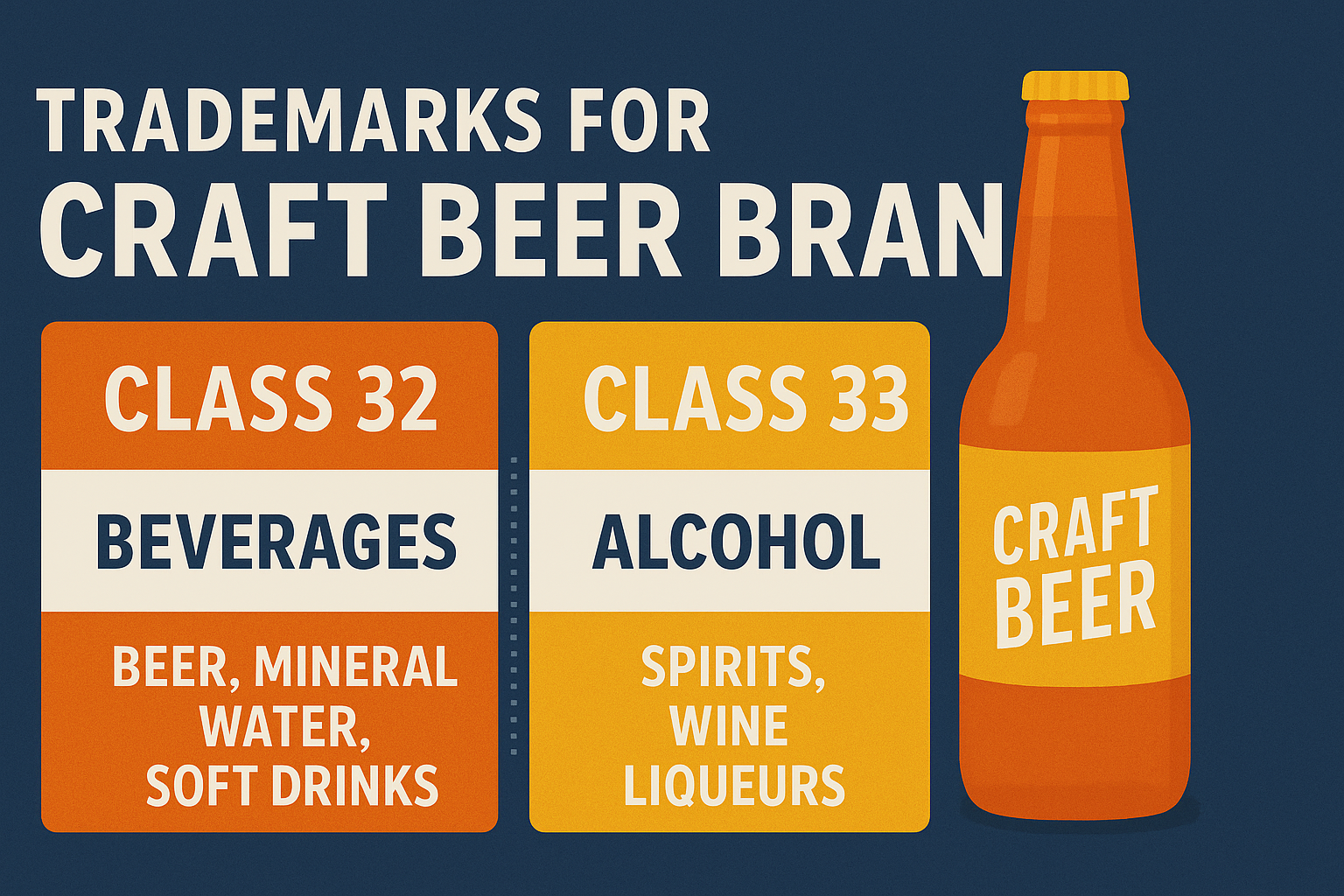
Class 32 — Non-Alcoholic Beverages & Standard Beer
Traditionally, beer is classified under Class 32, alongside:
- non-alcoholic beer
- soft drinks
- mineral water
- flavored beverages
Most U.S. and international trademark systems treat beer as a non-spirits beverage.
Class 33 — Alcoholic Beverages
This class covers:
- liquor
- distilled spirits
- wine
- alcoholic cocktails
- beer-based alcoholic products (in some regions)
Confusion arises because in some jurisdictions, strong beer or beer cocktails may fall under Class 33.
Comparative Table: Class 32 vs Class 33 for Beer
| Product Type | Correct Class | Notes |
|---|---|---|
| Standard beer | 32 | Most global filings use Class 32 |
| Non-alcoholic beer | 32 | Same class as regular beer |
| Beer cocktails | 33 | Contains spirits or mixed alcohol |
| Strong beer (regional exceptions) | 32 or 33 | Depends on alcohol rules |
| Malt beverages | 32 | Non-spirits category |
Key Insight:
To protect a beer brand comprehensively, many breweries file in BOTH Class 32 and Class 33 when expanding beyond traditional beer.
What Craft Beer Brands Can Trademark
A craft brewery can trademark far more than just its company name.
1. Brewery Brand Name (Word Mark)
This is your most important identifier.
Examples:
– Sierra Nevada®
– Dogfish Head®
– Lagunitas®
2. Individual Beer Names
Seasonal and limited-edition names can — and often should — be registered:
- “Winter Haze IPA”
- “Galaxy Drift Pale Ale”
- “Pumpkin Forge Stout”
If a beer name appears annually, its trademark value increases.
3. Logo & Branding Elements
Hop illustrations, custom typography, geometric logos — all protectable.
4. Can / Bottle Artwork
Craft breweries often collaborate with artists.
Label art can be protected through:
- design trademarks
- copyright
- trade dress
5. Packaging & Trade Dress
Recognizable elements may become protectable:
- unique color bands
- label layout
- signature graphic motifs
- embossed bottle features
Table: Trademarkable Craft Beer Assets
| Element | Protectable? | Notes |
|---|---|---|
| Brewery name | ✔ Yes | Core brand protection |
| Beer name | ✔ Yes | Especially recurring ones |
| Logo | ✔ Yes | Graphic assets |
| Can artwork | ✔ Yes | Trademark + copyright |
| Bottle shape | ✔ Sometimes | Must be distinctive |
| Hop descriptors | ✖ No | Generic (e.g., “Citra IPA”) |
How to Trademark a Craft Beer Brand: Step-by-Step Process
Step 1 — Trademark Search
Craft beer names frequently conflict because many breweries draw from:
- hop varieties
- local geography
- animals
- nature themes
- seasonal concepts
A proper search includes:
- USPTO TESS
- WIPO Global Brand Database
- EUIPO
- Untappd database (practical insight!)
- Beer rating platforms
Step 2 — Filing in the Correct Class(es)
Most breweries file in Class 32, and optionally Class 33 for:
- beer cocktails
- barrel-aged spirits blends
- collaborations with distilleries
Step 3 — Provide Specimens (If Already Selling)
Examples include:
- can photos
- bottle labels
- product packaging
Step 4 — Respond to USPTO or EUIPO Office Actions
Common rejections:
- similarity to an existing beer name
- descriptive hop references (“Dry Hopped Ale”)
- geographic descriptiveness (“Rocky Mountain IPA”)
- ornamental use if the mark is too artistic
Protecting Packaging & Trade Dress
Craft beer packaging often becomes iconic.
Examples:
- distinctive label frames
- full-wrap illustrations
- holographic foil elements
- color-blocked can designs
To qualify for trade dress protection, packaging must be:
- distinctive
- consistently used
- recognized by consumers
Trade dress enhances long-term brand value and deters copycats.
International Considerations for Craft Beer Brands
Exporting beer creates new trademark requirements.
Priority markets include:
- US
- Canada
- EU
- UK
- Australia
- Japan
- China
Why China Requires Immediate Attention
China’s first-to-file system enables third parties to register foreign beer names before the brand enters the market — resulting in:
- brand hijacking
- ransom demands
- blocked imports
Breweries should secure international trademarks early, especially for distinctive labels.
Common Craft Beer Trademark Mistakes
Avoid these pitfalls:
- Using hop strain names in your trademark
- Copying retro beer themes
- Not registering seasonal beer names
- Assuming label art automatically protects the beer name
- Filing in only one class when expansion is planned
- Launching a collaboration beer without a trademark agreement
- Assuming domain names = trademark rights
How Trademark Factory® Helps Craft Breweries Protect Their Brands
Trademark Factory® supports beer brands with:
- full trademark search across beer-related conflicts
- fixed-fee trademark filing with guaranteed results
- label and packaging protection
- bottle and can design trademarks
- international filing through the Madrid Protocol
- handling of USPTO/EUIPO objections
👉 Book a Free Craft Beer Trademark Strategy Call
👉 See How Trademark Factory® Protects Alcohol Brands
👉 Read: How to Trademark a Wine Brand
FAQ — Craft Beer Trademark Protection
Can I trademark a beer name?
Yes — especially if the beer is recurring or distributed widely.
Do I need to register each seasonal beer?
If the name repeats or gains recognition — yes.
Is can artwork protected automatically?
Not automatically. You can protect it via trademark AND copyright.
Can two breweries use the same beer name in different states?
If there is a likelihood of confusion — no.
Do I need Class 33 for beer?
Not always. Most beer fits into Class 32, but Class 33 may apply for hybrid alcoholic products.
Can I trademark hop varieties?
No — varietals like Mosaic, Citra, or Galaxy are generic.
What about collaboration beers?
Trademark ownership should always be defined contractually.
Useful Resources
- USPTO Trademark Search
- WIPO Global Database
- EUIPO Search
- Trademark Factory® Blog — https://trademarkfactory.com/blog
Conclusion
Trademarking a craft beer brand requires a clear strategy that goes beyond the brewery name. With frequent releases, distinctive artwork, and constant competition, breweries must proactively protect their trademarks across Classes 32 and 33, secure label art, and plan for international growth.
With the right legal foundation — and expert support from Trademark Factory® — craft beer brands can expand confidently and protect the identity that makes their brews truly unique.
' width='400' height='200'/%3E%3C/svg%3E)