

Bars, restaurants, distilleries, and beverage brands often create unique cocktail names as part of their identity and menu strategy. Some of these names become iconic, recognizable, and commercially valuable. Naturally, businesses want to protect this value — but can a cocktail name actually be trademarked?
The answer is: sometimes yes, often no — and the distinction matters legally and commercially.
This guide explains when cocktail names qualify for trademark protection, when they don’t, and how beverage companies can secure the branding around their signature drinks.
Why Cocktail Names Raise Trademark Questions
Cocktail culture blends creativity, marketing, and culinary craft. Bars and beverage companies regularly invent:
- signature cocktails
- branded drink menus
- cocktail mixes sold in stores
- promotional beverages for events
Because some cocktail names become famous (think “Dark ’n Stormy®,” “Painkiller®,” “Sazerac®”), businesses naturally want to protect these names.
But most cocktail names are considered generic drink names, which makes them ineligible for trademark protection.
When Cocktail Names CAN Be Trademarked
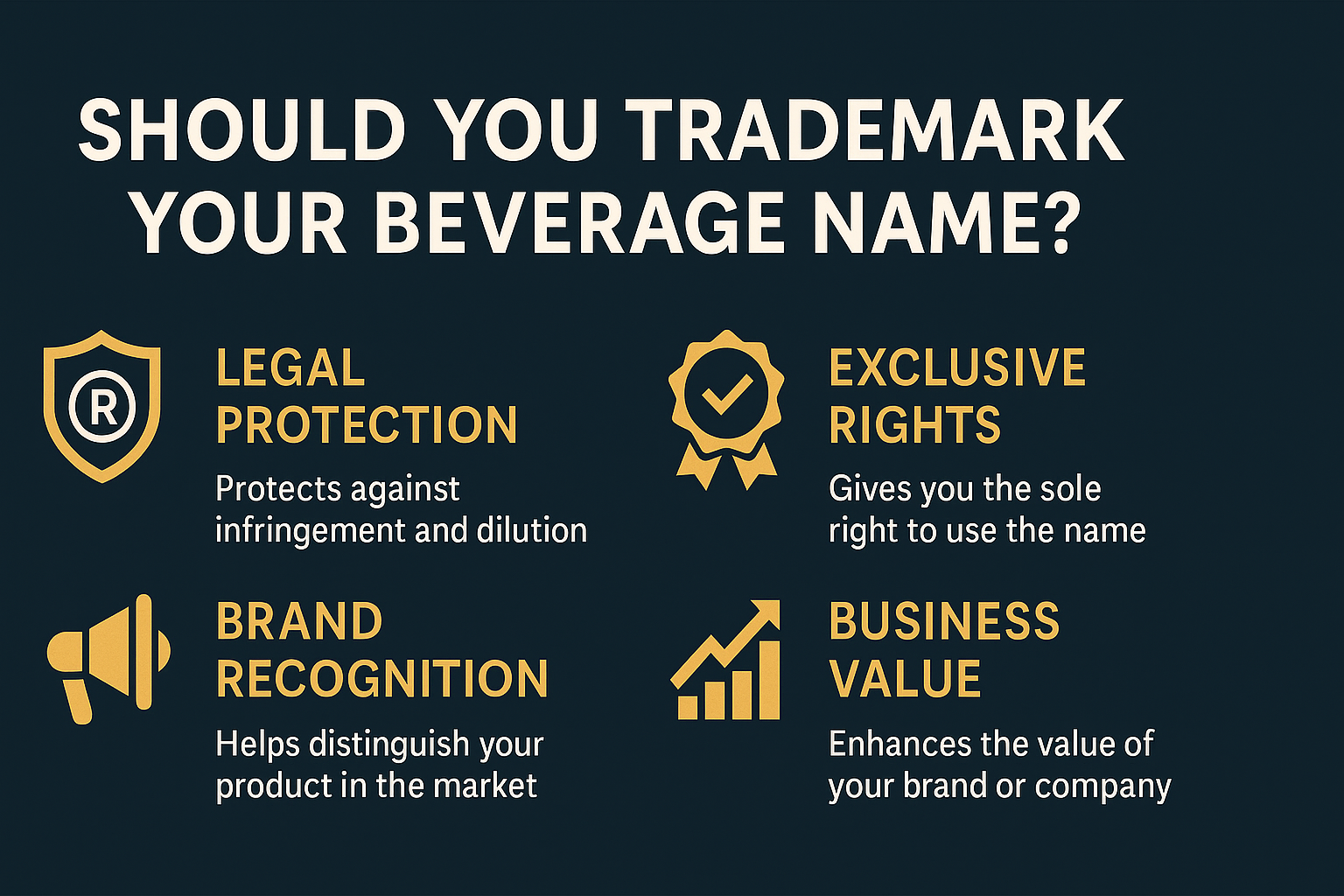
Trademark law allows protection only when the cocktail name functions as a source identifier, not merely a type of drink.
A cocktail name CAN be trademarked when:
1. The Cocktail Is Unique to Your Business
Examples:
- A signature drink created exclusively by your bar
- A cocktail name used consistently in branding
- A proprietary drink sold in a bottle or packaged mix
2. The Name Is Distinctive
Strong trademarks:
- creative
- non-descriptive
- not commonly used in the industry
Examples of potentially trademarkable names:
- “Midnight Orchid Cocktail”
- “Electric Velvet Spritz”
- “Pumpkin Spice Martini” (if not widely adopted)
3. The Cocktail Is Commercialized Beyond a Menu
Trademark protection works best when the cocktail is used in:
- bottled cocktail products
- canned RTD cocktails
- mix kits
- bar merchandise
- marketing materials
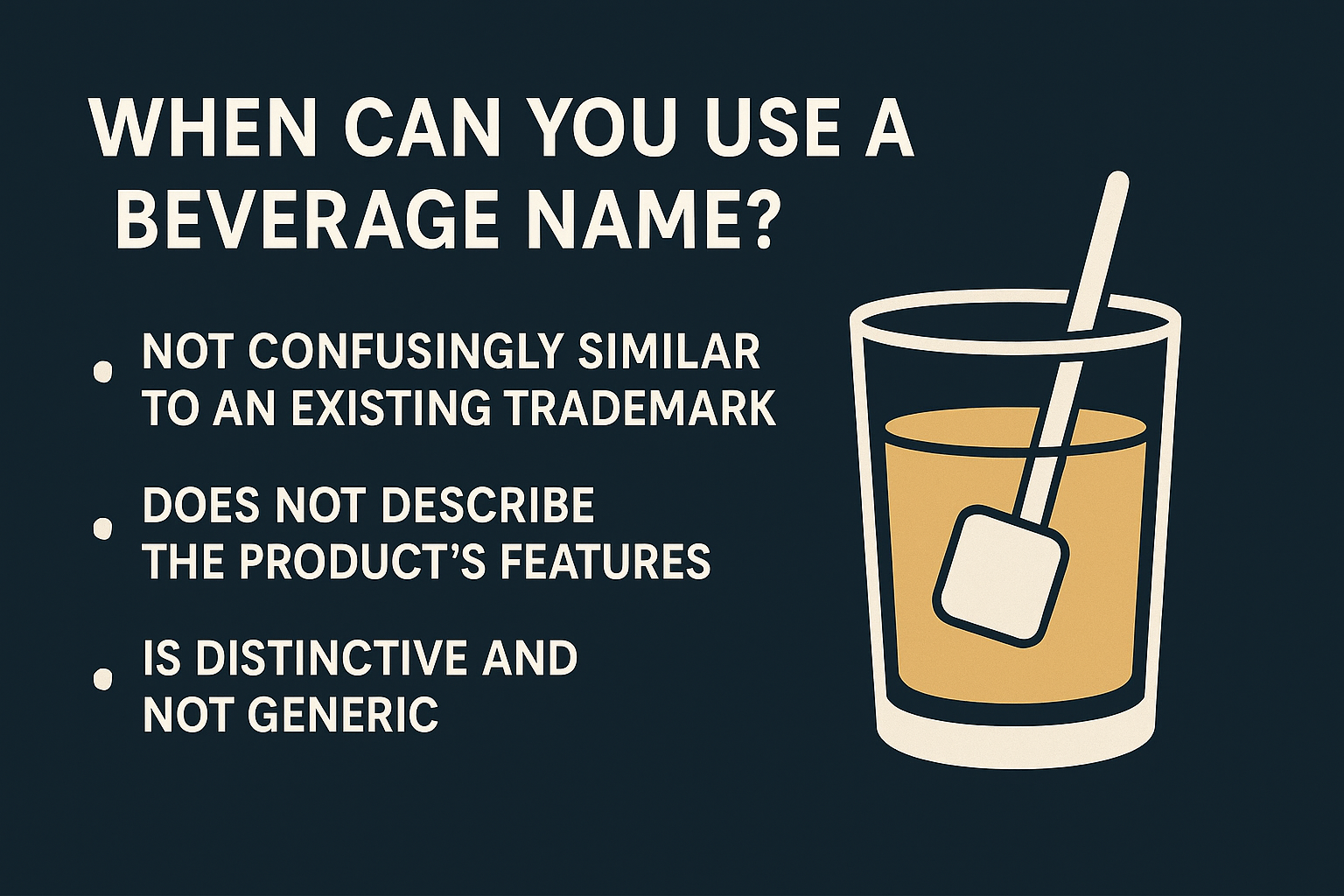
4. The Name Is Not Generic
The name must not describe the ingredients or drink type.
Table: When Cocktail Names ARE Trademarkable
| Example Name | Trademarkable? | Why |
|---|---|---|
| “Blue Velvet Eclipse” | ✔ Yes | Distinctive, creative |
| “Pumpkin Forge Martini” | ✔ Yes | Unique phrase |
| “Dark ’n Stormy” | ✔ Yes | Already trademarked by Goslings |
| “Sunset Ember Cooler” | ✔ Yes | No descriptive elements |
When Cocktail Names CANNOT Be Trademarked
Most cocktail names fall into this category. Trademark offices reject names that:
1. Are Generic Drink Names
Examples:
- Margarita
- Mojito
- Old Fashioned
- Cosmopolitan
- Negroni
- Espresso Martini
These names refer to common recipes, not source identifiers.
2. Describe Ingredients
Examples:
- “Vodka Cranberry”
- “Pineapple Rum Punch”
- “Bourbon Lemonade”
3. Are Widely Used by Different Bars
If the name is part of general cocktail vocabulary, it cannot be monopolized.
4. Mislead Consumers
Names implying origin or alcohol type may be rejected.
Table: When Cocktail Names Are NOT Trademarkable
| Name | Trademarkable? | Reason |
|---|---|---|
| Margarita | ✖ No | Generic |
| Old Fashioned | ✖ No | Traditional cocktail |
| Espresso Martini | ✖ No | Widely used recipe |
| Gin and Tonic | ✖ No | Generic ingredients |
| French 75 | ✖ No | Classic cocktail |
How to Trademark a Cocktail Name (If It Qualifies)
If your cocktail name meets distinctiveness criteria, follow the proper trademark procedure.
Step 1 — Conduct a Trademark Search
Search for conflicts in:
Also check:
- bar menus
- beverage companies
- bottled cocktail brands
Step 2 — Confirm the Correct Class
Common classes include:
- Class 33: alcoholic beverages
- Class 32: non-alcoholic mixes or mocktails
- Class 43: bar and restaurant services
- Class 30: non-alcoholic powders, syrups
- Class 35: promotional merchandise
Step 3 — File the Application
Include:
- the cocktail name (word mark)
- logo (if relevant)
- packaging design (if bottled)
Step 4 — Provide Evidence of Use
Examples:
- menu listings
- cocktail bottle packaging
- promotional materials
- product photos
Step 5 — Respond to Examiner Objections
Common issues:
- descriptive meaning
- generic wording
- similarity to existing marks
What If the Name Cannot Be Trademarked? Protect the Branding Instead
Even if the cocktail name itself can't be trademarked, you can protect:
1. The Logo or Stylized Version of the Name
Fonts and graphic styling may qualify.
2. The Packaging or Bottle Design (Trade Dress)
Unique label art = highly protectable.
3. Copyright for Artwork
Menu illustrations, graphic cocktails, artistic drink posters.
4. The Bar or Brand Name
Your business name protects the cocktail as a branded offering.
5. A Series Name
Example:
“Signature Mixology Series™” — protects the product line.
Why Cocktail Trademark Issues Matter for Bars and Beverage Companies
Bars risk losing:
- exclusive rights
- brand identity
- promotional opportunities
- legal standing against imitators
Beverage companies risk:
- copycats in retail
- domain conflicts
- counterfeit products
- international brand hijacking
Trademark protection is a competitive advantage.
How Trademark Factory® Helps Bars and Beverage Brands
Trademark Factory® provides:
- full search & legal analysis for cocktail names
- filing for word marks, stylized marks, logos
- packaging and trade dress protection
- international filing strategy
- fixed-fee, guaranteed trademark registration
👉 Book a Free Strategy Call for Your Cocktail Brand
👉 Discover How Trademark Factory® Protects Alcohol Brands
👉 Read: Trademarking a Whiskey Brand
FAQ — Cocktail Name Trademarks
Can I trademark a cocktail I invented?
Yes, if the name is distinctive and not generic.
Is a cocktail recipe itself protected?
No. Recipes are generally not protectable under trademark law.
Can two bars use the same cocktail name?
If the name is generic — yes. If it is trademarked — no.
Can I trademark a canned cocktail brand?
Yes. In fact, packaging protection strengthens your brand significantly.
What about cocktail names using famous liquor brands?
These are often not allowed due to likelihood of confusion.
Do I need international protection?
If you bottle or export the cocktail — absolutely.
Useful Resources
Conclusion
A cocktail name can be trademarked — but only when it rises above being a generic drink description. Distinctiveness, branding consistency, and commercial use determine whether a cocktail name can become legally protected intellectual property.
Bars, restaurants, and beverage manufacturers increasingly rely on trademark strategies to secure signature cocktail names, protect packaging, and build recognizable drink brands. With the right legal guidance, your signature cocktails can become valuable, defensible brand assets.
' width='400' height='200'/%3E%3C/svg%3E)