

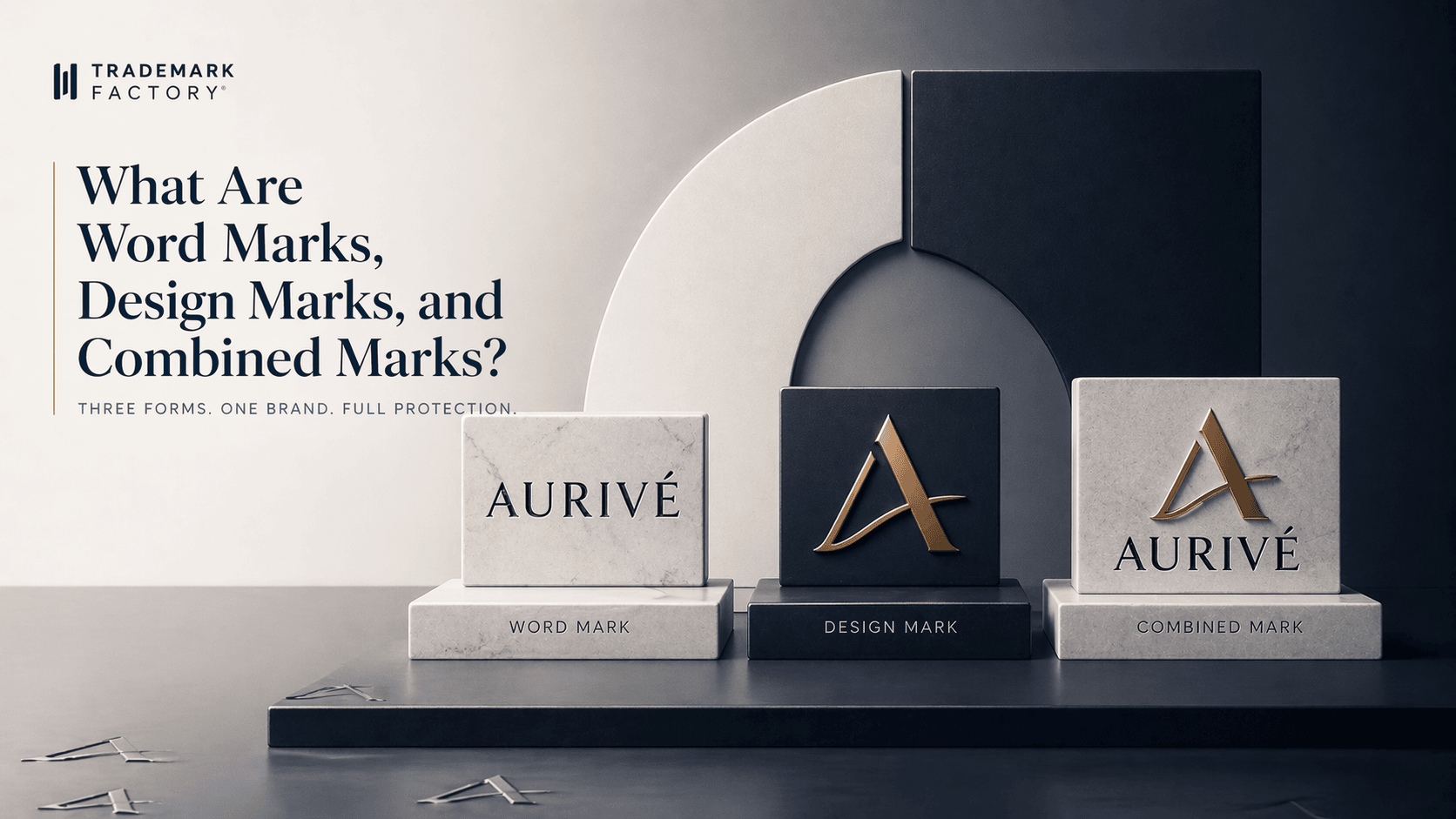
Word marks are basically just that: it is a trademark that contains nothing but words. It can be one word, two words, three words—as many words as you want. But these words would be written in plain characters and they protect the words. They don't protect how those words look like. They protect them in any font, in any size, in any color—that's what it is.
The design marks are just the opposite. They protect the looks. They protect those icons, the images. They don't protect anything other than that.
And combined marks are marks that have both the names, or the words, the phrases, and some images; or it could be words written in a particular font.
Should you file a combined mark or separate applications for the wording and design? The answer depends on which elements identify your business, how you use them, their registrability, and your budget. Each US application seeks registration of one mark. A combined word-and-design registration is not the same as separate registrations for the wording and the image.
Adding a logo or tagline does not automatically make an otherwise problematic name registrable. The USPTO assesses the applied-for mark as a whole, including whether it functions as a trademark, whether any matter is descriptive or generic, and whether there is a likelihood of confusion with earlier marks. Certain elements may need to be disclaimed.
A combined registration also does not mean that another business can safely copy one component. Infringement depends on the relevant marks, goods or services, and legal test; copying a distinctive or dominant component may still create confusion. Conversely, registration of the whole does not guarantee a separate exclusive right in every component.
Separate word-mark and design-mark applications can address elements used independently, while a combined application may fit an important overall presentation. Review the actual uses and filing costs rather than assuming that one application covers “80% of the risk” or that every brand must be split into multiple applications. A later application for an individual element will be examined on its own merits.
Protecting a logo with stylized lettering
A logo can consist entirely of specially drawn letters. It does not need a separate pictorial symbol. For a US application, decide whether the asset you want to register is the wording itself, its particular visual presentation, or both through separate applications where appropriate. A standard-character filing does not claim a particular font, while a special-form filing shows the chosen lettering or design.
Prepare the actual logo version you intend to use. The drawing and mark description should identify that presentation, and any required specimen must show genuine use of the applied-for mark with the claimed goods or services. Use our guide to preparing a name and logo application for the drawing-and-specimen workflow rather than treating a font file or a designer’s mockup as proof of commercial use.
Search the wording as well as the visual elements. An unusual type treatment does not automatically overcome a conflict involving similar wording, sound or meaning for related goods or services. Registration of a stylized brand also does not give you ownership of the underlying typeface or font software, or a general right to stop every business from using that font.
Check the actual font licence before launch. Permission to create a static logo can differ from permission to embed font software in a website or app, modify it, or pass the font files to another person. Keep the relevant licence and the designer’s agreement with your brand records. A trademark application does not replace the permissions needed to use the supplied artwork and font.
' width='400' height='200'/%3E%3C/svg%3E)