What Is Class 33? Complete Guide to Trademarking Alcohol Beverages
The alcohol industry is one of the most competitive and highly regulated markets in the world. Whether you produce wine, whiskey, rum, gin, liqueurs, or any type of distilled spirit, your brand identity is one of the most valuable assets you own. Trademarking your alcoholic beverage brand under Class 33 not only protects your product name and label — it safeguards your entire commercial identity across domestic and international markets.
In this comprehensive guide, you’ll learn what Class 33 includes, how alcohol trademarks work, how to register them correctly, how to avoid costly mistakes, and how Trademark Factory® can help you secure a brand that stands the test of time.
What Is Class 33? Understanding the Legal Category for Alcoholic Beverages
Class 33 is part of the international Nice Classification system, used globally to categorize products and services for trademark registration.
This class specifically covers alcoholic beverages, except beer. For alcohol brands, correct classification is essential — filing under the wrong class can delay or invalidate your trademark rights.
Below is a full overview of what Class 33 includes.
Goods Covered Under Class 33
This list represents the core alcoholic products eligible for protection:
- wine
- sparkling wine & champagne
- whiskey / whisky
- vodka
- gin
- rum
- brandy
- tequila
- mezcal
- liqueurs & aperitifs
- bitters
- sake
- distilled spirits
- pre-mixed alcoholic cocktails
- alcoholic cider (varies by jurisdiction)
Trademark registration in this class gives the brand exclusive rights over the name, design, and packaging of these beverages — a crucial factor in such a crowded marketplace.
What Class 33 Does NOT Include
Many alcohol entrepreneurs misunderstand where their products belong. Some goods look like alcohol or are used with alcohol but belong to different trademark classes.
Products Outside Class 33
| Not Included | Correct Class | Notes |
|---|---|---|
| Beer | 32 | Covered separately |
| Non-alcoholic beverages | 32 | Soft drinks, mocktails |
| Barware (glasses, tools) | 21 | Accessories, not beverages |
| Clothing and apparel | 25 | Branded merchandise |
| Bottling machinery | 7 | Industrial equipment |
Proper classification matters. Misclassifying your product can result in rejection or opposition from existing brands.
Trademark Types Available for Alcohol Brands
Every alcohol brand has unique assets worth protecting. Class 33 allows registration of multiple trademark types, giving beverage producers a strong competitive advantage.
What You Can Trademark Under Class 33
- Word marks: your brand name (e.g., Absolut®, Casamigos®, Campari®)
- Logo marks: graphic symbols and visual identity
- Combined marks: logo + name
- Label designs: wine and whiskey labels often function as trademarks
- Bottle shapes: iconic bottles can be protected if distinctive
- Slogans: taglines used in advertising
- Signature colors or textures: in some cases, trade dress protection applies
Trademark Types Table
| Trademark Type | Protects | Best For |
|---|---|---|
| Word mark | Name only | All alcohol brands |
| Logo mark | Graphic identity | Spirits, luxury brands |
| Label mark | Entire front label | Wine and whiskey |
| Bottle shape | Packaging | Iconic premium beverages |
| Slogan | Marketing phrase | Campaigns and promotions |
Strong alcohol trademarks usually combine several elements — name, logo, and bottle design.
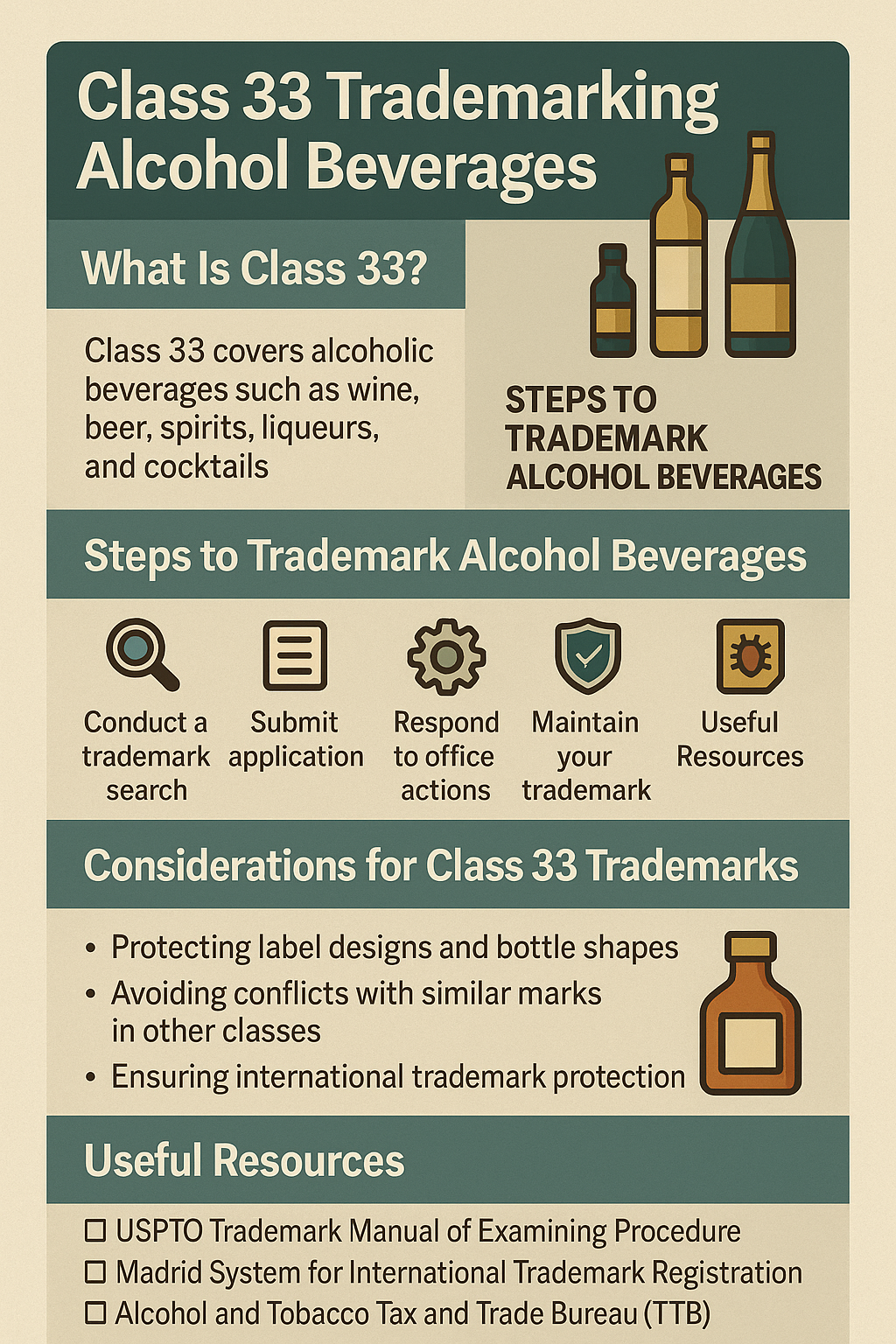
How to Trademark Alcohol Beverages Under Class 33
Trademarking alcoholic beverages requires industry-specific knowledge. Regulatory oversight, similar-sounding names, and label similarities often create challenges. Below is the complete process.
Trademark Search
A detailed search is critical. Alcohol brands frequently face objections due to:
- confusingly similar names
- look-alike labels
- descriptive or geographic wording
- regulatory conflicts
Use these tools:
You should also check industry-specific platforms:
- wine databases
- distillery catalogs
- online alcohol retailers
- state licensing registries
Deciding What to Protect
Before filing, determine which assets to secure:
- your brand name
- your logo
- your typographic style
- your bottle shape
- your label template
- your packaging color scheme
Preparing the Application
Include:
- correct goods description
- target jurisdictions
- specimens showing use (if applicable)
- ownership structure (LLC, corporation, etc.)
Filing the Application
Trademark requirements vary globally, but the general steps include:
- submitting your chosen trademark(s)
- selecting Class 33
- paying government filing fees
- waiting for examiner review
Responding to Office Actions
Common office actions include:
- similarity to existing alcohol brands
- unclear label description
- geographic indications (e.g., Champagne, Cognac)
- descriptiveness objections
Maintaining Your Registration
Renew trademark protection every 10 years (varies by jurisdiction).
Use and enforcement are essential — unused trademarks may be canceled.
Special Legal Considerations for Alcohol Trademarks
Alcohol is tightly regulated. Trademarks often overlap with production rules, labeling laws, and protected regions.
Regulatory Considerations
Depending on the market, alcohol branding must comply with:
- TTB (US Alcohol and Tobacco Tax and Trade Bureau)
- FDA labeling rules
- EU spirits regulations
- national labeling standards
Geographical Indications (GI)
Some alcohol-related names are legally protected:
- Champagne
- Cognac
- Scotch Whisky
- Tequila
- Bourbon (restricted)
These cannot be trademarked by unauthorized producers.
International Distribution Challenges
Exporting requires:
- additional compliance
- local registration
- translation of branding rules
- cultural and linguistic checks
Common Mistakes When Filing Class 33 Trademarks
Alcohol entrepreneurs frequently encounter predictable yet avoidable pitfalls.
Key Mistakes
- choosing a name too similar to an existing brand
- attempting to trademark a GI-protected term
- filing labels incorrectly
- failing to secure bottle shape separately
- using purely descriptive names
- not conducting an international search
Trademark Costs for Class 33
Trademarking alcohol brands requires budget planning due to multiple components: labels, bottle shapes, slogans, and international expansion.
Cost Overview
| Cost Type | Amount | Notes |
|---|---|---|
| USPTO filing fee | $250–$350/class | varies by filing type |
| EUIPO filing fee | €850 first class | €50 second class |
| UKIPO filing | £170 base + £50/class | |
| China filing | $300–$600 | varies |
| Attorney fees | varies | Trademark Factory® works at fixed fee |
Trademark Factory® offers predictable, fixed-fee trademark protection — no hourly billing, no surprises.
When Alcohol Brands Should Trademark Internationally
Alcohol is a global commodity. Even small producers should consider early international protection.
Priority Markets
- United States
- European Union
- United Kingdom
- Canada
- Australia
- China (critical!)
- Japan
- South Korea
Early filing is especially important in China and Southeast Asia due to trademark squatting.
How Trademark Factory® Helps Alcohol Brands Succeed
Trademark Factory® provides full-service protection designed for alcohol brands:
- comprehensive Class 33 trademark search
- filing name, logo, label, and bottle shape
- navigating GI restrictions
- managing office actions
- international registration strategy
- fixed-fee, guaranteed service
- legal oversight at every step
👉 Book Your Free Trademark Strategy Call
FAQ — Class 33 Alcohol Trademarking
Do I need a trademark for my wine or spirits brand?
Yes. Alcohol markets are highly competitive, and trademarking protects your commercial identity.
Can I trademark a bottle shape?
Yes — if it is distinctive and non-functional.
Can similar alcohol brands coexist?
Sometimes, but risk of consumer confusion is high.
Does trademarking protect my label artwork?
Yes, if filed as a label trademark or combined mark.
Is international registration necessary?
If you export or plan to expand — absolutely.
Does registering a domain protect my alcohol brand?
No. Only trademark registration provides legal protection.
Useful Resources
- USPTO Trademark Search
- WIPO Madrid System
- EUIPO Trademark Information
- UKIPO Trademark Registry
- TTB Alcohol Regulations
- Trademark Factory® Blog
Conclusion
Class 33 trademarks are essential for protecting alcoholic beverage brands in one of the world’s most competitive industries. From wine labels to iconic bottle shapes, trademark registration ensures that your brand identity remains uniquely yours — locally and globally.
Trademark Factory® helps alcohol brands secure powerful, enforceable protection with a guaranteed, fixed-fee system that removes uncertainty and delivers results.