What Is Class 32? Complete Guide to Trademarking Non-Alcoholic Beverages and Beer
The global beverage market is more crowded than ever, with new drinks introduced daily—sparkling waters, flavored sodas, functional beverages, craft beers, energy drinks, cold-pressed juices, kombucha, sports drinks, mocktails, and more. With so much competition, securing a strong and legally protected brand identity is essential.
Trademarking your beverage brand under Class 32 allows you to protect your name, logo, packaging design, and other brand assets, ensuring that your drinks stand out and remain uniquely yours.
This guide explains what Class 32 includes, how trademarking works for beverage companies, how to avoid common filing mistakes, and why early protection matters for every modern drink brand.
Understanding Class 32 in Trademark Law
Class 32 is part of the Nice Classification system, which organizes goods and services for trademark registration worldwide. The class covers non-alcoholic beverages and beer, including a wide range of popular drink categories.
Protecting your beverage brand in Class 32 helps prevent competitors from adopting confusingly similar names, packaging, or visual identity, giving your product a competitive edge in retail, distribution, and global expansion.
Products Covered Under Class 32
- sparkling water
- mineral water
- flavored water
- soda and soft drinks
- lemonade
- energy drinks
- isotonic drinks
- sports beverages
- craft beer
- non-alcoholic beer
- fruit juices
- vegetable juices
- kombucha
- mocktails and non-alcoholic cocktails
- non-alcoholic cider
Class 32 is the primary class for most drinks found on supermarket shelves or convenience stores, except products with alcohol content.
What Class 32 Does Not Cover
Many businesses are surprised to learn that beverages and related products may fall under different trademark classes depending on their nature and use. Misclassification can delay registration or cause an application to fail.
Products Outside Class 32
| Not Included | Correct Class | Notes |
|---|---|---|
| Wine, spirits, alcoholic beverages | Class 33 | Completely separate classification |
| Coffee, tea, cocoa | Class 30 | Considered food/drink products |
| Barware, drinkware | Class 21 | Cups, bottles, containers |
| Nutritional supplements | Class 5 | Health or medical function |
| Water coolers, brewing machines | Class 11 or 7 | Equipment, not beverages |
What You Can Trademark in Class 32
A beverage brand often has multiple components worthy of trademark protection. Registering these elements protects your brand from imitators and counterfeiters.
Trademarkable Assets
- word mark (brand name)
- logo
- label design
- bottle or can artwork
- 3D packaging (if distinctive)
- slogan or tagline
- signature color scheme
- stylized typography
Table: Types of Trademarks for Beverage Brands
| Type of Mark | What It Protects | Best For |
|---|---|---|
| Word mark | Brand name | All beverage companies |
| Logo mark | Graphic identity | Premium or lifestyle brands |
| Packaging mark | Label/can design | Craft beverages |
| 3D mark | Bottle/can shape | Innovative designs |
| Slogan | Marketing message | Campaign branding |
Trademarking more than one element is recommended for full legal protection.
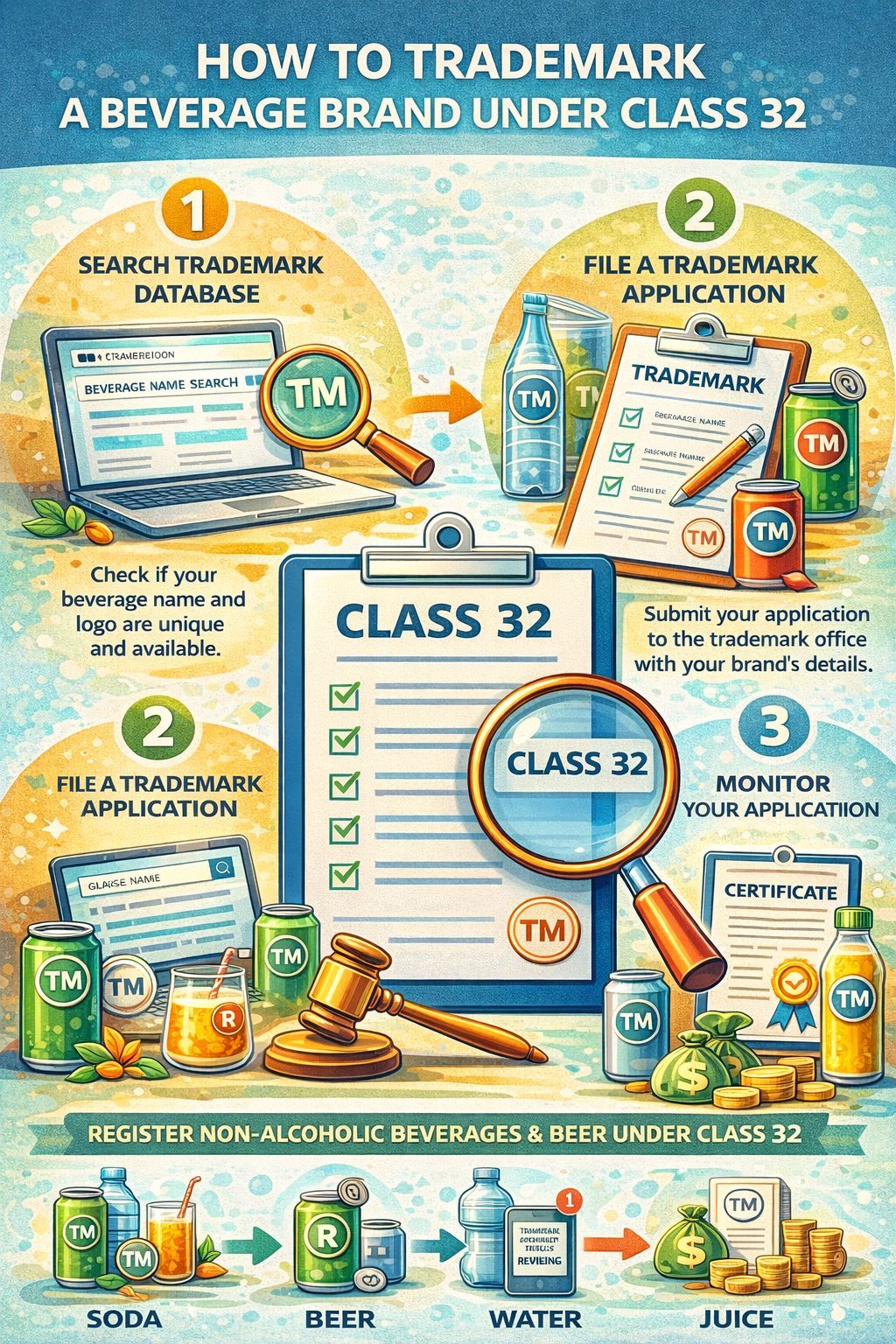
How to Trademark a Beverage Brand Under Class 32
Securing a Class 32 trademark follows a structured process. Each step ensures your branding is unique, registerable, and legally enforceable.
Trademark Search
A clearance search evaluates whether:
- similar drink names exist
- packaging resembles existing brands
- the trademark is descriptive (e.g., “Fresh Lemon Soda”)
- prohibited terms are used
Recommended tools:
A professional trademark search dramatically reduces risks of rejection.
Preparing the Application
Key elements:
- identify which marks to register
- prepare specimen images (labels, cans, bottles)
- specify beverage types under Class 32
- confirm trademark ownership entity
Submitting the Application
Trademark offices worldwide require:
- correct classification
- detailed product descriptions
- government filing fees
- accurate logo/label representations
Responding to Examiner Questions
Typical office actions relate to:
- confusing similarity
- descriptive terms
- geographic references (e.g., “Italian Lemon Drink”)
- generic phrases
Maintaining Registration
Your trademark must be renewed every 10 years, and consistent use is required to avoid cancellation.
Special Legal Considerations for Class 32 Brands
Beverage companies face additional compliance requirements.
Labeling and Packaging Regulations
- FDA/TTB in the U.S. (depending on product type)
- sugar content disclosures
- health claim limitations
Cross-Class Branding
Many beverage brands file additional classes:
- Class 30 (tea/coffee)
- Class 21 (drinkware)
- Class 35 (retail services)
- Class 33 (if expanding to alcohol)
International Distribution
Trademark protection does not automatically extend abroad — international filing is essential for global brands.
Common Trademark Mistakes for Class 32 Products
Avoiding these mistakes saves time, money, and brand integrity:
- choosing overly descriptive names
- copying packaging trends too closely
- neglecting international searches
- failing to protect packaging design
- assuming a domain name equals trademark rights
- filing only the name but not the label
Trademark Costs for Class 32
| Item | Cost | Notes |
|---|---|---|
| USPTO filing | $250–$350 per class | TEAS Plus vs Standard |
| EU filing | €850 first class | €50 subsequent class |
| WIPO international filing | varies | Based on countries |
| Attorney fees | varies | Trademark Factory® fixed fee |
Should You Trademark Internationally?
If your beverage sells in multiple countries, international trademark protection is essential. Markets to prioritize:
- U.S.
- EU
- UK
- China
- Canada
- Australia
- Japan
How Trademark Factory® Helps Beverage Brands
Trademark Factory® provides:
- comprehensive Class 32 trademark search
- trademark filing for names, logos, packaging
- international expansion strategy
- legal response to office actions
- fixed-fee pricing
- guaranteed results
👉 Book Your Free Beverage Brand Strategy Call
FAQ — Class 32 Trademarks
Can I trademark a flavored water name?
Yes, as long as it’s distinctive.
Can I trademark my bottle shape?
If it’s unique and non-functional.
Do I need separate protection for my logo?
Yes — logo trademarks offer separate protection.
Does my trademark cover international markets?
Only in countries where you register.
Can two drinks have similar names?
If consumers may be confused — no.
Useful Resources
Conclusion
Class 32 trademarks protect your beverage brand in an extremely competitive market. From soft drinks and energy beverages to craft beer and juices, registering your trademarks ensures that your brand identity remains exclusively yours — now and as you expand globally.