
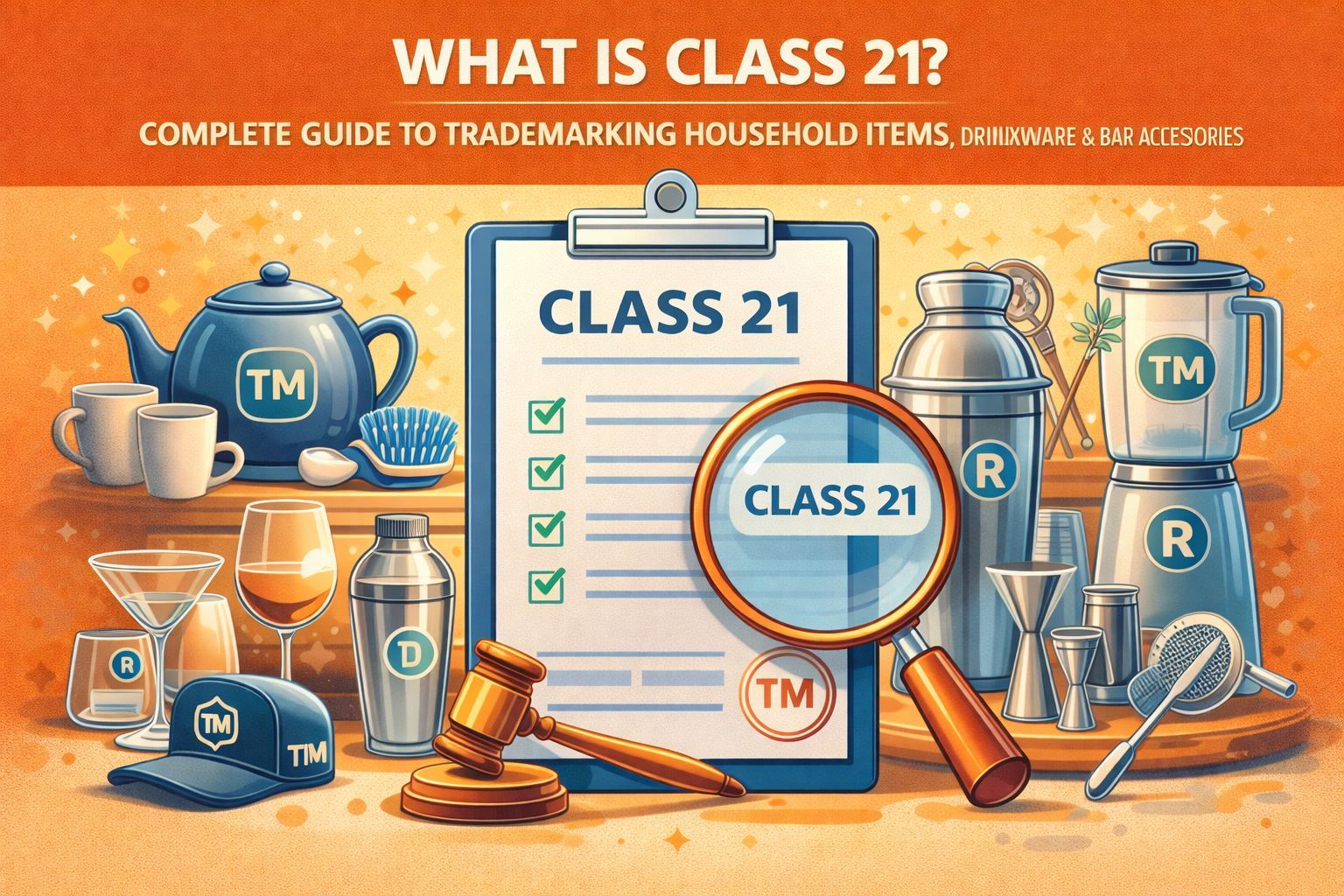
Consumer goods in Class 21 occupy one of the most versatile and competitive categories in modern commerce. From kitchen utensils and home storage to luxury drinkware and bar tools, these products require strong branding and legal protection. Trademarking under Class 21 ensures that your brand identity remains secure across marketplaces, whether you sell in retail, hospitality, e-commerce, or direct-to-consumer channels.
This guide covers what Class 21 includes, what it excludes, how to trademark your products, and what mistakes brands must avoid.
Understanding Class 21
Class 21 covers household products, utensils, drinkware, cookware, and barware.
These goods are often visually driven and brand-dependent, making trademark protection especially valuable.
Products Included in Class 21
- glassware
- drinkware (wine glasses, tumblers, beer glasses)
- cocktail shakers and bar tools
- household containers
- kitchen utensils
- bowls, plates, dishes
- ceramics and porcelain items
- reusable bottles (empty)
- insulated drink containers (non-electric)
- decorative home items
What Class 21 Does NOT Include
To avoid filing in the wrong category, review this classification table:
| Not Included | Correct Class | Explanation |
|---|---|---|
| Beverage products | 32 or 33 | The contents go to beverage classes |
| Electric appliances | 7 or 11 | Based on mechanics or heat |
| Furniture | 20 | Chairs, tables, shelves |
| Disposable paper cups | 16 | Single-use items |
| Metal kitchen tools | 8 | Knives, scissors |
What You Can Trademark in Class 21
A brand operating in Class 21 may protect multiple elements:
Trademarkable Assets
- word mark (brand name)
- logo
- packaging (boxes, sleeves, sleeves)
- 3D product shape
- pattern or texture
- engraving signature
- distinctive color scheme
Table: Trademark Types in Class 21
| Type | Protects | Examples |
|---|---|---|
| Word mark | Brand name | Barware brand name |
| Logo | Graphic mark | Engraved symbol |
| Packaging mark | Box design | Luxury kitchen products |
| 3D shape | Product form | Unique bottle or mug shape |
| Pattern mark | Signature texture | Ceramic surface pattern |
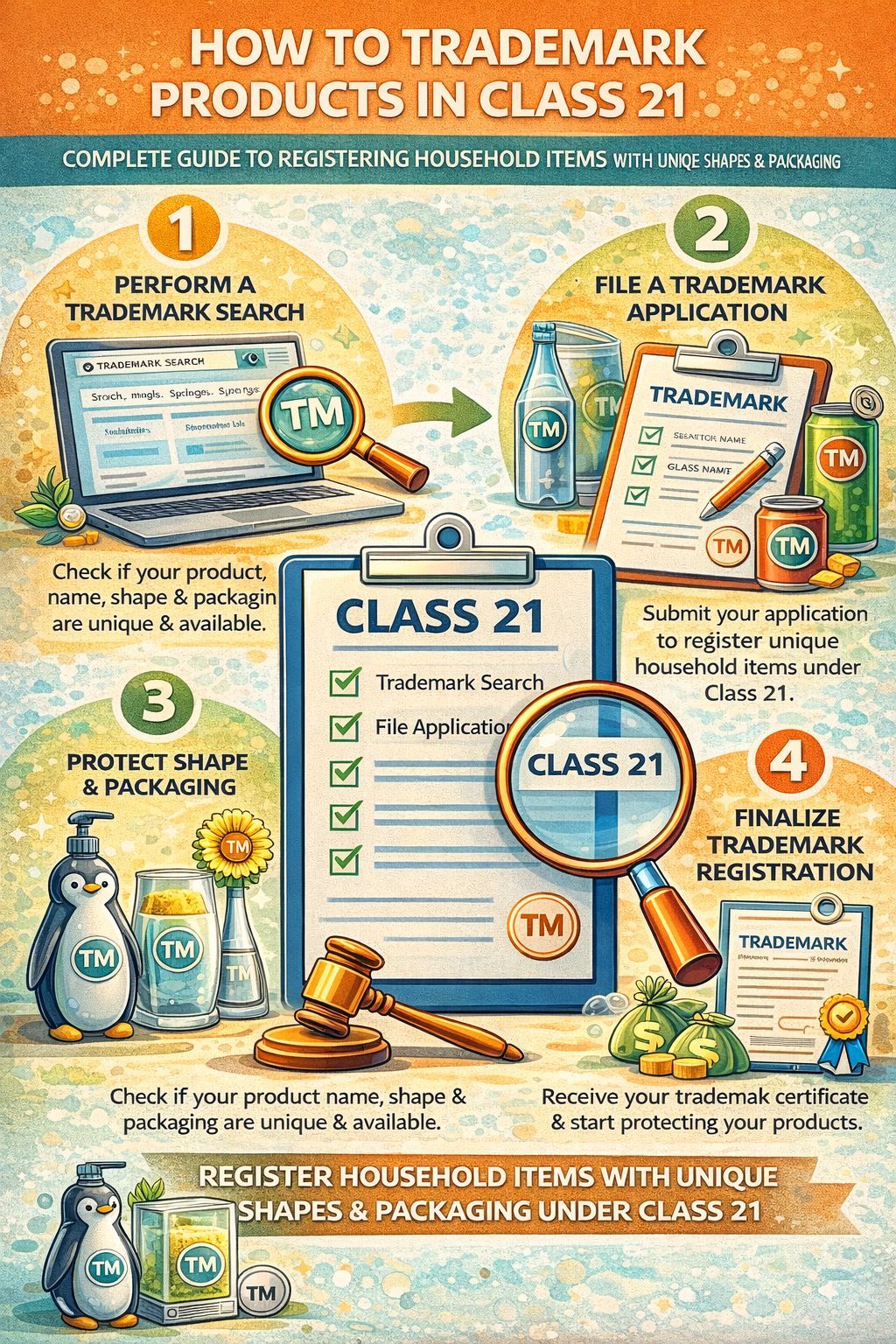
How to Trademark Products in Class 21
Class 21 often involves unique shapes and packaging, so attention to detail is crucial.
Trademark Search
A thorough search checks:
- similar brand names
- existing 3D marks
- similar packaging aesthetics
- potential conflicts with luxury drinkware brands
Use:
Preparing an Application
Prepare:
- accurate product classification
- clear specimen images
- correct ownership entity
- detailed description of design elements
Filing Requirements
Trademark offices require:
- precise goods description
- non-functional 3D shapes
- clear logo/packaging images
Responding to Examiner Actions
Typical reasons for refusal:
- functional product shape
- overly descriptive naming
- similarity to existing homeware brands
Special Considerations for Class 21
3D Shape Limitations
If a product shape is functional, it cannot be trademarked.
Ornamental Use
Logos used only decoratively may not qualify unless they serve as brand identifiers.
Counterfeits and Parallel Imports
Drinkware and kitchen tools are frequently counterfeited — trademarks help enforce takedowns globally.
Cross-Class Branding
Many Class 21 brands file in:
- Class 35 (online retail)
- Class 32/33 (if producing branded bottles)
- Class 11 (if designing appliances)
Common Mistakes in Class 21 Trademarking
- failing to protect packaging
- mistaking decorative art for trademark use
- filing functional shapes
- inconsistent brand presentation
- not registering internationally
Trademark Costs for Class 21
| Cost | Price | Notes |
|---|---|---|
| USPTO filing | $250–$350/class | Based on filing method |
| EU filing | €850 | First class |
| UK filing | £170 | Base fee |
| International filing | varies | WIPO-based |
Trademark Factory® offers a predictable fixed-fee model with guaranteed outcomes.
International Trademark Strategy for Class 21
Products in this class are often sold globally via:
- Amazon
- Etsy
- Shopify
- retail distributors
International protection is essential in countries with high counterfeiting rates, especially China.
How Trademark Factory® Supports Class 21 Brands
Trademark Factory® helps by:
- performing full trademark searches
- preparing and filing applications
- advising on 3D marks and packaging
- offering global filing strategies
- providing guaranteed service with fixed pricing
👉 Book Your Free Product Brand Strategy Call
👉 See How Trademark Factory® Protects Product Designs
FAQ — Class 21 Brands
Can I trademark a mug shape?
Yes, if it’s non-functional and distinctive.
Does packaging need separate protection?
Yes — packaging trademarks are powerful against counterfeits.
Can I trademark a material pattern?
Yes, if it identifies your brand.
Does selling on Amazon require trademarks?
For Brand Registry — yes.
Do I need international protection?
If selling globally — absolutely.
Useful Resources
Conclusion
Class 21 trademarks help secure some of the most recognizable and widely used products on the market. Whether you sell premium drinkware, kitchen tools, or designer homeware, protecting your brand ensures that your creative identity—and your commercial advantage—remain exclusively yours.
' width='400' height='200'/%3E%3C/svg%3E)