
Your Complete Guide to the Cost of International Trademark Registration
Expanding a brand internationally means ensuring that your intellectual property is legally protected across borders. For many companies, the biggest concern is understanding the true international trademark cost, the complexity offees, and the unpredictable expenses associated with global filing. This article breaks down the reality behind international trademark registration cost, shows you how the system works, and offers a clear path toward budget-predictable protection through Trademark Factory®.
Understanding What International Trademark Registration Really Means
Before diving into the numbers, it is essential to understand what “international registration” actually represents. There is no single worldwide trademark system that grants protection everywhere. Instead, businesses can use structured international frameworks that simplify filing in multiple jurisdictions at once.
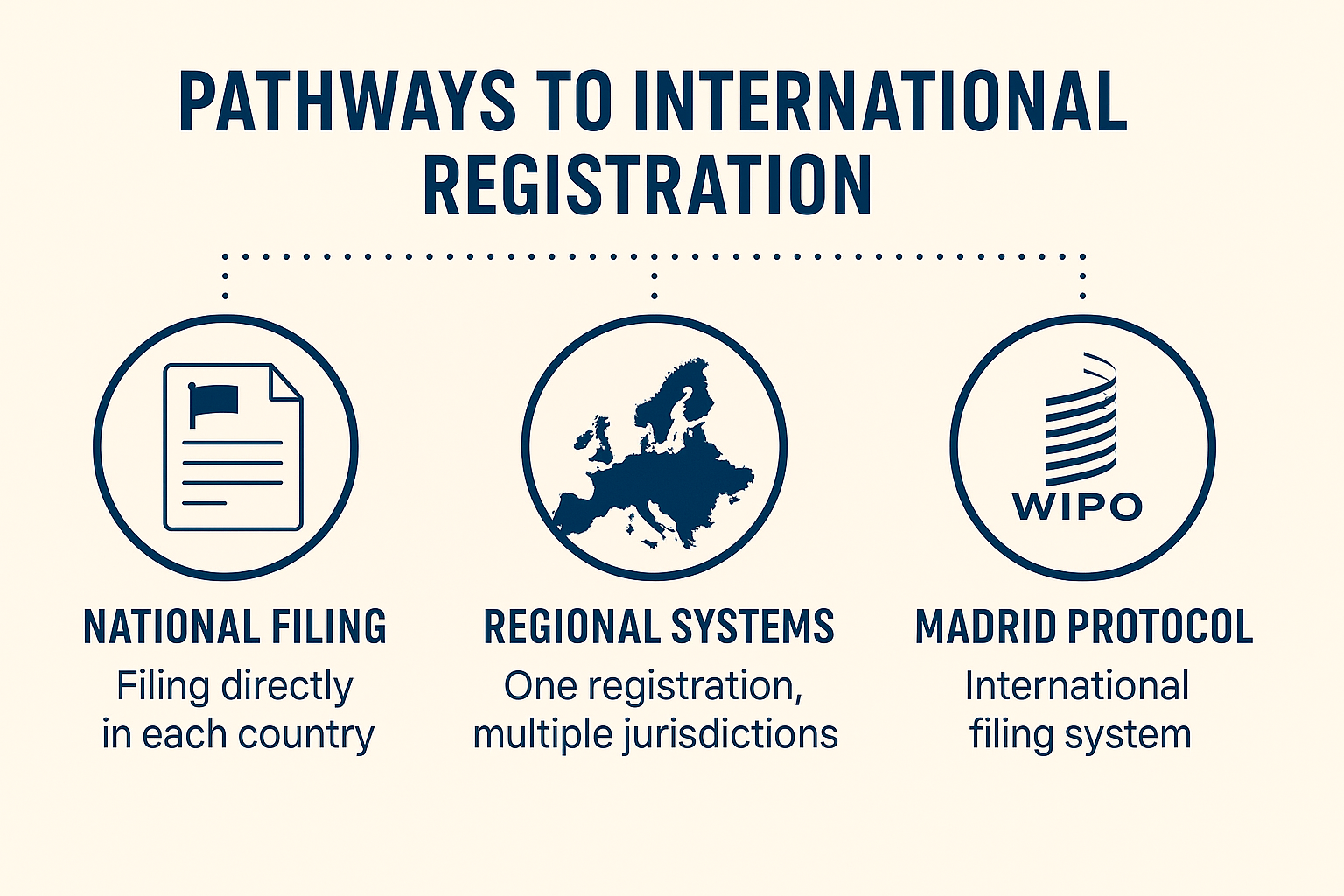
The three global pathways below illustrate how worldwide protection works and why the cost of international trademark varies depending on the chosen route.
Pathways to International Registration
National Filing
Filing directly with each national office provides granular control but results in higher costs and separate fees per jurisdiction.
Regional Systems
Some regions, such as the European Union, allow a single filing to protect a markacross several countries. This pathway reduces administrative burden but still carries specific legal and examination requirements.
Madrid Protocol
The most widely used global system: it allows applicants to designate multiple countries in one application. While it simplifies the filing process, country-specific fees still apply.
What Influences the Cost of International Trademark Registration
The cost of international trademark registration depends on numerous variables that go far beyond a simple government filing fee. Every mark submitted through the Madrid system or directly to national offices goes through legal review and classification of goods and services.
Common factors that affect international trademark registration fees include:
- number of classes you register
- how many countries you designate
- translation and administrative requirements
- legal examination and potential objections
- the complexity of your goods and services
- whether your brand meets local rules
- the need for attorney involvement
- renewal terms in each country
These factors explain why worldwide trademark cost differs so significantly across industries and markets.
Build your international trademark budget by filing route
Compare the same mark, goods or services, classes and target markets before choosing a filing route. Use a separate line for each charge and retain its original currency.
| Budget item | Direct national or regional applications | Madrid application |
|---|---|---|
| Initial official charges | Application fees charged by each selected office | WIPO basic fee, designation fees and any applicable supplementary fees |
| Additional filing costs | Local filing and representation requirements | Basic application or registration costs, plus any office-of-origin fee |
| Budget currency | Each office’s required currency | WIPO charges in CHF; show other charges separately |
| Later costs | Responses, disputes, maintenance and renewals | Responses in designated markets, disputes, maintenance and renewals |
How Madrid fees fit together
For a new international application, start with the WIPO basic fee. Add the applicable individual or complementary fee for each designation. A standard supplementary fee concerns classes beyond three, with exceptions when only individual-fee designations are selected. Do not add national application tariffs to Madrid designation fees for the same filing.
Worked example for a US business expanding to Canada and the UK
Illustrative scenario checked on November 9, 2026: an eligible US applicant already has one US basic application or registration covering the proposed goods or services. It files a new Madrid application for one ordinary black-and-white mark, designating Canada and the United Kingdom. Both destinations receive the same class count. These are official-fee calculations, not a Trademark Factory service quote.
| WIPO fee component | One class in each destination | Two classes in each destination |
|---|---|---|
| Basic fee | CHF 653 | CHF 653 |
| Canada designation | CHF 282 | CHF 282 + 86 = 368 |
| United Kingdom designation | CHF 240 | CHF 240 + 64 = 304 |
| WIPO subtotal | CHF 653 + 282 + 240 = 1,175 | CHF 653 + 368 + 304 = 1,325 |
No standard complementary or supplementary fee is added in these scenarios. The WIPO Fee Calculator reproduces both subtotals using these inputs.
Finish the budget before deciding
For electronic certification based on one US basic application or registration, the USPTO fee is USD 100 per class. In Madrid e-Filing, it is collected in CHF at the applicable conversion rate. The planned filing charges are therefore CHF 1,175 plus the CHF equivalent of USD 100 for one class, or CHF 1,325 plus the CHF equivalent of USD 200 for two classes.
Then add quoted search, preparation, coordination, translation and payment charges where applicable. Show a separate allowance for possible objections or disputes, and keep later maintenance and renewal costs outside the initial filing subtotal. Costs already paid for the US basic mark are excluded from this expansion example. An unquoted item is still a cost to confirm, not zero.
Recheck the WIPO Fee Calculator before filing. Use our trademark filing fees calculator for the direct-filing charges it supports, or review international trademark filing to discuss a route-specific quote.
How to Reduce the Cost of International Trademark Registration
Businesses often overpay without realizing that strategic planning can dramatically reduce the cost. Trademark Factory® strongly recommends a structured approach to filing that minimizes unnecessary expenses and legal risks.
Key expert recommendations include:
- registering only the essential classes
- conducting a professional clearance search
- filing through the most cost-effective route
- grouping countries based on expansion goals
- planning for potential objections in advance
- avoiding hourly billing fees
- ensuring your mark meets local requirements
Proper planning reduces the likelihood of unexpected fees and accelerates global protection.
Trademark Factory® Fixed-Fee Global Solution
Trademark Factory® offers the world’s only attorney-managed, fixed-fee system with a 100% money-back guarantee. For businesses prioritizing clarity and predictability, this model eliminates uncertainty and ensures that your trademark applications are handled by experts from start to finish.
Why businesses choose Trademark Factory®:
- fixed fee with no hourly charges
- full-service filing and management
- proactive monitoring of legal risks
- guaranteed trademark registration or your money back
- strategic country-by-country trademarking plan
👉 Book a Free Trademark Strategy Call
👉 See How Our Guaranteed System Works
How the International Registration Process Works
International protection follows a structured workflow, but many companies underestimate how many steps must be completed before a mark becomes fully registered. This block summarizes the full lifecycle in a clear, visual way.
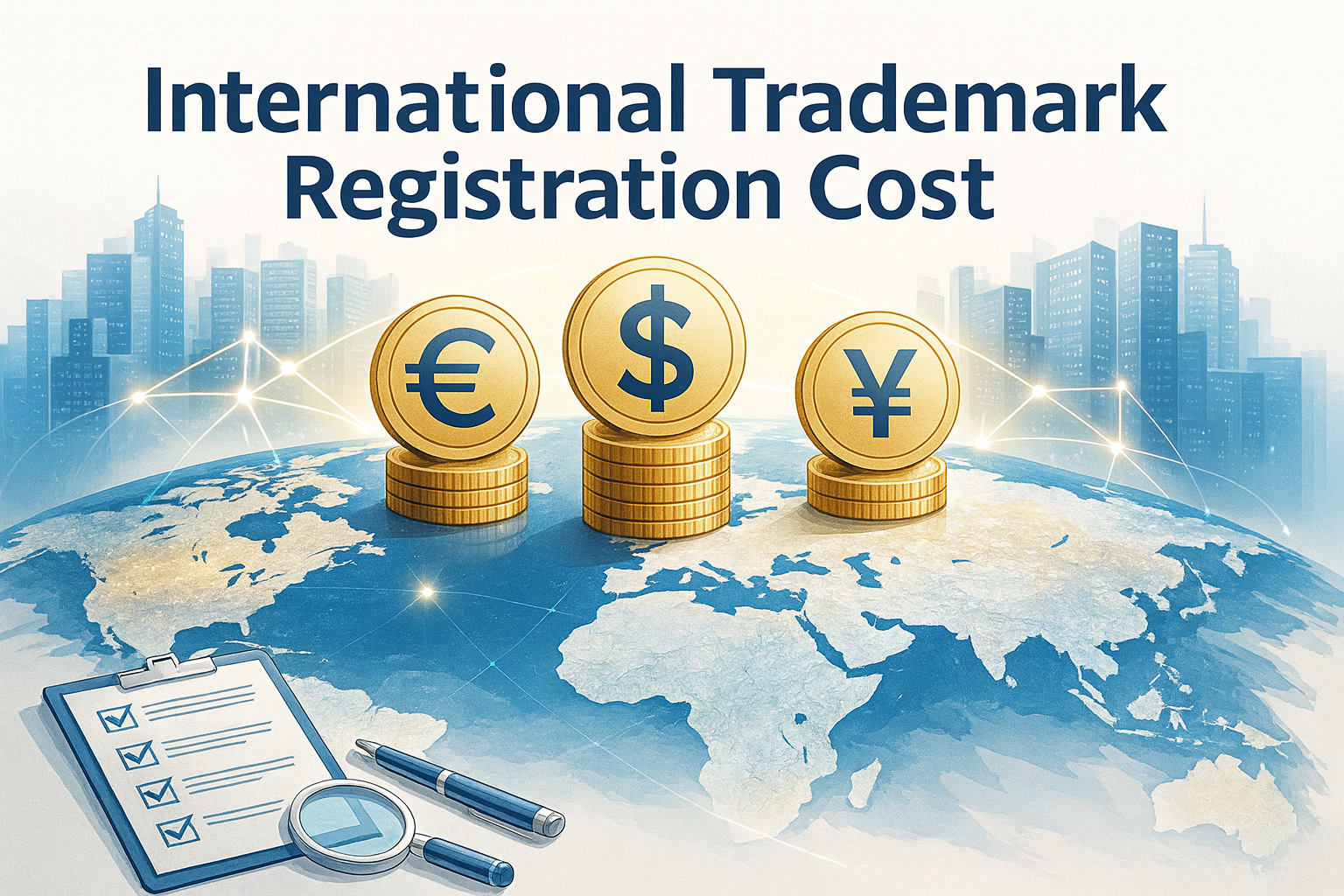
Process Overview
- preliminary trademark search
- filing through national offices or Madrid Protocol
- WIPO formal review
- national examination in each selected country
- publication and opposition windows
- approval and issuance of registration
- renewal every 10 years
This system creates consistency but still requires country-specific compliance.
FAQ — Common Questions About International Trademark Cost
How much is an international trademark?
The budget depends on the filing route, selected markets and classes. Use the worked example above to separate the WIPO subtotal from certification, professional work and later costs, then obtain a quote for your own filing plan.
Does the Madrid Protocol reduce costs?
It reduces administrative complexity but does not eliminate individual country fees.
Are worldwide trademarks possible?
There is no single worldwide registration—but the Madrid system comes closest.
Useful Resources
Below are official links that help you calculate fees, understand rules, and explore global filing options:
- WIPO Fee Calculator
- WIPO Madrid System Guide
- USPTO Madrid Protocol Resources
- EUIPO Trademark Information
- CIPO International Filings
Conclusion
Understanding international trademark cost and the different layers of feesempowers your business to protect its brand globally with confidence. The world’s intellectual property landscape is complex, but with the right partner, clarity and predictability are entirely achievable. Trademark Factory® provides a proven, risk-free system that ensures your protection is done correctly, efficiently, and with no surprises.
👉 Start Your International Trademark Strategy Today
' width='400' height='200'/%3E%3C/svg%3E)