
Turning Your Registered Trademark Into a Revenue Stream
For many brand owners, a registered trademark is more than intellectual property — it is a powerful financial asset. When businesses explore licensing and royalties, they gain access to new markets, partners, and consistent income without manufacturing, distribution, or operational costs. This article explains how licensing works, how licensing royalties are calculated, what a standard licensing agreement percentage looks like, and how you can transform your trademark into a steady revenue source.
What Trademark Licensing Means and How Royalties Work
Trademark licensing allows a company (the licensor) to grant another party (the licensee) the rights to use the brand, logo, or design on specific products. In return, the licensor receives royalties, which are financial payments based on sales, usage, or fixed terms.
Because licensing and royalties involve intellectual property rights, the contract must clearly define how the trademark can be used, what products are allowed, and what quality standards the licensee must follow. These agreements protect the brand while creating a predictable revenue structure.
Why Businesses Choose Licensing Instead of Manufacturing
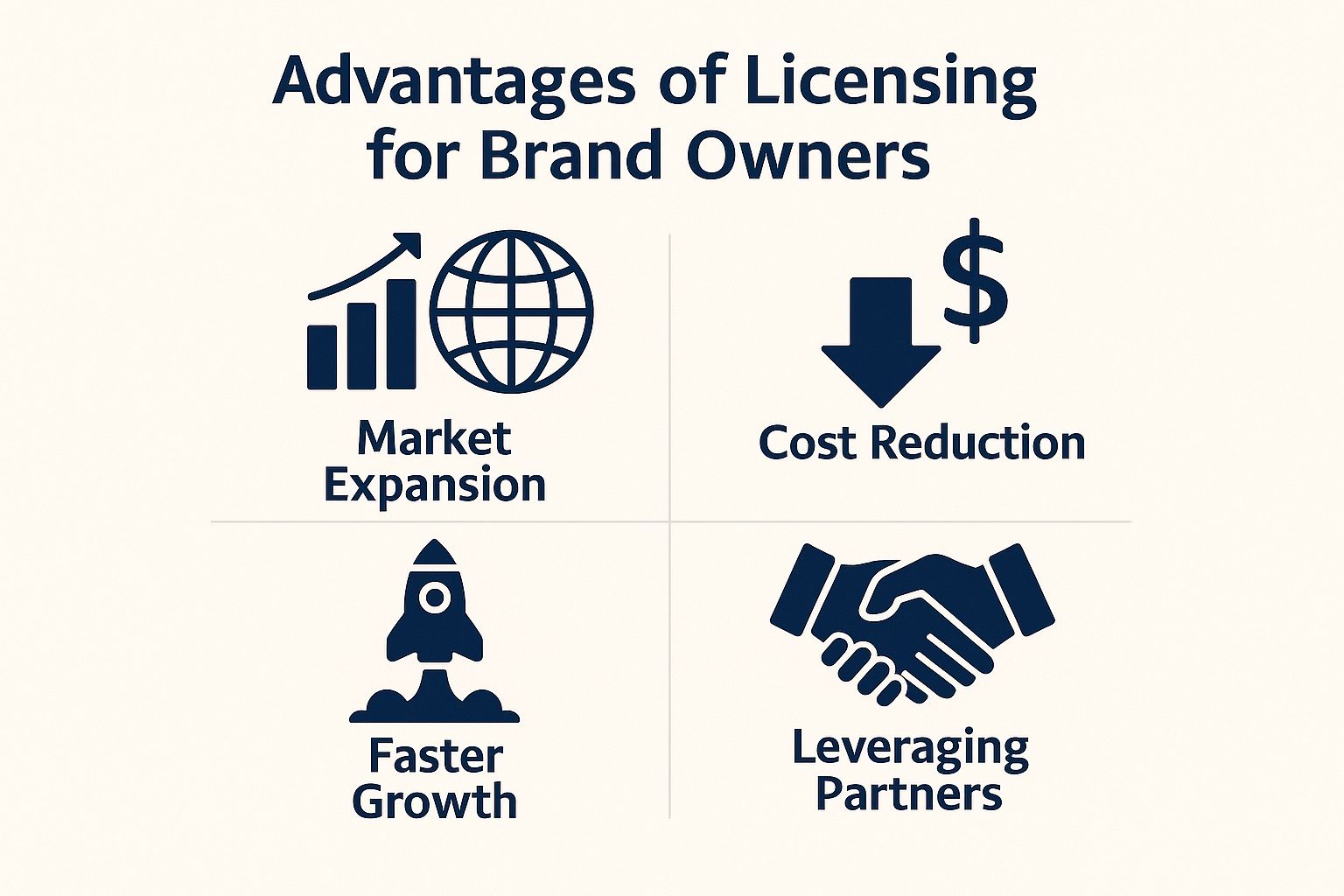
When companies want to expand without handling production, licensing becomes a strategic solution. Through trademark licensing, brands can reach new markets with minimal cost and effort. It also reduces risk, speeds market entry, and allows businesses to partner with experienced manufacturers who already have distribution channels.
This model works especially well for apparel, accessories, toys, publishing, cosmetics, digital goods, and franchising.
How Licensing Royalties Are Structured
Trademark owners generally receive payments based on one of several royalty models. Understanding these structures is essential before negotiating a contract.
Percentage of Sales (most common)
The licensor receives a percentage of the licensee’s net sales.
This is where the royalty rate and standard licensing agreement percentage become crucial.
Average range: 3%–12% depending on industry.
Flat-Fee Licensing
A fixed amount paid upfront or periodically.
Minimum Guarantee + Royalty Percentage
The licensee pays a guaranteed amount annually, ensuring baseline income for the licensor.
Hybrid Agreements
Combinations of upfront fees, ongoing royalties, and tiered percentages.
Table: Comparison of Royalty Models
|
Model |
How It Works |
Best For |
|
Percentage of Net Sales |
Royalties
paid based on sales |
Consumer products |
|
Flat Fee |
Fixed
amount regardless of sales |
Established brands |
|
Minimum Guarantee |
Guaranteed payment + sales percentage |
High-demand markets |
|
Hybrid Schemes |
Blended structure |
Apparel, electronics, collectibles |
How to Calculate Trademark Licensing Royalties
Understanding the math behind royalties helps licensors negotiate effectively.
Typical formula:
Royalty = Net Sales × Royalty %
Factors that influence royalty percentages include:
- brand recognition
- type of products sold
- sales projections
- territory and exclusivity
- market competition
- manufacturing cost
- marketing obligations of the licensee
Example:
If the licensee sells $1,000,000 worth of products and the royalty rate is 8%, the licensor receives $80,000.
Key Clauses Every Licensing Agreement Must Include
Because trademark misuse can damage a brand, a strong agreement is essential.
A legally binding licensing contract should include:
- Territory and duration
- Quality control requirements
- Reporting obligations
- Payment terms and the royalty structure
- Exclusivity (if any)
- Rights to audit sales
- Intellectual property protection
- Termination rules
- Minimum guarantees
- Manufacturing and distribution terms
These elements protect the licensor from risk while giving the licensee clear operational boundaries.
👉 Book a Free Trademark Licensing Strategy Call
👉 Learn More About Our Licensing Support Services
How to Avoid Licensing Mistakes That Reduce Royalties
Even well-known companies lose revenue because of poorly structured agreements. Common errors include:
- weak quality control clauses
- missing minimum guarantee
- unclear product categories
- lack of reporting and auditing tools
- licensing to unreliable partners
- using agreements not tailored to the industry
Avoiding these mistakes helps ensure that royalties are paid accurately and consistently.
How to Scale Your Licensing and Royalties Internationally
Global licensing allows brands to enter new markets without additional infrastructure. To do this effectively, the licensor must:
- register the license or trademark in key territories
- work with master licensees for large markets
- maintain strict brand guidelines
- set region-specific royalty percentages
- protect the trademark through customs and monitoring
Scaling internationally can significantly increase yearly royalties when executed correctly.
👉 Get Your International Licensing Assessment
Useful Resources
These authoritative resources help you understand licensing and royalties, financial implications, and industry standards:
- Investopedia — Licensing Fees & Royalties
- RoyaltyRange — Difference Between Licensing Fees and Royalty Rates
- Flexport — Royalties and Licensing Fees Guide
- Boag Law — Licensing Rights and Royalties Overview
- Sketch Design Repeat — Art Licensing Royalties
Conclusion: Turn Your Trademark Into a Revenue-Generating Asset
When structured correctly, trademark licensing becomes a predictable and scalable income source. With a strong agreement, accurate royalty percentages, trusted partners, and proper brand protection, your trademark can generate revenue for years.
Trademark Factory® provides full legal support — from drafting license agreements to negotiating royalty terms and protecting your intellectual property worldwide.
👉 Start Earning Through Licensing Royalties Today
' width='400' height='200'/%3E%3C/svg%3E)