
Music today is global by default. A band can upload a single on Spotify tonight, and by morning it can be streaming in Europe, Asia, and South America—long before the group even travels there.
This global visibility brings opportunity, fans, and revenue. But it also brings one major risk: someone in another country may register your band name before you do.
That’s why learning how to trademark your band name internationally isn’t optional for musicians who perform, collaborate, or release music worldwide. This guide explains exactly how international trademark protection works, what steps artists need to take, how much it costs, and how to prevent legal conflicts in global markets.
Why Musicians Need International Trademark Protection
A band name isn't just a creative choice—it is a commercial identity. Once your music is available in multiple countries, your band name becomes vulnerable to:
- unauthorized foreign registrations
- counterfeit merchandise
- impersonation on streaming platforms
- brand hijacking by opportunists
- disputes during international touring
- domain name squatters
Fans across the world may know your music, but foreign laws won’t protect your band name unless you register it.
International protection ensures:
- exclusive rights to your band or artist name worldwide
- enforcement against copycat groups abroad
- safer touring, licensing, merch distribution, and collaborations
- greater brand value (useful for label deals)
- protection on global music platforms
How International Trademarking Works
There is no such thing as a single global trademark that covers all countries. Instead, musicians can secure international protection through a combination of:
- Madrid Protocol (centralized filing)
- National trademark offices (country-by-country)
- Regional trademark systems (such as EUIPO for Europe)
Each provides a different level of protection depending on a band’s career, touring schedule, and long-term goals.
When Musicians Should Consider International Filing
If any of the following applies to you, you should trademark internationally:
- you perform or plan to perform internationally
- your streaming audience is global
- you sell merch overseas
- labels, sponsors, or collaborators are outside your country
- you license your band name
- you attract international press or publicity
- fans abroad use your logo/name on social media
- you plan to tour in the next 1–2 years
For artists with an international audience, foreign trademark registration is not a luxury—it’s a necessity.
Madrid Protocol: The Main Tool for Global Brand Protection
The Madrid Protocol allows musicians to file one international application and designate multiple countries for protection.
Benefits of the Madrid System
- one application instead of dozens
- one fee instead of many
- one language
- simplified management
- easier renewals
- cost-effective for expanding bands
Limitations
- relies on a valid home-country trademark
- not all countries participate
- some regions have specific examination rules
Regional Trademark Systems for Musicians
For certain geographical areas, musicians can secure protection across an entire region with a single application.
Key regional systems include:
| Region | Trademark Authority | Countries Covered |
|---|---|---|
| European Union | EUIPO | 27 EU countries |
| Africa | OAPI | 17 African states |
| Benelux | BOIP | Belgium, Netherlands, Luxembourg |
| Caribbean | ARIPO (partial IP coverage) | varies |
These options often cost less than filing in each country separately.
Country-by-Country Filing: When You Need Direct Applications
Some major music markets require direct national filings—even if you use the Madrid Protocol.
Countries that frequently require extra attention:
- United States
- United Kingdom
- Canada
- Australia
- China (critically important!)
- Japan
- South Korea
- Brazil
- Mexico
China, especially, is notorious for trademark squatting. Many Western bands lose rights because someone in China registers their name before they arrive.
If you plan to sell merch, distribute music, or tour in Asia or North America, direct protection may be essential.
Choosing the Right Countries for Your Band
You don’t need to trademark your band name in all 195 countries. Instead, choose based on:
- top streaming audiences
- touring plans
- merch shipping locations
- business partnerships
- fan concentration
- piracy risk level
| Band Situation | Recommended Countries |
|---|---|
| Growing Spotify audience | US, UK, Canada, EU |
| Planning a tour | Target tour countries |
| Selling merch internationally | US, EU, UK, Australia |
| Large Asian fanbase | China, Japan, South Korea |
| Label interest | Country of label |
Trademarking is an investment—so select countries with real strategic value.
How to Trademark Your Band Name Globally: Step-by-Step
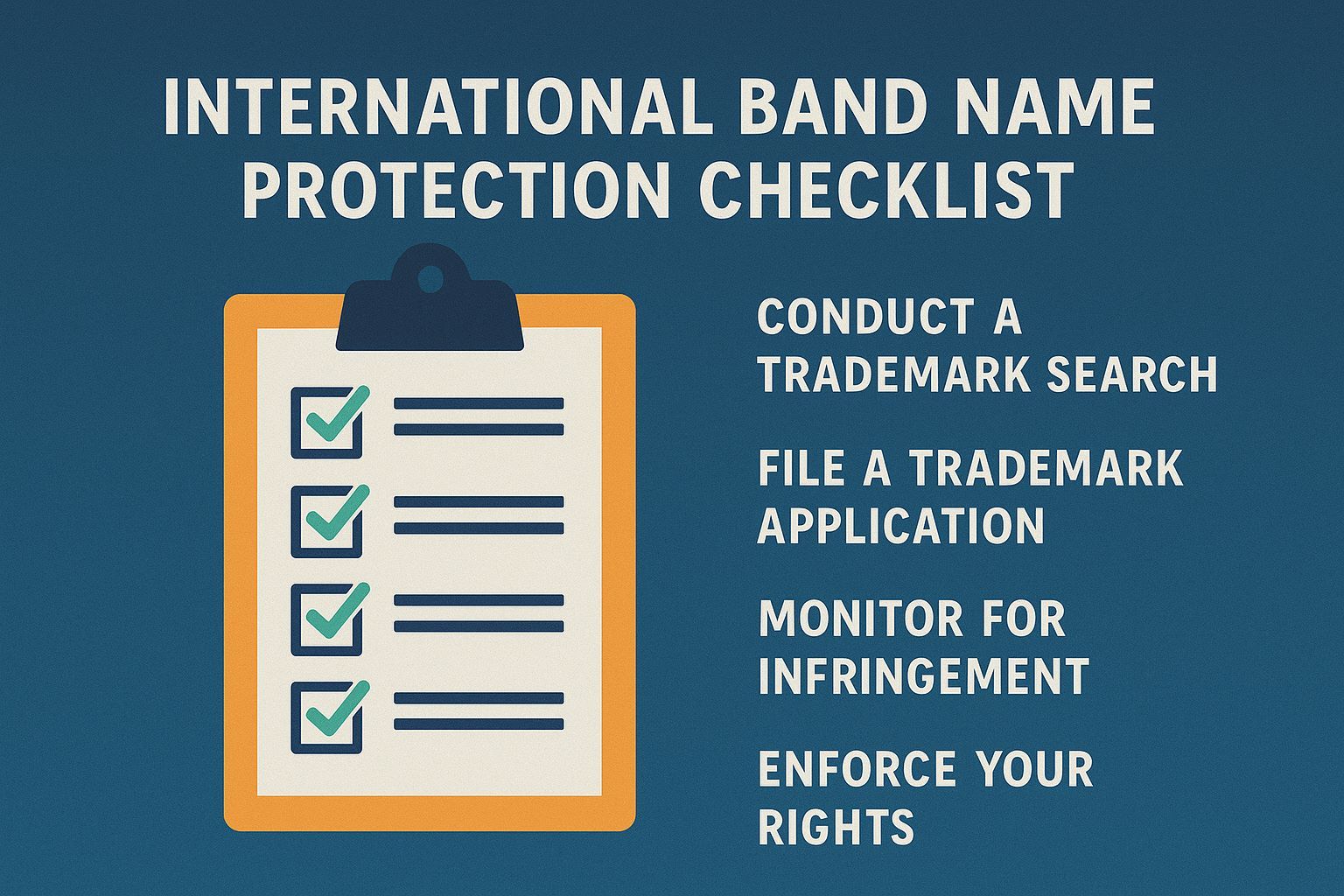
International registration follows a structured process. Here is the musician-friendly breakdown:
Secure Your Home Trademark First
Most global systems require a base (home) registration.
Trademark your band name in your home country before filing internationally.
Decide on the Right Strategy
Options include:
- Madrid Protocol
- regional filing
- direct national filings
- a hybrid approach
Prepare Your Application
You will need:
- the band name (standard or stylized)
- classes for entertainment, merch, digital goods
- owner information (LLC recommended)
- evidence of use or intent to use
File and Designate Countries
Choose target countries based on real needs.
Respond to International Office Actions
Different countries may ask for clarification or additional evidence.
Maintain and Renew Registrations
Trademark rights require maintenance every 5–10 years depending on the country.
How Much Does Global Trademark Protection Cost?
Costs depend on how many countries you include and whether you file through Madrid or individually.
Approximate example:
| Filing Method | Estimated Cost |
|---|---|
| Madrid Protocol (base + 3 countries) | $1,500–$3,000 |
| Additional Madrid countries | $150–$500 each |
| Direct filing in China | $300–$800 |
| Direct filing in UK | $250–$400 |
| Direct filing in Canada | $330–$400 |
| Attorney fees | varies |
Trademark Factory® offers fixed-fee global protection, eliminating uncertainty.
Avoid These International Trademark Mistakes
Artists often underestimate how complicated global brand protection can be.
Common mistakes include:
- assuming a U.S. trademark protects the world
- relying solely on domain registration
- failing to check international conflicts
- touring without registering the band name
- launching merch globally without protection
- waiting until after popularity grows
- using inconsistent branding in different countries
- not trademarking the logo together with the name
A trademark must be protected where your audience is — not just where you live.
How Trademark Factory® Helps Musicians Build Global Brands
Trademark Factory® provides musicians with end-to-end global brand protection:
- strategic country selection
- clearance search in target markets
- filing under Madrid Protocol or national systems
- managing international office actions
- monitoring and enforcement
- fixed-fee pricing
- 100% money-back guarantee
👉 Book a Free Global Trademark Strategy Call
👉 See How Trademark Factory® Protects Music Brands Worldwide
FAQ — International Band Name Protection
Do I need a separate trademark for each country?
Sometimes. Regional and Madrid systems simplify the process, but some countries require direct filings.
Can I trademark my band name internationally before becoming famous?
Yes — and it's recommended to prevent trademark squatting.
Is a US trademark valid overseas?
No. Trademark rights are territorial.
Can two bands in different countries have the same name?
If neither registered first, yes. International registration prevents this conflict.
How long does international protection last?
Usually 10 years, renewable indefinitely.
Can I trademark my band name globally at once?
Madrid Protocol is the closest option but not fully worldwide.
Useful Resources
- WIPO Madrid Protocol
- USPTO Madrid Resources
- EUIPO Trademark System
- UKIPO Trademark Filing
- Trademark Factory® Blog
Conclusion
In the global music landscape, protecting your band name internationally is no longer optional—it is essential. Whether your audience is growing abroad, your merch ships worldwide, or you plan to tour, securing international rights ensures that your brand stays yours everywhere your music travels.
If you're ready to build a truly global music brand, Trademark Factory® is here to guide and support you every step of the way.
' width='400' height='200'/%3E%3C/svg%3E)