Message us

Trademark Registration and Brand Protection Guides

What Happens If You Ignore a Trademark Office Action?

Receiving a Trademark Office Action from the United States Patent and Trademark Office (USPTO) can feel overwhelming. The document may contain legal terminology, references to trademark law, and detailed explanations of issues with your application. Because of this, some applicants delay responding — or worse, ignore the Office Action entirely. However,...

Non-Final vs Final Office Action: What’s the Difference?

When reviewing a trademark application, the United States Patent and Trademark Office (USPTO) may issue an Office Action if the examining attorney finds issues that prevent immediate registration. However, not all Office Actions are the same. Applicants typically encounter two types: Non-Final Office ActionsFinal Office ActionsUnderstanding the difference between them...

DIY Trademark Office Action Response vs Hiring a Trademark Attorney

Receiving a Trademark Office Action from the United States Patent and Trademark Office (USPTO) can raise an important question for many applicants: Should you respond to the Office Action yourself, or hire a trademark attorney? Technically, the USPTO allows applicants to respond on their own. The response is usually submitted...

USPTO Office Action Response Deadline: 3 Months or 6 Months?

Receiving a Trademark Office Action from the United States Patent and Trademark Office (USPTO) immediately raises an important question: How much time do you have to respond? For many years, applicants had six months to reply to an Office Action. However, the USPTO introduced a significant rule change that shortened...

USPTO Specimen Refusal: What It Means and How to Fix It

Submitting a trademark application based on use in commerce requires more than just choosing a name and filing paperwork. Applicants must also prove that the trademark is actually used in connection with the goods or services listed in the application. This proof is called a specimen. If the examining attorney...

Trademark Descriptiveness Refusal: What It Means and How to Overcome It

One of the most common challenges trademark applicants face is a descriptiveness refusal issued by the United States Patent and Trademark Office (USPTO). Many businesses naturally choose names that describe their products or services. While this may be helpful from a marketing perspective, it can create problems during the trademark...

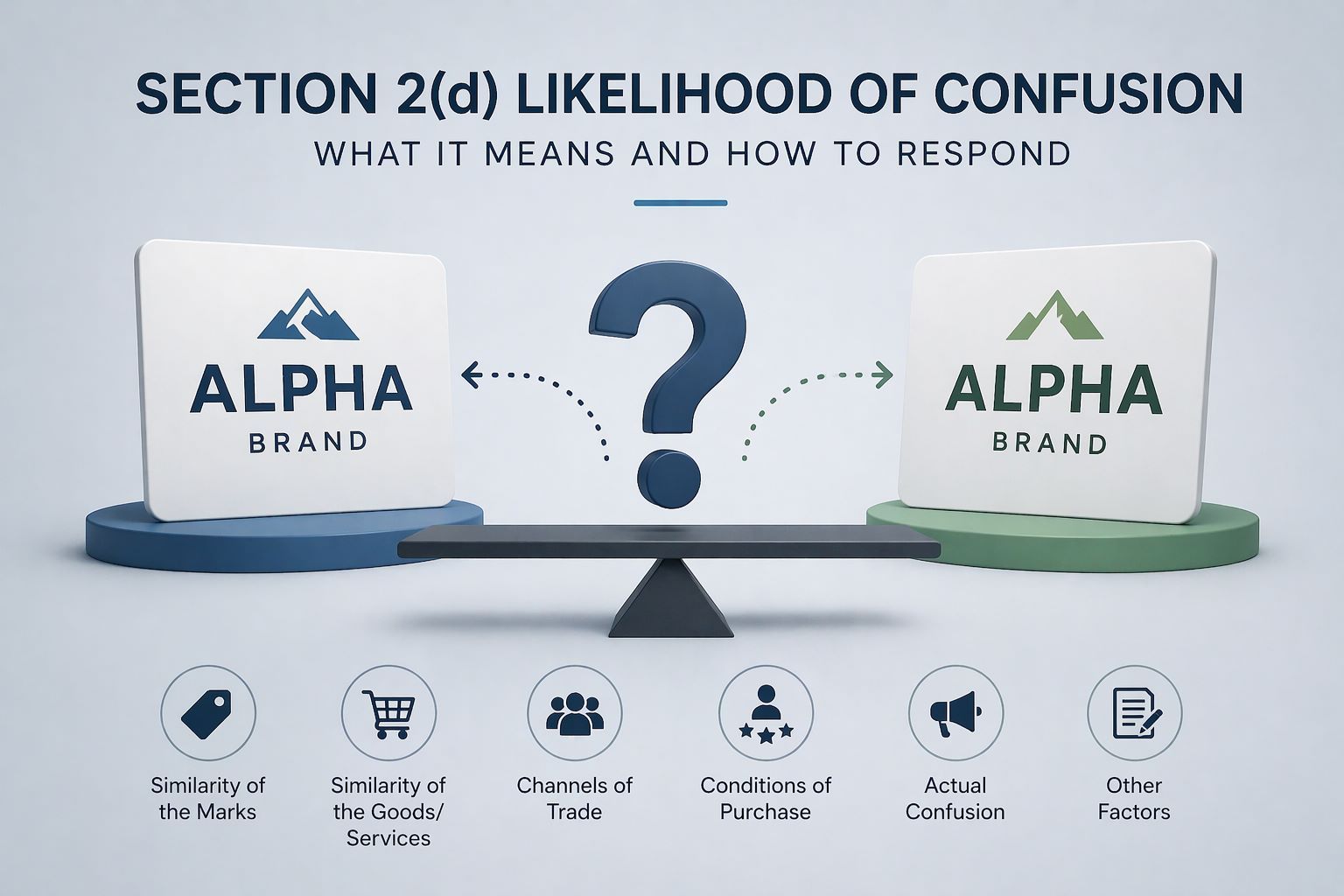
Section 2(d) Likelihood of Confusion: What It Means and How to Respond

One of the most common reasons trademark applications are refused by the United States Patent and Trademark Office (USPTO) is the so-called Likelihood of Confusion refusal under Section 2(d) of the Lanham Act. For many applicants, this refusal comes as a surprise. After investing time and resources into building...

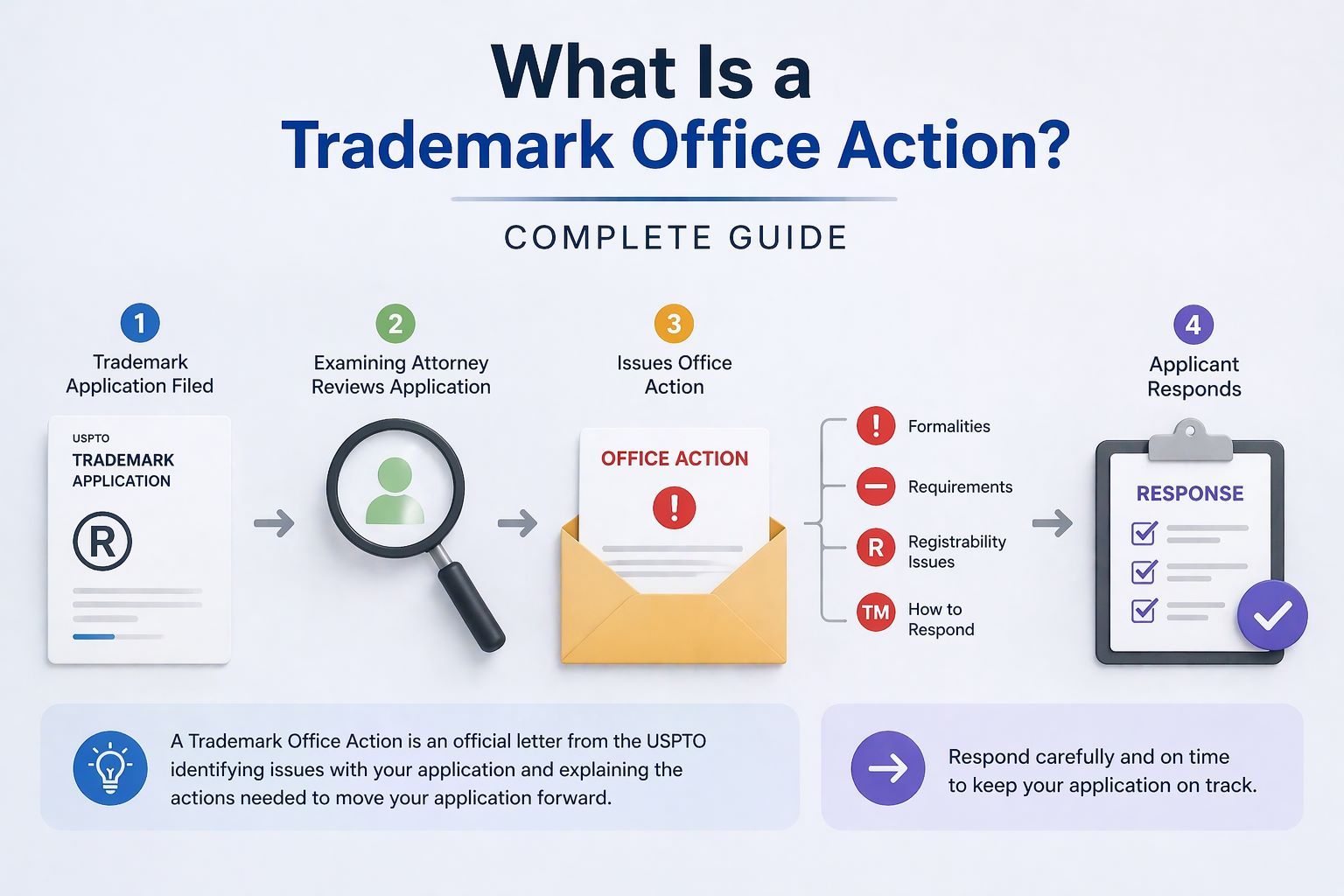
What Is a Trademark Office Action? (Complete Guide)

Receiving a Trademark Office Action can feel alarming — especially if you expected your trademark registration to move smoothly toward approval. Instead, you receive a formal letter from the United States Patent and Trademark Office (USPTO) identifying problems with your application. However, an Office Action does not mean your trademark has...

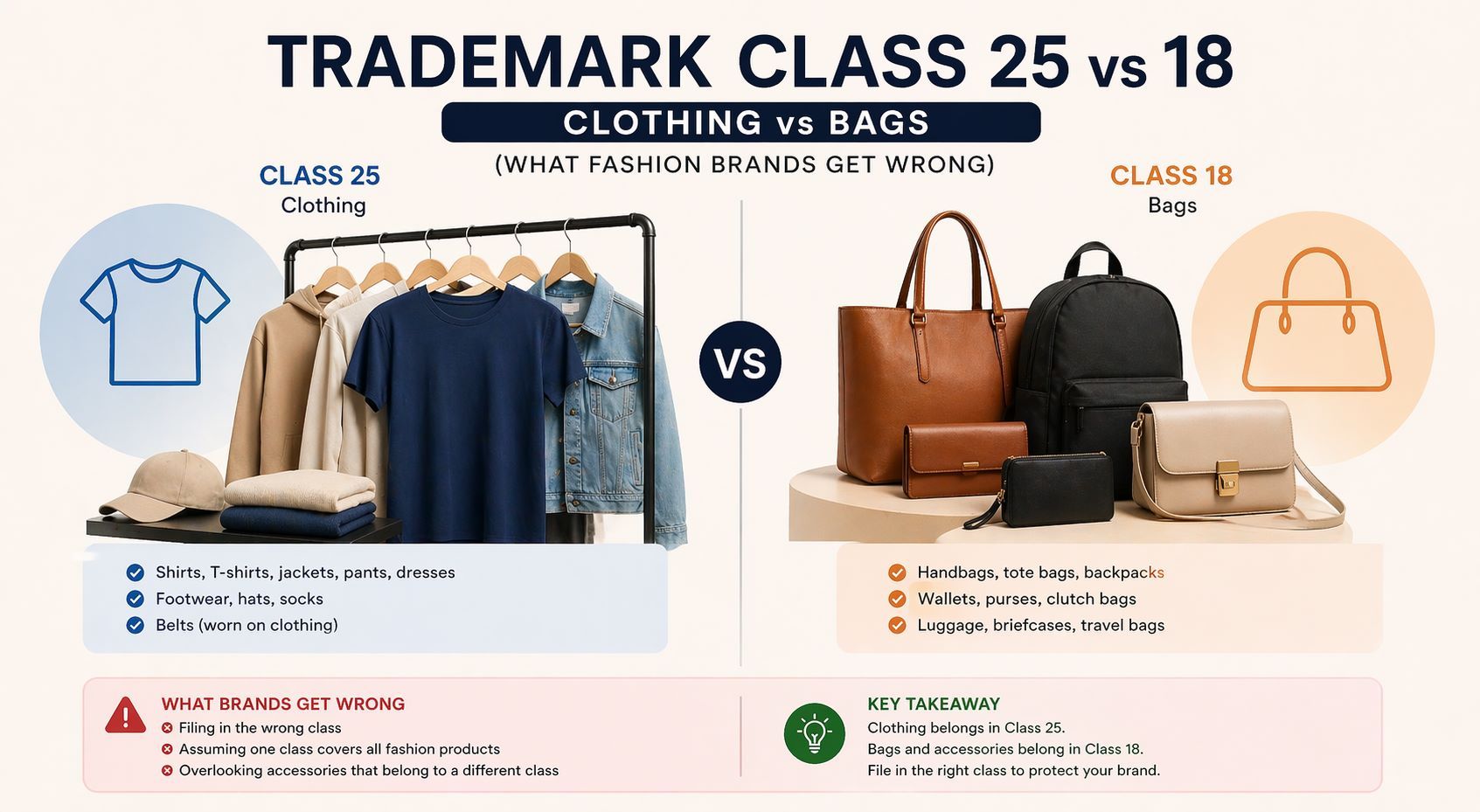
Trademark Class 25 vs 18: Clothing vs Bags (What Fashion Brands Get Wrong)

If you run a fashion brand, there’s a moment that almost always happens sooner or later. You start with clothing. It’s simple. You sell t-shirts, hoodies, sweatpants — classic Class 25. Then your customers start asking for accessories. So you add: tote bagsbackpackswalletsmaybe even a premium leather bagAnd suddenly...

Message us